What types of mink fur are there? With a complete gallery of mink fur pictures
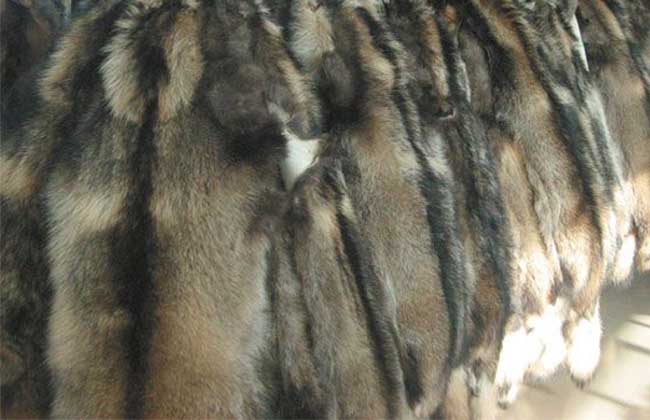
Mink fur is soft in texture and quiet, and the leather board is tough and highly tensile. It is a precious animal fur with a renowned reputation. There are five main categories of mink fur, namely mink fur, sable fur (black sable fur), patterned mink fur, sand mink fur and Pacific mink fur. Now let us take a look at the differences among these types of mink fur!
Mink fur
Mink fur is dark brown from the back to the base of the tail, with a black tail, some white mixed in at the neck, and possibly white markings on the belly. The guard hair is smooth, soft and glossy, and the underfur is dense and flexible.
Sable fur
Sable fur is dark brown along the spine from the neck to the base of the tail, and the color gradually becomes lighter on both sides of the ribs and at the neck. Most mink fur has long coarse hairs mixed in among the guard hairs; these are thicker, longer and glossier than the needle hairs, and are known as the silver needles of mink fur. Sable fur has a glossy oil-like sheen, a beautiful base color, flexible guard hair, and underfur with a bluish-gray root. The underfur is full and the needle hairs are dense, the area is large, and the leather board is soft and strong in tensile strength. The fur quality and color of the head, tail and four limbs of mink fur are all elegant and generous, each with different functions, and can be made into novel varieties.
Patterned mink fur
Patterned mink fur has black guard hair over the whole body, with intermittent white stripes. The underfur of patterned mink fur is brownish within the black, glossy, and shorter than the needle hairs. The needle hairs of patterned mink fur are black over the whole body; they are not as fine and pointed as those of sable fur, but they are soft and neat. Although the underfur lies beneath the leaf hair, every strand can be seen to the bottom; it is fine, soft and glossy, without stickiness, light and flexible, rising and falling freely.
Sand mink fur
Sand mink fur has an elegant color. Its basic color depends on the pigment of the needle hairs and short underfur; the directional hairs play no role. The base of the underfur contains a deep blue shadow, dark yet subtly charming, and the tips of the underfur cast an orange-blue shadow through the needle hairs, setting off the beauty of the needle hairs. The color is like clouds covering the moon, transparent within the dark. The ribs on both sides are orange-yellow with a deep blue shadow, the ridge peak has a faint dark brown, the tip of the muzzle has black hair, and the belly is a lighter tan color. The whole body is brightly colored and full of appeal. The hair of sand mink fur is thicker than that of sable, and the guard hair is not pointed, but the fur is soft and glossy, and the short underfur has a silky greenish brightness, with light shining directly onto the roots of the underfur. The leather board of sand mink fur is evenly thick and thin, making it most suitable for making reversible coats. Using the orange-brown set off by its natural deep blue shadow, it is also beautiful and elegant for women's hats and the edges of woolen coats.
Pacific mink fur
Pacific mink fur is a precious and rare fur, and its needle hairs, underfur and leather board are all different from ordinary fur. Pacific mink fur is emerald green with a slight shadow from the neck to the base of the tail, slightly lighter in color on the belly, with one color running through from top to bottom, without other mixed colors. Its patterns and spots are like a mirror of emerald water. Pacific mink fur has a glossy fur quality and a clear, elegant and beautiful color.