Mink Farming Technique Videos and Farming Prospect Analysis
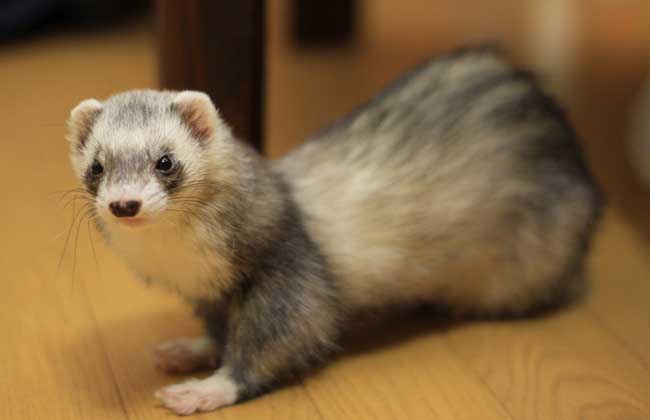
Farming Prospects for Mink
1. Mink fur is a precious fur product: Looking at the history of the fur trade on the international market, mink fur has always been one of the pillar products. The raising of precious fur animals both at home and abroad is bound to form a situation and pattern dominated by mink.
2. Market prospects for mink fur: Judging from the quality and value of mink fur, its utilization rate is also higher than that of large-hair fur such as fox and raccoon dog fur, and the domestic market in particular has great potential. Mink fur is renowned for its short, even fur and its glossy, luxurious appearance. It is the main raw material fur for making clothes, collars, hats, cuffs and trimmings, and it is widely used and in great demand. Large-hair furs such as fox and raccoon dog fur, because their fur is coarser and longer than mink fur and less splendid than mink fur, are not suitable for making overcoats in the domestic market, but are only suitable for making accessories such as collars, cuffs and shawls, so their utilization rate is lower than that of mink fur. It can thus be seen that the development prospects of small-hair fur animals, with mink as the main one, are superior to those of large-hair fur animals such as fox and raccoon dog.
3. The mink fur market is stable: The market order for mink fur is good, and market conditions have always been more stable than those for fox and raccoon dog. In recent years there has also been a trend of steady growth with slight increases. The law of high quality commanding a high price, as reflected in the mink fur market, has pushed the price of colored mink fur up substantially, and has also created an opportunity for mink farmers to accelerate breed improvement of their populations, produce high-quality fur that is well suited to the market, and improve economic returns.
4. Great development potential: At present, the number of mink raised domestically is lower than that of foxes, which further demonstrates the development potential of mink farming. The number of foxes raised domestically, especially Arctic foxes, is higher than the number of mink raised, and this is the result of being driven by short-term benefits from current market conditions. As market conditions for fox and raccoon dog fur change, in the near future the focus of farming will certainly shift toward mink, which will further enhance the development potential of mink farming.
Farming Conditions for Mink
1. Feed conditions: Mink are carnivorous animals. When choosing farming feed, attention should be paid to the fact that the animal-based feed for mink includes fish, meat and their by-product feed, dried animal-based feed, milk and eggs, etc. The plant-based feed for mink includes grains, cakes, fruits and vegetables, etc. The additive feed for mink includes vitamins, antibiotics, antioxidants and inorganic salts, etc.
2. Terrain conditions: Mink farms should be built in places with relatively high terrain and dry ground.
3. Water source and soil quality: Because mink farms need large amounts of water for processing feed, cleaning and washing, and drinking water for the mink, the site should be chosen near streams, rivers, lakes or ponds, or in places with abundant clean groundwater sources.
4. Transportation and power supply: Mink farms should be built in places with relatively convenient transportation conditions. Only in this way can the timely transport of feed and other materials be guaranteed. Power supply is an important energy source for mink farms. Feed processing and preparation, feed freezing and storage, light-controlled mink raising, and various scientific research work carried out at mink farms all require power supply as an indispensable condition.
5. Environmental sanitation: Mink farms should be built in places far away from livestock farms and poultry farms, in order to prevent mutual transmission of diseases from the same sources. If poultry or livestock infectious diseases have occurred in the local area, strict disinfection and sterilization treatment must be carried out, and only after meeting the requirements of sanitation and epidemic prevention may a farm be built there. Mink farms should also maintain a certain distance from residential areas to prevent the spread of epidemic diseases through human and livestock activities. The environment of a mink farm needs to be secluded, therefore it is not suitable to build it near busy traffic routes or near factories and mining areas.
6. Land conditions: The land area of a mink farm should be spacious and open, and should be compatible with the development plan for the farm's mink production. However, competition for land with crops should be avoided as much as possible, and barren land or idle land should be used as much as possible for building the mink farm.
Shed and Housing Construction for Mink
1. Shed construction: Sheds are facilities for protecting mink from cold and heat, and can be adapted to local conditions and made with local materials. The specifications are generally 25-50 m long, 3.5-4 m wide, and with a shed eave height of 1.1-1.2 m. Some increase the span of a single shed (about 8 m), raising breeding mink on both sides and fur mink in the middle, which can improve the utilization rate of a single shed and, to a certain extent, improve fur quality.
2. Cage construction: This is the place where mink move about, eat, excrete and reproduce. The cage is woven from wire mesh, and the small chamber is mostly made from 1.5-2 cm wooden boards, with various specifications.
① Single-layer cage housing: The cage enclosure is 70×30×40 cubic cm (length×width×height). The small chamber is 30×30×30 cubic cm or 45×35×45 cubic cm.
② Double-layer cage housing: The lower layer is for breeding mink, and the upper layer is for fur mink or young mink. The breeding mink cage is 65×60×45 cubic cm, and the small chamber is 45×40×40 cubic cm. The fur mink cage housing is 50×45×40 cubic cm, and the small chamber is 56×30×23 cubic cm, with one small chamber connected into two compartments.
There are many styles of mink cages, but they are required to be simple and durable, not affect the mink's activities, prevent mink from escaping, meet sanitation conditions, and be convenient for management and operation. The size of mink cages is determined according to the different uses of the mink.
Farming Management of Mink
1. Before mating: The main task of the pre-mating preparation period is to promote the normal development of the reproductive organs, adjust the appropriate body condition, and ensure that the mink enter the mating period at the proper time. For the convenience of feeding and management, the pre-mating preparation period for mink is usually further divided into the early stage (September-October), the middle stage (November-December) and the late stage (January-February).
2. Mating period: During the mating period, due to the influence of sexual activity, the appetite of mink somewhat declines, especially in male mink with strong mating ability. Therefore, feeding should be strengthened, and fresh, high-quality, nutrient-rich, highly palatable and easily digestible diets should be supplied. This ensures that male mink have vigorous and sustained mating ability and good semen quality.
3. Gestation period: The gestation period is the key period in mink production. During this period, the metabolism of female mink is extremely vigorous, and their requirements for feed and nutrients are stricter than at any other period. This is because, in addition to maintaining their own life activities and molting, mink must also provide nutrients for fetal growth and development and store nutrients for lactation after birth.
4. Whelping and lactation period: The quality of feeding and management during this period directly affects the lactation capacity of female mink, the duration of continuous lactation, and the survival rate of mink kits.
5. Maintenance period: After mating ends, the body condition of male mink generally declines. In order to help them recover as quickly as possible, the feeding standard should not be lowered immediately. The feeding standard for pregnant female mink or for male mink in the late mating period should be adopted, and after 15-20 days, once the body condition of the male mink has somewhat recovered, they can then be switched to maintenance-period feeding. At the same time, male mink should be gathered together and kept far away from female mink to reduce interference with the female mink. In addition, male mink with poor mating ability, poor semen quality and no remaining breeding value should be culled.
6. Winter fur growth period: During this period, the metabolic level of mink is also relatively high, because in addition to storing body fat and body protein for overwintering, mink must also grow thick, dense winter fur. Fur is the product of protein keratinization, so the need for protein, fat and certain vitamins and trace elements is very urgent. Therefore, in order to produce high-quality fur, the digestible protein in the diet should reach 30-35 g, and the metabolizable energy should reach 250-300 kcal. Animal-based feed should account for 50%-70%, mainly composed of fish, animal offal, blood, fish meal, rabbit and poultry scraps, etc. The total diet amount is 350-400 g.
7. Rearing of mink kits: When mink kits are born, their living conditions undergo tremendous changes. From originally carrying out gas exchange, taking in nutrients and excreting waste through the placenta, they change to breathing, eating and excreting on their own. After birth, mink kits are directly exposed to the external environment. Because their body development is incomplete, improper feeding and management can easily lead to death.
8. Rearing of young mink: After young mink reach 40-45 days of age, they have already acquired the ability to regulate body temperature and live independently, and they can be weaned when the ambient temperature is suitable. If the mink kits in the same litter develop evenly, they can be weaned all at once and raised 2-3 of the same sex per cage, then separated into individual cages after 7-10 days. If the mink kits in the same litter do not develop evenly, first separate out the larger, stronger ones with strong feeding ability, while the smaller, weaker ones with poor feeding ability continue to nurse for a period. Before separation, work such as building cage housing, or repairing, cleaning, disinfecting and bedding old cages should be done well. During separation, pedigree registration should be done well. After separation, high-quality complete, easily digestible and highly palatable feed should be provided, and water should be given in a timely manner. After weaning, mink kits grow and develop rapidly, so the supply of protein, minerals and vitamins must be guaranteed.