Chinese Toad Picture Gallery: Online Appreciation
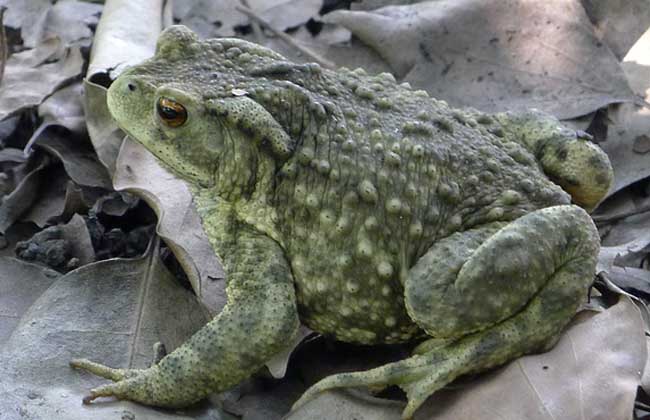
The Chinese toad lives in burrows in the soil, or shelters under stones and among grass; it dwells in grass clumps, under stones or in earthen burrows, and crawls out at dusk to hunt. The spawning season varies with location, and the eggs are arranged in four staggered rows within a tubular gelatinous egg string. The egg strings wrap around aquatic plants, and each toad lays 2000-8000 eggs. Adult toads hibernate in the mud or rotting grass at the bottom of the water. Its tadpoles like to swim in groups in the same direction. In winter it mostly stays in the mud at the bottom of the water. It hides by day and comes out at night or on rainy days. It feeds on captured animals such as snails, slugs, ants, beetles and moths.
Living Habits of the Chinese Toad
The Chinese toad is an amphibious reptile, fond of moisture, darkness and warmth. By day it rests in dark, damp places such as riversides, grass clumps and brick and stone crevices; from dusk to early morning it often forages by ponds, along ditches, on riverbanks, at field edges, in vegetable gardens, by roadsides or around houses. It is most active at night and after rain, feeding mainly on snails, slugs, ants, mosquitoes, wrigglers, locusts, cutworms, scarab beetles, mole crickets, flies and various phototactic moths and butterflies. When the temperature drops below 10°C, it burrows into brick and stone holes, earthen burrows, or dives to the bottom of the water to hibernate. When the temperature rises above 10°C, hibernation ends, and it becomes active in the shallow water on the sunny side of ponds or on the banks.
Reproduction of the Chinese Toad
The Chinese toad is dioecious, with external fertilization; before metamorphosis it lives in water, and after metamorphosis it lives mainly on land. The breeding season is mostly in spring; when the water temperature reaches above 12°C, it mates and lays eggs among aquatic plants in still water or in streams with little flow. The eggs are black and arranged in two rows within the egg string.
Distribution of the Chinese Toad
The Chinese toad is widely distributed and is numerous in various habitats at different altitudes. It is not only a natural enemy of crop, forage and forest pests, but also a medicinal source of toad venom.
1. Domestic distribution: within China it is distributed in the Northeast, North China, East China, Central China, Northwest and Southwest provinces and regions.
2. Overseas distribution: outside China it is distributed in Russia, Korea, and elsewhere.