Are Toads Poisonous? A Detailed Look at Their Medicinal Value and Breeding Techniques
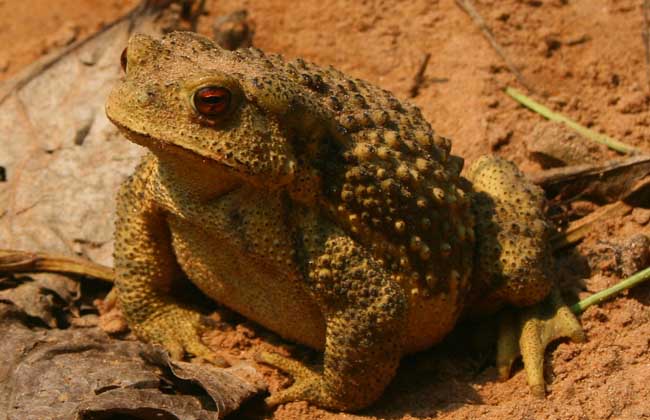
Toad Living Habits
Toads like to hide in mud burrows, under damp stones, in grass, and along ditch edges. Their skin loses water easily, so they mostly hide during the day and come out to move around at night and dusk. Adult toads often overwinter in groups in the mud and sand at the bottom of water or under moist soil on land. They stop eating and rely on glycogen stored in the body to maintain minimal metabolism, and only when the temperature rises to 10-20°C the following year do they end hibernation. They hunt and move at night, feeding on beetles, moths, snails, fly maggots, and so on. Artificial breeding and reproduction are easier than for other frogs.
On the body of the male toad midwife, many newly laid toad eggs are carried on its back. Its responsibility is to protect these toad eggs from being eaten by other predators.
Toad Variety Classification
1. Strauch's toad: The average body length of Strauch's toad is about 60 mm, and the largest female can reach 80 mm. During the day it mostly hides under grass and stones or in earthen burrows, and at dusk it goes out to look for food. In winter it lives in groups in burrows in sandy soil. It is mainly distributed in Heilongjiang, Jilin, Liaoning, Inner Mongolia, Qinghai, Gansu, Ningxia, Shaanxi, Shanxi, Hebei, Shandong, and other places.
2. Black-spectacled toad: The black-spectacled toad is a very cute warty toad. It has a ring of black protrusions around its eyes, as if wearing black-rimmed glasses, so it is called the black-spectacled toad. It is widely distributed in flatlands and low-altitude areas and is the amphibian most willing to live alongside humans, often appearing near homes, in rice paddies, on open ground, and other places. The breeding season is from February to September.
3. Red-eyed toad: The red-eyed toad is a new species of toad, discovered in September 2010 in the steep cloud forest region of Colombia. It once left scientists perplexed. Red-eyed toad stock can be captured in the wild, or egg masses or tadpoles can be collected for rearing.
4. Chinese tree toad: The Chinese tree toad is small and slender, with a snout that is flat and straight and points downward, and the head is wider than it is long. The tympanum is round and clear, and a dark brown eye mask runs from the snout through the eye and tympanum to above the shoulder. The temporal fold is oblique, straight, and obvious. The back is grass green, and the skin is smooth.
Toad Breeding Techniques
1. Build a toad breeding farm: Set up a fence 1 m high around the site. Inside, set up breeding ponds and spawning and hatching ponds. The area depends on the scale. Ensure sufficient water sources and convenient drainage and irrigation. Leave open space in or beside the ponds for planting lawns or vegetables, and stock an appropriate amount of aquatic plants in the ponds. Raise yellow mealworms, fly maggots, and earthworms or install lights to attract insects to increase feed.
2. Artificial breeding of toads: Capture and raise Chinese toads, Strauch's toads, and black-spectacled toads as breeding stock. Adult toads lay eggs at 10°C, about 5,000 eggs each time. Place them in a hatching pond, and at a water temperature of 18-24°C, tadpoles hatch after 3-4 days. Strengthen rearing.
3. Toad stocking density: 2,000-4,000 small tadpoles per sq m; after 20 days reduce to 500-1,000; 30-40 young toads. Raise them in separate ponds and groups according to different developmental stages.
4. Toad feed preparation: Newly hatched small tadpoles are fed fresh, palatable feed such as cooked egg yolk and water fleas after 5 days, twice a day. Young toads are fed fly maggots, earthworms, yellow mealworms, and chlorella feed. Adult toads have a large food intake, so compound feed made from soybean cake, bran, flour, fish meal, and pagoda tree leaf powder can be used.
Toad Disease Prevention and Control
1. Cutting off transmission routes, maintaining clean and hygienic environments, and strengthening the feeding management of frogs are important principles of disease prevention and control.
2. Disinfect the habitat regularly, and prohibit the use of polluted water sources and feed.
3. Before introducing breeding frogs, investigate whether the source farm has any disease situation, and never introduce breeding frogs when there is an epidemic. When frogs are purchased, caught for stocking, or transferred between ponds, the equipment used, the stocking environment, and the frogs to be stocked must all be disinfected.
4. Strictly disinfect materials, vehicles, tools, and so on entering the farm to avoid bringing in pathogens and causing disease.
5. Ensure the provision of comprehensive and sufficient nutrition, do not feed moldy or spoiled feed, provide suitable living conditions such as water temperature and water quality, improve the frogs' own disease resistance, and prevent the occurrence of disease.
6. When an epidemic occurs, quickly replace the pond water, blockade and disinfect the habitat, cut off transmission routes, and prevent the disease from spreading further. For treatment, collect valuable materials from all sides, make a correct diagnosis, and prescribe the right medicine.
Toad Medicinal Value
[Nature and flavor] Fishy, warm, toxic.
[Meridian tropism] Heart meridian,
[Efficacy] Detoxification, pain relief, resuscitation, and so on.
The toad is an economic animal with very high medicinal value. Its whole body is a treasure! Toad venom, dried toad skin, toad slough, toad head, toad tongue, toad liver, toad gallbladder, and so on are all medicinal materials.
The dried product of the white secretion from the postorbital glands and skin glands of the toad is called toad venom. It is a precious Chinese medicinal material containing various biological components and has effects such as detoxification, reducing swelling, pain relief, strengthening the heart and promoting urination, anti-cancer, anesthesia, and anti-radiation. It can treat heart failure, stomatitis, pharyngitis, sore throat, skin cancer, and so on.
Germany has already used toad venom preparations for clinical treatment of coronary heart disease, Japan uses toad venom as a raw material to produce “Jiusheng Dan”, and more than 50 Chinese patent medicines in China, including the famous Meihua Dianshe Dan, Yili Yatong Wan, Xinbao, and Huachansu Injection, all contain toad venom components. Toad venom has both benefits and drawbacks, is highly toxic, and cannot be taken directly; it needs to be refined and processed!