What is the market price of masked palm civet per jin?
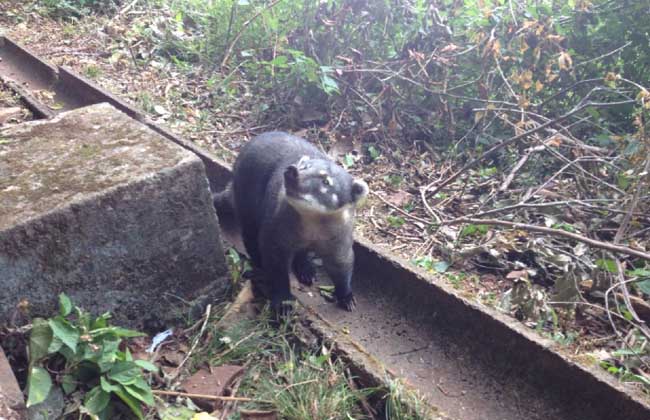
In animal taxonomy, the masked palm civet belongs to the class Mammalia, order Carnivora, family Viverridae, genus Paguma, and is one of the “Eight Treasures”. It is mainly distributed in tropical regions. Because it mainly eats fruit, its meat has little unusual odor, and it is regarded by the general public as a tonic. Let us take a look below at the market price of the masked palm civet!
The market price of masked palm civet
The market price of masked palm civet is generally 30 yuan to 40 yuan per jin, and the price varies depending on the market in each place.
The farming value of masked palm civet
The fat of the masked palm civet is a raw material in cosmetics production and can treat scalds. Civet skins produced in southern China have a relatively small size, while civet skins produced in the north have a relatively large size and can be made into leather gloves and the like. The tail hair and guard hair can be made into brushes and paintbrushes.
The current population status of masked palm civet
There are quite a lot of masked palm civets bred and raised by the general public, but the current status of wild populations is unclear. Rich profits have prompted a flourishing trend of poaching and selling masked palm civets in various places. According to the "Wildlife Protection Law of the People's Republic of China", the wild masked palm civet is a protected animal.
On May 11, 2003, researchers in Shenzhen and Hong Kong, China isolated a SARS-like virus from masked palm civet specimens. Beijing, Guangzhou and other places successively placed masked palm civets raised there under temporary sealed management.
In August 2003, China's State Forestry Administration determined the first batch of terrestrial wild animals that could be commercially operated and utilized. The masked palm civet, which had been the subject of much heated discussion, would have the label of “chief culprit of SARS” removed and become a dish on people's tables.
In 2013, Yuen Kwok-yung, a professor of infectious diseases at the University of Hong Kong, China's medical school, said that the natural host of the SARS virus is a bat called the “Chinese horseshoe bat”, and that the masked palm civet is only an intermediate host, not the natural host. Only then was the masked palm civet cleared of a 10-year injustice.