A Comprehensive Analysis of the Masked Palm Civet's Living Habits
The masked palm civet is a forest-edge mammal. It is mainly active in rainforests, evergreen or deciduous broad-leaved forests, sparse shrubland, or sparsely treed bare-rock areas interspersed with rocky hills. It often uses dense thickets, tree hollows, burrows and rock caves as hiding places. In winter and spring it mostly rests in caves, and in the hot summer it often hides in dense thickets. Let's take a look below at the living habits and native range distribution of the masked palm civet.
Morphological Characteristics of the Masked Palm Civet
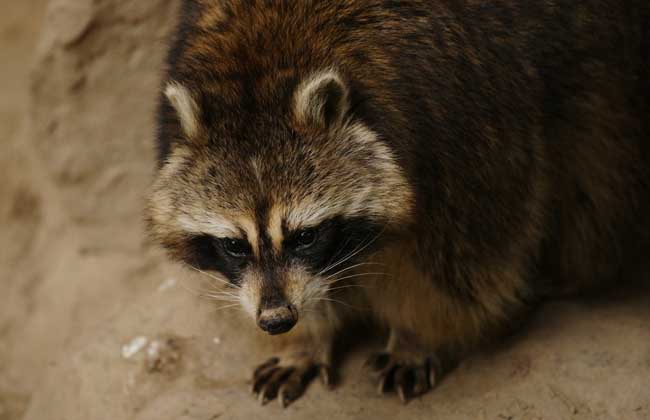
The masked palm civet has a body length of 48-50 cm, a tail length of 37-41 cm, and a body weight of 3600-5000 g. Its fur is short and coarse, and its body color is yellow-grayish brown. The fur on the head is darker, with a distinct four-striped band running from the forehead to the bridge of the nose. There are white patches below the eyes and below the ears, and the fur on the back is grayish brown. The back of the head, shoulders, ends of the limbs and the rear half of the tail are black. The limbs are short and sturdy, each with five toes. The toes end in claws, and the claws are somewhat retractable. The tail is long, about two-thirds of the body length.
The Living Habits of the Masked Palm Civet
The masked palm civet is a forest-edge mammal and a nocturnal animal. It likes to be active at dusk, at night and before sunrise, and is good at climbing. It is an omnivore and is quite fond of juicy fruits. It feeds mainly on wild fruits and grains, and also eats twigs and leaves. It also enters orchards to eat fruit and occasionally eats its own feces. It has scent glands near the anus, and when facing an enemy it releases a strong odor to drive it away.
Native Range Distribution of the Masked Palm Civet
The masked palm civet mainly inhabits forests, shrubland, rock caves, tree hollows or burrows, and can occasionally be found in cultivated land. In the wild it is distributed across Indochina, Indonesia, Myanmar, India, Bhutan, Nepal, and the vast areas of China south of North China, from the western suburbs of Beijing, Datong in Shanxi, the Qinling Mountains in Shaanxi, and western Sichuan in the north all the way to the southern Himalayas in Tibet, and south to Taiwan, China, Hainan Island and the southern edge of Yunnan. The nominate subspecies Paguma larvata is distributed in the southeastern provinces, and the subspecies endemic to Taiwan, China is distributed from low to high elevations in mountainous areas, but mainly in mid- to low-elevation mountainous areas and cultivated land.
In addition, in Jiangxi, Guangxi, Hainan, Fujian and Guangdong in China, among other places, large numbers of masked palm civets are raised in captivity.