What does the masked palm civet eat? A detailed look at its feeding habits
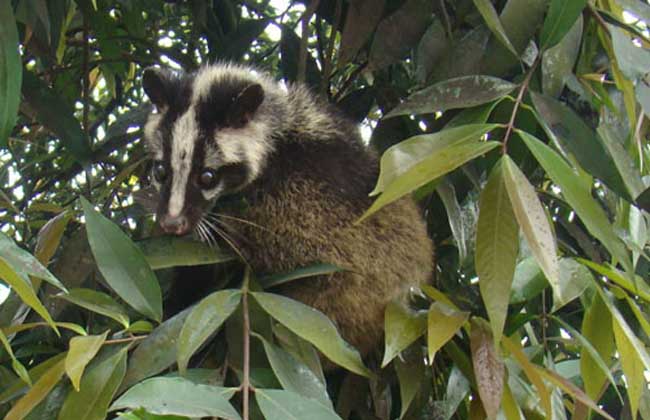
The masked palm civet is a precious wild animal belonging to the order Carnivora, family Viverridae, genus Paguma. Its body color is yellowish-gray-brown, its body is slightly plump, and its neck is short and thick, making it hard to distinguish from the body. It is an omnivorous animal that lives in forests, shrublands, rock caves, tree holes or burrows, and can occasionally be found in cultivated land. Let us take a look below at what the masked palm civet eats!
What does the masked palm civet eat?
The masked palm civet is an omnivorous animal. In the wild, it mainly feeds on wild fruits and grains, and also eats twigs and leaves, birds and bird eggs, frogs, rats, insects and similar foods.
Feed formulation for the masked palm civet
When the masked palm civet is raised in captivity, the feed is mainly plant-based feed such as cornmeal and wheat bran, appropriately supplemented with some animal-based feed such as meat-and-bone meal, fish meal, and livestock and poultry offal. If conditions permit, some fruits can be given. The feed ratio varies depending on the season.
Every year from February to March is the early breeding period, with animal-based feed accounting for 20%-30% and plant-based feed and other feed accounting for 70%-80%. From March to July is the breeding season, and high-quality feed rich in protein and vitamins and easy to digest should be given. During this period, the daily diet ratio is 50%-70% animal-based feed and 30%-50% plant-based feed and other feed. In autumn and winter, plant-based feed should be the main component.
Living habits of the masked palm civet
During the day, apart from eating and excreting feces and urine, the masked palm civet generally sleeps or lies motionless the rest of the time. It appears sluggish and lazy. When sleeping, it sometimes lies on its side, sometimes on its back, and sometimes curls into a hemisphere shape. When several masked palm civets are together, they sleep in a pile. The masked palm civet has keen night vision. After 22:00 at night, it becomes agile and energetic, beginning activities such as climbing, playing, seeking a mate, mating, foraging and excreting, and this continues until the early morning of the next day.
The masked palm civet is quiet, timid and easily startled, and its hearing is relatively keen. After being startled, most individuals show reduced appetite and libido, refusal to eat, difficult birth, refusal to nurse, random defecation and urination, and biting to death or swallowing their young. A small number of masked palm civets also release an extremely foul odor after being startled, then flee into the nest box and tremble incessantly. When the stimulating factor has not yet disappeared, the masked palm civet loses its usual judgment and timidity, blindly rushing out of the nest box and running and jumping wildly, often bumping and falling until its head is bruised and bleeding, and even dying from internal bleeding.
When winter arrives, the sexual characteristics of the masked palm civet completely disappear. Its fur is thick and glossy, its body is fat, and its movements are slow. Its reactions to light and to dangers it normally considers dangerous are relatively sluggish, and its food intake decreases markedly. Apart from a small amount of eating and excreting day and night, it remains asleep, slowly consuming through hibernation the nutrients stored in autumn. By early spring, the masked palm civet revives and begins activities such as playing, frolicking and climbing.