What to Do About the Low Reproductive Rate of Masked Palm Civets? Practical Methods to Improve Fertility
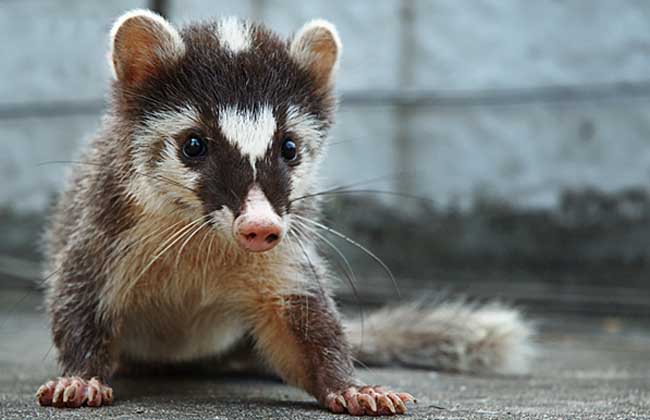
The masked palm civet is a seasonal polyestrous animal. Its estrus season runs from mid-January to late July each year. Wild masked palm civets can only produce 1 litter per year, with 1-2 young per litter. Under artificial domestication, they can produce 2 litters per year, with 3-4 young per litter. Below, let us take a look at the methods for improving the reproductive rate of masked palm civets!
Breeding High-Reproduction Populations
1. To obtain a breeding stock group with strong reproductive capacity, targeted selection is necessary.
(1) Female civets: gentle temperament, high littering rate, no fewer than 3 young per litter, teats neatly and symmetrically arranged, strong lactation capacity, good maternal instinct, and no bad habit of eating their young.
(2) Male civets: fast growth rate, high feed conversion efficiency, body weight of 6 kg-6.5 kg, strong virility, symmetrical testicles of moderate size, coat color required to be grayish-yellow, with clear black-and-white markings on the face. To obtain a breeding population with stable and excellent traits, it takes 3-4 generations of targeted breeding and accumulation to form.
2. Mating: Choose to mate when the female civet shows the most obvious signs of estrus. Mate early for old females, late for young females, and in the middle for middle-aged females. Mating methods can use repeat mating and double mating. Repeat mating refers to using the same male civet to mate twice successively within one estrus period of the female civet. Double mating refers to using 2 male civets to mate with the female civet successively within one estrus period. The interval between matings is about 20 hours.
Shortening the Production Cycle
1. Implement artificial feeding to shorten the nursing period of the young civets. Before May each year, for the first litter of young civets born, take the young out at 7-10 days of age and place them in a nursing box for warmth, prepare milk for feeding. The initial temperature requirement is 29°C, and after 20 days of age, lower it to 26°C. The formula for artificial milk is 25 g milk powder, 30 g malted milk, 10 g white sugar, 1 calcium tablet, 1 yeast tablet, mixed with boiled water to make 250 mL, cooled to 40°C, then add 3-5 mL of compound vitamin B solution, put into a milk bottle for feeding, 4 meals per day. After 30 days of age, begin training the young civets to eat, and after 45 days of age, the young civets can eat well and are gradually weaned. For supplemental feeding, put out small amounts frequently.
2. Raise male and female civets together to bring anestrous females into estrus earlier. Raising male and female civets in the same cage (pen) can promote estrus and mating in females. Alternatively, place non-estrous female civets near or in the same cage (pen) as females that are in estrus and mating, so that through the behavioral influence of the estrous females' estrus and mating, non-estrous females are stimulated to come into estrus and ovulate.
3. Drug treatment for female civets that remain anestrous after weaning. For female civets that still have not come into estrus 15-20 days after weaning, sex hormones can be used to induce estrus. Feed diethylstilbestrol tablets orally, 10 tablets each time, for 3 consecutive days. At the same time, appropriately increase the content of the trace element selenium and vitamin E in the food to improve the sexual function of male and female civets.
Improving the Survival Rate of Young Civets
1. Management of female civet parturition and rearing of young civets. After the female civet has been pregnant for 1 month, she should be placed alone in a delivery room for feeding, to prevent mutual disturbance and fighting among the civet group that could cause miscarriage or stillbirth. To ensure safe delivery of the female civet, the expected delivery date should be calculated based on the mating date. Establish a file for each breeding civet and record daily. The expected delivery date is the 58th day after the last meatball (vaginal plug) is found on the ground. More than 80% of female civets give birth on this day. Preparations for delivery should be made. For young civets that are "apparently dead," after clearing the mucus from the nose, artificial respiration can be performed. For female civets with "young-eating behavior," stop them promptly. When a female civet has difficulty giving birth, provide assistance or perform a cesarean section. If major bleeding occurs in the birth canal, immediately plug the vagina with absorbent cotton and promptly inject vitamin K, 10 mg. Female civets after delivery should be given warm brown sugar water to drink within 1-2 days, and the feeding amount should be increased after 3 days. Young civets within 7 days of age should be supplemented with iron, using "Futieli" by intramuscular injection, at a dose of 1 mL per animal.
2. Proper feeding and management is an important factor in improving the survival rate. Young civets should be dewormed promptly at 45 days of age, using levamisole mixed into feed according to the instructions, for 2 consecutive days. At the same time, feed sufficient trace elements, vitamins, calcium, etc., to strengthen the constitution and improve disease resistance. At 60 days of age, begin vaccination. First inject measles vaccine, and half a month later inoculate with canine five-combined vaccine. When vaccinating, the young civets must be healthy. At the same time, give the young civets 1 pill of Luyou Angong Pill each day for 3 consecutive days; the effect is especially good. When young civets are sick or weak, they can be fed Banlangen granules for 4-5 days, 2 packets per day. After the young civets recover, additionally feed Luyou Angong Pill, and the young civets can safely pass through the dangerous period.