What nutritional value does the Rosa roxburghii fruit have? A comprehensive guide in one article
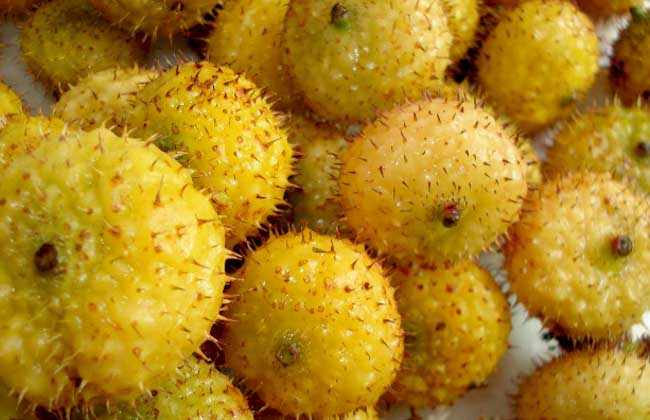
Rosa roxburghii is also known as ci suan li zi, ci li, mu li zi, song chun gui, jiu tou niao, ci mei guo, ci bo luo, and so on. It has very high nutritional and medicinal value. Its flowers, leaves, fruit and seeds can be used as medicine, and it has the effects of strengthening the stomach, promoting digestion, nourishing the body and stopping diarrhea. Its vitamin C content is extremely high, and it is known as the king of vitamin C among fruits. Now let us take a look together at the nutritional value of Rosa roxburghii!
The nutritional components of Rosa roxburghii
The nutritional content per 100 grams of Rosa roxburghii is 55 kcal of calories, 0.7 g of protein, 0.1 g of fat, 16.9 g of carbohydrates, 4.1 g of dietary fiber, 2800 mcg of vitamin D, 483 mcg of vitamin A, 2900 mcg of carotene, 6000 mg of vitamin P, 0.05 mg of thiamine, 0.03 mg of riboflavin, 2585 mg of vitamin C, 3 mg of vitamin E, 68 mg of calcium, 13 mg of phosphorus, and 2.9 mg of iron.
The dietary therapeutic value of Rosa roxburghii
1. Promotes digestion: helps with the secretion of gastric acid and the digestion of food, and is suitable for treating food accumulation syndrome.
2. Stops diarrhea: suitable for patients with the damp-heat type, such as symptoms of fever and a thick greasy tongue coating, with stool resembling egg drop soup and containing a small amount of mucus
3. Strengthens the spleen: suitable for abdominal distension, loose stools, poor appetite, limb fatigue and weakness caused by weak spleen qi and insufficient transportation and transformation.
4. Nourishes yin and tonifies deficiency: tonifies deficiency and damage, benefits essence qi, moistens the lungs and tonifies the kidneys, and is used for lung-kidney yin deficiency. It is suitable for tonifying those with long-term illness and bodily weakness or consumptive disease.
The nutritional value of Rosa roxburghii
1. Rosa roxburghii is rich in vitamin C, and its content is the highest among all plants. It is nearly 3 times that of sour jujube, which ranks second, and 30 times that of kiwifruit, the king of fruits, so it is called the king of vitamin C.
2. Rosa roxburghii is rich in B vitamins, which can protect the heart, reduce fatigue, enhance myocardial vitality and lower blood pressure.
3. The polysaccharides, tannic acid and other components contained in Rosa roxburghii can dispel phlegm and relieve cough, and have a nourishing effect on the throat.
4. Rosa roxburghii is cool in nature and can clear heat and calm the mind. Regular consumption can help restore blood pressure to normal and improve symptoms such as dizziness and blurred vision.
5. The lipase contained in Rosa roxburghii can increase the secretion of enzymes in the stomach, promote food digestion, and has therapeutic effects such as treating food accumulation and fullness, stimulating appetite and strengthening the body, and astringing to stop diarrhea.
6. The fruit of Rosa roxburghii contains 18 kinds of amino acids, including 8 essential amino acids for the human body.
7. Rosa roxburghii is rich in superoxide dismutase (SOD), with a content as high as 6000 U/100 ml, the highest among wild fruits. SOD significantly enhances immune function and has beauty benefits.
8. Rosa roxburghii also contains relatively many trace elements, such as selenium and zinc, which are beneficial for preventing and fighting cancer.
9. Rosa roxburghii contains relatively high dietary fiber, which helps with detoxification and beauty care.
10. Unlike ordinary fruits, Rosa roxburghii is also rich in tannins. Tannins have effects such as sterilization, beauty care, anti-aging, adsorbing heavy metals and clarifying liquids.
11. The vitamin E, B-sitosterol, SOD and catalase in Rosa roxburghii form a protective system that eliminates reactive oxygen species such as superoxide anion free radicals.