How much is Rosa roxburghii per jin? A detailed look at market prices
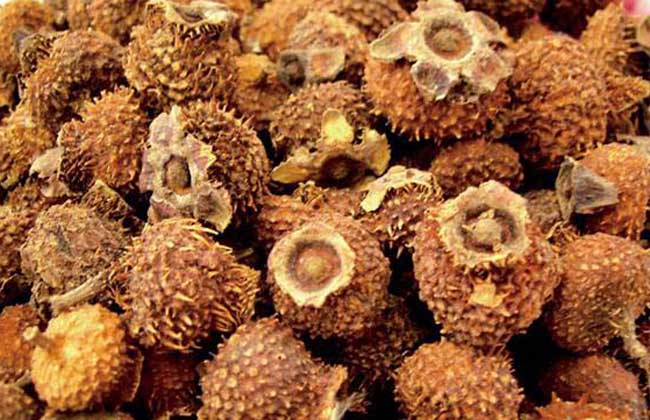
Rosa roxburghii has thick, plump flesh and a sweet-and-sour taste. The fruit is rich in sugar, vitamins, carotene, organic acids, more than 20 kinds of amino acids, and more than 10 kinds of trace elements beneficial to the human body. The fruit contains abundant vitamin C and is called the “King of Vitamin C”, with very high nutritional value and medicinal value. Let's take a look below at how much Rosa roxburghii costs per jin!
How much is Rosa roxburghii per jin
The market price of Rosa roxburghii is generally 20-40 yuan per jin, and prices vary depending on the place of origin and quality. Farmhouse self-harvested dried Rosa roxburghii fruit from Guizhou costs 36 yuan per jin, and this is still sold loose by weight, while some packaged dried Rosa roxburghii with a manufacturer's brand costs even more. The Guizhou specialty Shanlimei brand dried Rosa roxburghii, in a 132-gram package, costs 12 yuan, which works out to nearly 50 yuan per jin. Because things are precious when they are rare, overall the price of Rosa roxburghii is still relatively high, and ordinary families can only eat it occasionally.
How to select Rosa roxburghii
1. Look at the appearance: sun-dried finished Rosa roxburghii should be yellow or brown in appearance, with little surface damage and a hard shell. Conversely, inferior products have muddy, dull color, many impurities, and excessive color variation.
2. Observe the liquor color: when good tea is brewed with boiling water, the liquor should be yellow-brown, like black tea, and clear and translucent. Conversely, cloudy color indicates an inferior product.
3. Taste the tea: good Rosa roxburghii tea brewed with boiling water has a unique fresh, sweet-and-sour taste, while brewing with warm boiled water highlights the sourness (warm boiled water can reduce the loss of vitamin C, thus retaining more sourness). Inferior fruit brewed as tea has a strange taste, and sulfur-fumigated Rosa roxburghii tea has an astringent, bitter feel.
4. Smell the aroma: grab a handful of loose fruit, cup it for a while, then hold it under your nose and smell it. If you can smell a pungent, irritating odor, then it can be confirmed that it was fumigated with sulfur. For Rosa roxburghii that has already been packaged and sealed, when opening the package for the first time, you should immediately smell the unique fresh fragrance of Rosa roxburghii rushing toward you. Conversely, a strange or pungent smell indicates an inferior product or sulfur-fumigated fruit.
The distribution of Rosa roxburghii production areas
1. Guizhou Rosa roxburghii: Bijie, Liupanshui, and Tongren in Guizhou are the areas richest in Rosa roxburghii resources. Anshun now cultivates a seedless Rosa roxburghii, which is very popular among consumers, and it is also widely distributed around Guiyang. It can be said that Rosa roxburghii has a long history in Guizhou as a dual-purpose medicinal and edible variety. People eat it as a fruit, or use it to make wine, and this has become a habit. In the new harvest season from August to September each year, dried and fresh Rosa roxburghii fruit can be seen for sale on every street and alley, and some manufacturers regard it as the “Sacred Fruit of Yanhuang” and develop it, producing beverages that enter supermarkets, offering good quality at a low price.
2. Kaifeng Rosa roxburghii: Kaifeng in Henan began planting Rosa roxburghii in the old course of the Yellow River area in 1993. Compared with the southwestern planting areas, the Rosa roxburghii harvest season is about one month earlier, harvested during the dog days of July-August, and it is a main production area for dried Rosa roxburghii fruit.
3. Xiangxi Rosa roxburghii: The wild Rosa roxburghii resources in Xiangxi, Hunan, are also relatively abundant, mainly distributed in some townships of Fenghuang, Baojing, Jishou, Guzhang, Yongshun, Longshan and other counties and cities. According to statistics from before 2000, the entire prefecture had about 4 million plants, with an annual output of more than 500,000 kg. Because of its rich vitamin C content and unique flavor, Rosa roxburghii is mainly used to produce various types of Rosa roxburghii beverages such as Rosa roxburghii raw juice, Rosa roxburghii royal jelly, Rosa roxburghii wine, Rosa roxburghii cola, Rosa roxburghii soda, etc. It can also be used to produce Rosa roxburghii preserved fruit, Rosa roxburghii canned goods, Rosa roxburghii jam, etc.
4. Liangshan Rosa roxburghii: The Liangshan area of Sichuan has always had a history of using Rosa roxburghii in dishes (remove the thorns and wash clean, remove the seeds, pound into pieces and extract the juice, add a little salt, and it tastes delicious) and for making wine. Some areas of Xichang and Mianning have developed local specialty enterprises mainly focused on Rosa roxburghii drinks, fruit juice, and Rosa roxburghii wine.
5. Enshi Rosa roxburghii: There is a large distribution in river valley areas such as Lichuan City in the Enshi Autonomous Prefecture of Hubei. It is generally eaten as a wild fruit, and so far it has not yet been developed.