A Detailed Explanation of the Benefits, Effects, Nutritional Value and Market Price of Rosa roxburghii
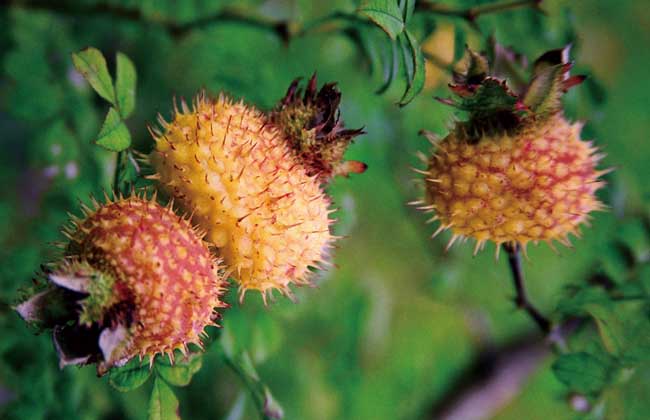
Market Price of Rosa roxburghii
The market price of Rosa roxburghii is generally 20-40 yuan per jin, and prices vary depending on the place of origin and quality. Farmhouse self-harvested dried Rosa roxburghii fruit from Guizhou costs 36 yuan per jin, and this is sold loose by weight, while some packaged dried Rosa roxburghii with a manufacturer's brand costs even more. The Guizhou specialty brand Shanlimei dried Rosa roxburghii, in a 132-gram package, costs 12 yuan, which works out to nearly 50 yuan per jin. Driven by the principle that scarce goods are precious, overall the price of Rosa roxburghii is still relatively high, and ordinary families can only eat it occasionally.
Production Area Distribution of Rosa roxburghii
1. Guizhou Rosa roxburghii: Bijie, Liupanshui and Tongren in Guizhou are the regions richest in Rosa roxburghii resources. Anshun now cultivates a seedless Rosa roxburghii, which is very popular among consumers, and it is also widely distributed around Guiyang. It can be said that Rosa roxburghii has a long history in Guizhou as a dual-purpose medicinal and edible variety. People have made it a habit to eat it as a fruit or use it to make infused liquor. When the new harvest season arrives each year from August to September, dried and fresh Rosa roxburghii fruit can be seen for sale in the streets and alleys, and some manufacturers regard it as the “Sacred Fruit of Yanhuang” and develop it, producing it into beverages that enter supermarkets, offering good quality at a low price.
2. Kaifeng Rosa roxburghii: Kaifeng in Henan began planting Rosa roxburghii in the old course of the Yellow River area in 1993. Compared with the southwestern growing areas, the Rosa roxburghii harvest season comes about one month earlier, harvested during the dog days of July-August, and it is a major production area for dried Rosa roxburghii fruit.
3. Xiangxi Rosa roxburghii: The wild Rosa roxburghii resources in Xiangxi, Hunan, are also relatively abundant, mainly distributed in some townships of counties and cities such as Fenghuang, Baojing, Jishou, Guzhang, Yongshun and Longshan. According to statistics before 2000, the whole prefecture had about 4 million plants, with an annual output of more than 500,000 kg. Because of its rich vitamin C content and unique flavor, Rosa roxburghii is mainly used to produce various types of Rosa roxburghii beverages such as Rosa roxburghii raw juice, Rosa roxburghii royal jelly, Rosa roxburghii wine, Rosa roxburghii cola and Rosa roxburghii soda, and can also be used to produce Rosa roxburghii preserved fruit, Rosa roxburghii canned goods, Rosa roxburghii jam and so on.
4. Liangshan Rosa roxburghii: The Liangshan area of Sichuan has always had a history of using Rosa roxburghii in cooking (remove the thorns and wash clean, remove the seeds, pound into pieces and squeeze out the juice, add a little salt, and the taste is delicious) and of making infused liquor with it. In parts of Xichang and Mianning, local specialty enterprises focusing on Rosa roxburghii drinks, juice and Rosa roxburghii wine have already been developed.
5. Enshi Rosa roxburghii: It is widely distributed in river valley areas such as Lichuan City in the Enshi Autonomous Prefecture of Hubei, and is generally eaten as a wild fruit. Up to now, it has not yet been developed.
Nutritional Value of Rosa roxburghii
1. Rosa roxburghii is rich in vitamin C, with a content that is the highest among all plants, nearly 3 times that of wild jujube, which ranks second, and 30 times that of the king of fruits, kiwifruit. Therefore it is called the king of vitamin C.
2. Rosa roxburghii is rich in B vitamins, which can protect the heart, reduce fatigue, enhance myocardial vitality and lower blood pressure.
3. The polysaccharides and tannic acid and other components contained in Rosa roxburghii can resolve phlegm and relieve cough, and have a nourishing effect on the throat.
4. Rosa roxburghii is cool in nature and can clear heat and calm the mind. Regular consumption can restore blood pressure to normal and improve symptoms such as dizziness and blurred vision.
5. The lipase contained in Rosa roxburghii can increase the secretion of enzymes in the stomach, promote food digestion, and has therapeutic effects such as treating food stagnation and abdominal fullness, stimulating the appetite and strengthening the body, and astringing to stop diarrhea.
6. The Rosa roxburghii fruit contains 18 kinds of amino acids, including 8 essential amino acids for the human body.
7. Rosa roxburghii is rich in superoxide dismutase (SOD), with a content as high as 6000U/100 ml, the highest among wild fruits. SOD has the obvious effect of enhancing the body's immunity and beautifying the skin.
8. Rosa roxburghii also contains relatively many trace elements, such as selenium and zinc, which are beneficial for preventing and fighting cancer.
9. Rosa roxburghii contains relatively high dietary fiber, which helps with detoxification and beauty care.
10. Unlike ordinary fruits, Rosa roxburghii is also rich in tannins. Tannins have effects such as sterilization, beauty care, anti-aging, adsorption of heavy metals and clarification of liquids.
11. Vitamin E and B-sitosterol, SOD and catalase in Rosa roxburghii form a protective system that eliminates free radicals such as superoxide anions and other reactive oxygen species.
Benefits and Effects of Rosa roxburghii
[Nature and Flavor] Sweet and sour in taste, cool in nature.
[Meridian Entry] Spleen, stomach and large intestine meridians.
[Benefits] Strengthens the stomach and aids digestion, clears heat and relieves summer heat. Used to treat conditions such as food stagnation and abdominal distension, dysentery, enteritis and vitamin C deficiency.
1. Enhancing the body's immune function: Rosa roxburghii juice not only significantly affects the non-specific immune function of animals, such as promoting the proliferation of normal splenocytes and enhancing the phagocytic function of intraperitoneal macrophages, but also has obvious effects on specific immune function, such as increasing the number of B lymphocytes, enhancing the antibody-secreting function of B lymphocytes, increasing peripheral blood T lymphocytes, and enhancing the activity of splenic natural killer cells.
2. Delaying aging: Research has found that Rosa roxburghii juice can significantly reduce the free radical content and lipofuscin levels in the heart, liver and brain of animals, increase the numbers of lymphocytes, red blood cells, white blood cells and neutrophils, and raise serum protein content, suggesting that Rosa roxburghii has the effect of delaying aging. Japanese scholars have found through research that Rosa roxburghii juice has a significant scavenging effect on superoxide free radicals, hydroxyl free radicals, diphenyl—2-picrylhydrazyl free radicals and carbon-centered free radicals.
3. Anti-atherosclerosis: Consuming Rosa roxburghii juice can lower the levels of cholesterol, triacylglycerol and lipid peroxides in the blood, increase SOD activity, regulate lipid metabolism in hyperlipidemia, reduce blood viscosity, alleviate lipid peroxidation damage, reduce the degree of arterial lesions, and prevent hypertension and arteriosclerosis. Rosa roxburghii juice can reduce various lipoproteins in a dose-dependent manner, and its effect is significantly higher than that of the same dose of vitamin C and vitamin E preparations. After patients with coronary heart disease took Rosa roxburghii juice orally, the levels of vitamin C and vitamin E in plasma increased significantly.
4. Detoxifying effects
① Lead: Rosa roxburghii juice can significantly increase the lead excretion of lead-poisoned rats, and can supplement SOD in the body, significantly increase SOD activity and reduce lipid peroxide content, and significantly enhance the immune function of lead-poisoned mice. The lead-removing effect of Rosa roxburghii juice has a more comprehensive action than EDTA lead removal, and at the same time as removing lead it has no effect on the essential trace elements in the body.
② Fluorine: Rosa roxburghii juice can antagonize the reduction in antioxidant capacity of liver and kidney tissues caused by high fluorine, antagonize the enhancement of lipid peroxidation in liver and kidney tissues, and bring the lipid peroxide content of liver and kidney back down, thereby antagonizing liver and kidney damage, and significantly bringing back down the elevated liver triglyceride content and γ-glutamyl transferase activity.
③ Manganese: Manganese poisoning can increase the body's manganese deficit and raise the copper content in the body while lowering the zinc content in the body. Rosa roxburghii juice can significantly increase fecal manganese excretion, lower the manganese content in serum and brain tissue, and can supplement the zinc content in serum and brain tissue.
④ Mercury: Rosa roxburghii juice can significantly increase urinary mercury excretion and serum vitamin C content, and significantly bring back up the levels of reduced glutathione (GSH) in serum, liver, brain and kidney caused by chronic mercury poisoning.
⑤ Cadmium: Rosa roxburghii juice not only has a cadmium-removing effect, but can also antagonize the damage from free radicals and lipid peroxidation and protect kidney function.
5. Anti-tumor effect: Modern medicine believes that N-nitroso compounds are a strong carcinogen, and Rosa roxburghii can block the synthesis of nitrosamines in the body. Research on voluntary human subjects has proven that Rosa roxburghii can reduce the amount of nitrosamine synthesized in the body by 75%. Rosa roxburghii juice has a significant inhibitory effect on the proliferation of human leukemia K562 tumor cells, and the active components extracted from Rosa roxburghii also have a significant inhibitory effect on the proliferation of gastric cancer (MKN-45TSGC-7901), human liver cancer (SM-MMC7721) and endometrial adenocarcinoma (JEC) cells.
6. Stomach-strengthening effect: The Rosa roxburghii fruit can strengthen the spleen and aid digestion, and has an atropine-like pain-relieving effect. The decoction of Rosa roxburghii root has medicinal value in preventing and treating stomach diseases and protecting the gastric mucosa.
7. Anti-stress effect: Rosa roxburghii can significantly enhance the hypoxia tolerance and anti-fatigue ability of mice. Rosa roxburghii polysaccharides can also improve the ability of mice to tolerate high and low temperatures.
8. Preventing and treating diabetes: Rosa roxburghii flavonoids can very significantly lower serum glucose and triglycerides in mice, raise serum insulin, significantly increase pancreatic SOD and catalase activity, and significantly reduce malondialdehyde (MDA), thereby having the effect of protecting the pancreas and preventing diabetes.
9. Other effects: Research shows that Rosa roxburghii can also improve the fertility of male mice. In addition, Rosa roxburghii also has multiple effects such as eliminating fatigue, improving sleep, adding vitality, eliminating spots and beautifying the skin, and has the effect of strengthening the body.