Red mushroom cultivation technology video tutorial, detailed explanation of planting methods
Red mushroom is an edible fungus of the order Agaricales, family Russulaceae, genus Russula. It is rich in nutrients and has the effects of tonifying deficiency and nourishing blood, nourishing yin, cooling and detoxifying, and anti-tumor, and its cultivation economic value is relatively high. However, artificial cultivation is still quite difficult at present. Usually, production can be developed by artificial propagation promotion and creating fungus forests to produce mushrooms, similar to matsutake. Now let us take a look at the red mushroom cultivation technology video together!
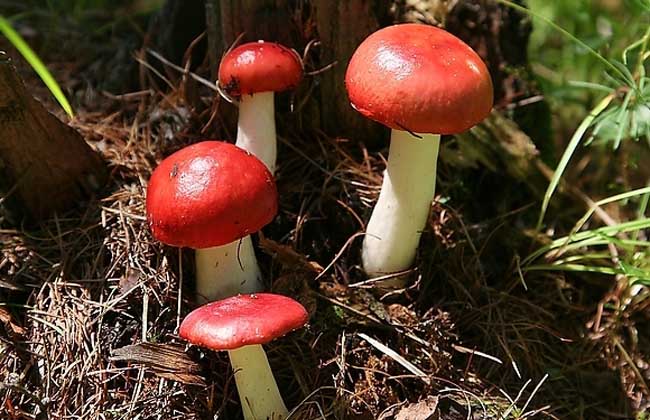
Cultivation methods of red mushroom
1. Bag cultivation of red mushroom: When the temperature of the material bag drops below 28°C, under sterile conditions inoculate the red mushroom spawn onto the culture medium in the bag, and seal the opening well with a cotton plug. After inoculation, move it indoors at 23°C-25°C for mycelial growth culture, with air relative humidity below 70%, maintain air circulation, and prevent a sudden increase in indoor carbon dioxide concentration. Mycelial growth culture usually takes about 30 days. After the mycelium has fully colonized the bag, move the fungus bags to an outdoor shade shed, remove the bags, and place them horizontally on sterilized beds in the shed, then cover with humus soil 3-5 cm. Seal the surroundings of the bed with soil, allowing the fungus logs to continue mycelial growth culture in the bed.
2. Bed cultivation of red mushroom: Spread the fermented material in the bed, with a material thickness of 15-18 cm, and sow in 3 layers. That is, first spread a layer of material on the bed surface, sow spawn, continue to spread a layer of material, sow a layer of spawn, and then cover with another layer of material, forming 3 layers of material and 2 layers of spawn. Generally, 10 kg of dry material is used per square meter, and the amount of spawn accounts for 10% of the material amount. After sowing, level the material surface and press lightly. Then set up an arched plastic film cover above the bed to protect from rain. When the mycelium has consumed 2/3 of the material, cover with soil 3-5 cm. However, attention should be paid to ventilation to keep the air in the bed fresh, so as to facilitate mycelial development.
Isolation of red mushroom mother culture
1. Sterilization and disinfection: Cut off impurities at the base of the mushroom body, soak in 0.1% mercuric chloride solution for 1-2 minutes, take it out and rinse with sterile water 2-3 times, then wipe dry with sterile gauze.
2. Cutting tissue blocks: Place the treated mushroom and the instruments used for isolation together into an inoculation box. Take a glass container, put 3-5 grams of potassium permanganate into it, then pour in 8-10 milliliters of formaldehyde, and fumigate for 30 minutes before operating. Or use aerosol disinfectant for sterilization. Then use a scalpel to split the mushroom longitudinally into two halves, cut tissue blocks 3 mm square in the center of the stipe with the knife, pick them up with an inoculation needle, quickly place them into test tubes, and immediately plug with cotton plugs.
3. Inoculation and culture: Place the test tubes with the inoculated tissue blocks under constant temperature conditions at 24°C for 3 days. The mycelium begins to germinate. After repeated purification, the red mushroom mother culture can be obtained. Red mushroom mycelium grows relatively slowly. After 10 days of inoculation, the average daily growth rate is 0.67 cm. On PDA medium, the mycelium appears white to yellow, with sparse aerial mycelium and yellow-brown pigment appearing. After 10 days, through screening, select the test tubes with fast mycelial development and continue culturing, and eliminate those contaminated with miscellaneous bacteria and with weak growth. After 20-25 days of culture, the mycelium finally fills the test tube.
Red mushroom culture material formulas
1. Cottonseed hull 86%, wheat bran 8.5%, lime 2%, calcium carbonate 1%, superphosphate 2%, urea 0.5%.
2. Soybean straw 48%, peanut shell 20%, cottonseed hull 19%, wheat bran 10%, superphosphate 1%, calcium carbonate 2%, material-to-water ratio 1:1.3.
3. Cottonseed hull 90%, wheat bran 6%, lime 1%, superphosphate 1.5%, calcium carbonate 1%, urea 0.5%, material-to-water ratio 1:1.3.
4. Reed 50%, miscellaneous sawdust 16%, cottonseed hull 30%, lime 1.5%, superphosphate 2%, magnesium sulfate 0.5%. Material-to-water ratio 1:1.3.
Cultivation technology of red mushroom
1. Site selection: For a mushroom site using fermented material bed cultivation, choose an outdoor site near mountains and water, with fertile soil and facing the sun while sheltered from the wind. The bed width is about 1.3 m, the bed surface is shaped like a turtle back, drainage ditches are opened around it, and a shade shed is built above to maintain a light intensity of “three parts sun, seven parts shade”.
2. Piling material and inoculation: Spread the fermented material on the bed, with a material thickness of 15-18 cm, and sow in 3 layers, just like the pile material sowing of Dictyophora. That is, first spread a layer of material on the bed surface, sow spawn, continue to spread a layer of material, sow a layer of spawn, and then cover with another layer of material, forming 3 layers of material and 2 layers of spawn. Generally, 10 kg of dry material is used per square meter, and the amount of spawn accounts for 10% of the material amount. After sowing, level the material surface and press lightly. Then add a plastic film rain shelter above the bed. When the mycelium has consumed 2/3 of the material, cover with soil 3-5 cm. However, pay attention to ventilation and keep the air in the bed fresh, which is beneficial to mycelial development.
3. Fruiting management: After the fungus bags are arranged in the outdoor bed, management should maintain the moisture of the casing soil. The soil moisture content should not be lower than 20%. Outdoor field cultivation relies on soil moisture, and generally there is no need to spray water. If the climate is dry and the soil surface turns white, water can be sprayed to maintain moisture, but it must not seep into the material, so as to avoid the mycelium becoming moldy and rotting. After casing soil, mushrooms generally emerge in about 20 days. At this time, the temperature should be kept in the range of 23°C-26°C, and artificial temperature difference stimulation should be carried out, alternating dry and wet, to promote mycelial knotting to form primordia and differentiate into mushroom buds. The mushroom shed should be “three parts sun, seven parts shade”. During the fruiting body development stage, uncover the film for ventilation every morning, and combine with spraying water once. The space relative humidity should be kept at 90% as suitable. Keep the air in the mushroom shed fresh. Keep the temperature in the range of 23°C-28°C.
4. Harvesting and processing
① Reasonable harvesting: Wild red mushroom fruiting bodies can be harvested when they are 60-70% mature. Reasonable harvesting has a relatively large relationship with the commercial value of red mushrooms. According to surveys, unopened red mushrooms at 60% maturity have a market purchase price of 600-850 yuan/jin, while fully mature ones are 400-650 yuan/jin. Generally, overmature opened mushrooms or those already showing signs of decay have mostly been damaged by insects and have maggots inside, losing commercial value, so they should not be harvested and should be left in the forest land as a breeding source, which is beneficial for mushroom growth the following year.