Okra: A Complete Guide to Its Benefits, Recipes, and Growing Methods
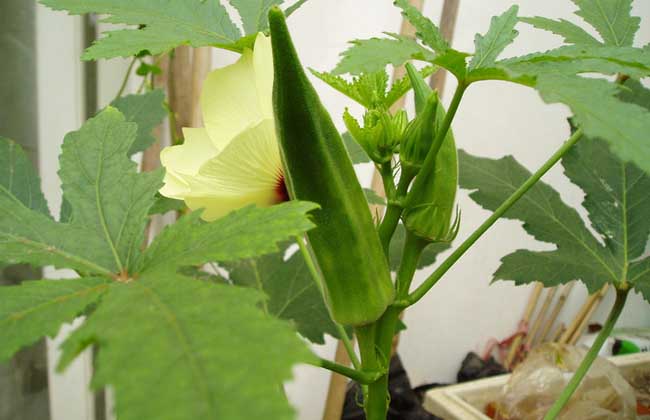
Nutritional Value of Yellow Okra
1. The young pods of yellow okra are rich in pectin and dietary fiber. The viscous state of its pectin is very rare in the plant kingdom, and both its proportion of dietary fiber and the proportion of soluble dietary fiber within it are very high among plants.
2. The young pods of yellow okra are rich in vitamin A, carotene, as well as vitamin C, E, etc. In particular, its content of vitamin A and carotene ranks first among all currently discovered animals and plants.
3. The young pods of yellow okra also contain various trace elements such as selenium, calcium, iron, phosphorus, and potassium, but the content is not especially abundant.
Okra Benefits and Effects
[Nature and Flavor] Bitter in taste, cold in nature.
[Meridians Entered] Kidney, stomach, and bladder meridians.
[Effects] Tonifies yang, tonifies the kidney, promotes qi flow, clears heat and drains dampness. Suitable for gastritis, cancer, gastric ulcers, anemia, indigestion, and other conditions.
1. Aids digestion: The viscous substances in yellow okra can promote gastrointestinal motility, which helps digestion, benefits the stomach and intestines, and improves hypoxia tolerance.
2. Protects the liver: The pectin and polysaccharides in yellow okra have liver-protective effects.
3. Prevents colon cancer: The viscous substances in yellow okra contain 50% cellulose, which helps prevent colon cancer.
4. Calcium supplementation and weight loss: Yellow okra not only contains calcium comparable to fresh milk, but its calcium absorption rate is 50-60%, which is 1 times higher than that of milk, making it an ideal calcium source. At the same time, yellow okra is a low-energy food and is a very good food for weight loss.
5. Kidney-tonifying effects: Yellow okra is also called goat horn bean, and Americans call it "plant Viagra", which shows its kidney-tonifying effects. For young and middle-aged adults and athletes, regular consumption can eliminate fatigue and quickly restore physical strength. Of course, this effect also applies to all groups of people.
How to Grow Yellow Okra
1. Planting time: For open-field cultivation of yellow okra, sowing is mostly done from April to June across the north and south, with harvest from July to October. In North China, sowing is generally done from mid-to-late April to May. In cold northern regions, solar greenhouses and plastic tunnels are often used for centralized seedling raising, and after the late spring frost in early spring, the seedlings are transplanted into the field.
2. Land preparation and fertilization: For the plot prepared for growing yellow okra, after the previous crop is harvested, deep plowing should be carried out promptly in autumn and winter, with deep plowing of 30 cm, to deepen the cultivated soil layer, further loosen the soil, and enhance the soil's water storage and fertilizer retention capacity. Before planting, make the land fine, level, loose, and soft, with a loose top and firm bottom. Yellow okra requires more fertilizer. Spread 5000 kg of decomposed barnyard manure and 20 kg of compound fertilizer per mu on the ground before land preparation, then plow deeply into the soil, harrow finely and mix evenly so that soil and fertilizer are blended, then open furrows and make beds.
3. Thinning and intertillage: After yellow okra emerges, thin the seedlings promptly. When there are 2-3 true leaves, remove diseased, weak, and small seedlings, leaving 2 plants per hole. After the seedlings emerge, carry out intertillage and weeding promptly, about once every 10 days. Before the first flower opens, intertillage should be strengthened and seedlings appropriately hardened to promote root development. Before the rows close, carry out intertillage and earth up to prevent the plants from lodging.
4. Fertilizer and water management: Yellow okra is relatively tolerant of drought and moisture, and during the growth period it requires relatively high air and soil humidity, especially during the flowering and fruiting period when sufficient water is needed. Yellow okra has a long growth and harvest period, with the entire growth period about 100 days. On the basis of applying sufficient base fertilizer, apply appropriate topdressing. The first topdressing is carried out after emergence, applying 6-7 kg of urea per mu.
5. Setting up supports and removing leaves: In summer, supports should be set up to prevent lodging. A 1-meter-long bamboo pole or branch can be inserted beside the plant roots to support the plant. In the early growth stage, prevent excessive vegetative growth from causing spindly growth. In the middle and late stages, promptly remove the old leaves on each node below the harvested young pods. For fruits retained for seed, promptly pinch off the growing tips, which can promote the seed fruits to mature and help the seeds become plump, improving seed quality.
6. Timely harvest: Yellow okra flowers and sets pods when it reaches a plant height of about 30 cm and has 7-9 true leaves from sowing, and the first young pod takes about 60 days to form. After that, the entire harvest period lasts 60-100 days, and the whole growth period can reach about 120 days or even longer.
7. Seed retention and storage: The seed collection technique for yellow okra is relatively simple. After it enters the growth period, vegetative growth and reproductive growth proceed together. To avoid inhibiting growth and reducing yield, the lower fruits set early should not be retained for seed. The pods at the top of the plant are difficult to fully mature, and even if fully mature, the seeds are not plump and the quality is poor, so they are not suitable for seed retention. Therefore, it is advisable to select and retain old mature pods from the middle of robust plants that conform to the characteristics of this variety, with plump seeds (the fruit shell turns yellow-brown and cracks appear), then dry them in the sun, thresh, clean, and store in cloth bags for later use.
Complete Collection of Okra Recipes
1. Cold Tossed Okra
[Ingredients] 300 g okra, 1 small spoon mustard, 1.5 large spoons oyster sauce, 1 small spoon light soy sauce, 1 small spoon sugar, 1 small spoon sesame oil, 1 large spoon toasted sesame seeds, 1 small spoon salt, corn oil.
[Method] ① Wash the okra clean and cut off about 2/3 of the stem end. Do not cut the okra open, to prevent the mucus inside from being lost during blanching. ② Put the mustard, oyster sauce, light soy sauce, sugar, and sesame oil into a bowl and stir evenly. ③ Put water in a pot and bring to a boil, add 1 small spoon salt and corn oil, blanch the okra for about 3 minutes until the color turns emerald green, then scoop it out. ④ Immediately put it into ice water to soak and cool, to keep it crisp and green. ⑤ Arrange the okra on a plate, pour over the sauce, and sprinkle with toasted sesame seeds.
[Tips] ① Okra should not be blanched too long; 3 minutes is appropriate. If cooked too long, it will not be crisp and will become sticky, with a poor texture. ② It is best to mix and eat immediately; do not leave it for too long, as this affects the crispness.
2. Stir-Fried Pork Slices with Okra
[Ingredients] 50 g cleaned pork slices, 10 yellow okra pods.
[Method] ① Wash the yellow okra clean, slice, and set aside. ② Put an appropriate amount of cooking oil into the pot and turn on medium heat. ③ When the pot is hot, add the pork slices and stir-fry. After the pork slices become fragrant, add the yellow okra and continue stir-frying. ④ Add an appropriate amount of salt and yellow wine and continue stir-frying. ⑤ When the dish is cooked, add an appropriate amount of MSG and pepper powder, mix evenly, and serve.
3. Stir-Fried Yellow Okra with Tomato
[Ingredients] 6 yellow okra pods, 1 tomato.
[Method] ① Wash the yellow okra and tomato clean, slice, and set aside. ② Put an appropriate amount of cooking oil into the pot and turn on medium heat. ③ When the pot is hot, add the tomato and stir-fry. After tomato juice is released, finally add the yellow okra and stir-fry. ④ Add an appropriate amount of salt and yellow wine and continue stir-frying. ⑤ After the dish is cooked, add an appropriate amount of MSG, mix evenly, and serve.
4. Stir-Fried Okra with Eggs
[Ingredients] 3 yellow okra pods, 2 eggs.
[Method] ① Wash the yellow okra clean, slice, and set aside; beat the eggs and set aside. ② Put an appropriate amount of cooking oil into the pot and turn on medium heat. ③ When the pot is hot, add the sliced yellow okra and stir-fry, then add the beaten eggs and stir-fry. ④ Add an appropriate amount of salt, yellow wine, MSG, and pepper powder, mix evenly, and serve when the dish and eggs are cooked.
5. Braised Beef with Okra
[Ingredients] 450 g beef shank, 200 g okra, stem ends removed, 140 g tomato, cut into pieces, 100 g onion, cut into pieces, 1/2 tea spoon cornstarch, 2 table spoons vegetable oil, 1 table spoon wine, 3 table spoons tomato paste, 2 table spoons soy sauce, 1/2 tea spoon sugar, 1/2 tea spoon salt.
[Method] ① Blanch the beef shank in boiling water for 2 minutes, take it out, and cut it against the grain into 2 cm thick slices. ② Take a small bowl, add the cornstarch and 2 table spoons water, and mix into cornstarch water. ③ Heat oil in a wok over high heat. Add the onion and saute until fragrant, add the beef and wine, and stir-fry briefly. Then add the tomato paste, tomato, 480 ml water, soy sauce, sugar, and salt. After bringing to a boil, reduce to low heat and simmer for about 1 hour, until the beef is tender. Add the okra and cook until done. Thicken with cornstarch water and serve.