What are the main characteristics of the ginkgo tree?
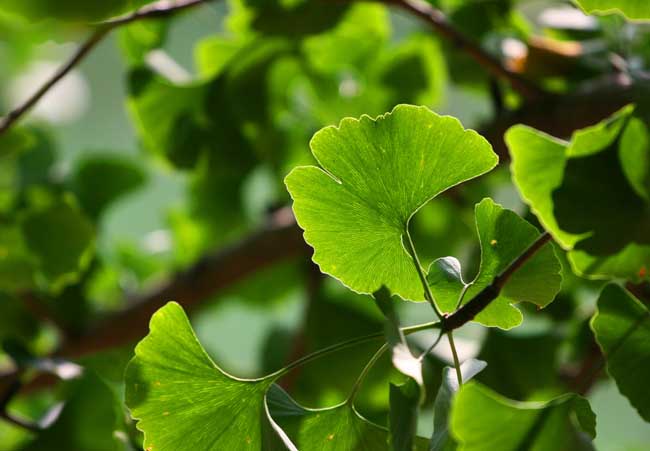
The ginkgo tree, also known as the white fruit tree, grows relatively slowly and has an extremely long lifespan. Under natural conditions, it takes more than twenty years from planting to fruiting, and only after forty years can it produce fruit in large quantities. It is therefore also called the "grandfather-grandson tree," carrying the meaning of "the grandfather plants it and the grandson gets to eat," making it the venerable elder of trees. The ginkgo tree has ornamental, economic and medicinal value, and every part of it is a "treasure." The ginkgo tree is the oldest gymnosperm left over after the Quaternary glaciation, and is one of the most precious tree species in the world, which is why it is regarded as a "living fossil" in the plant kingdom. Below, the editor will introduce the characteristics of the ginkgo tree!
General characteristics of the ginkgo tree
1. Leaves: fan-shaped, with a stalk; leaves on long shoots mostly have 2 lobes, while leaves on short shoots often have wavy notches.
2. Sporophyll strobili: unisexual, on separate plants.
3. Microsporophyll strobili: catkin-like, borne in the axils of scales at the tips of short shoots. The microsporophylls have short stalks, and the stalk tips usually bear 2 pendulous microsporangia.
4. Microspores: oblong, with a sunken distal sulcus along the longitudinal axis, and the outer wall has minute protrusions.
5. Megasporophyll strobili: simple, usually with a long stalk; the stalk tip bears 2 ring-shaped megasporophylls, specially called a collar, each bearing 1 orthotropous ovule.
6. Seeds: nearly spherical, with the seed coat differentiated into 3 layers. The embryo has 2 cotyledons; chromosome number: x=12.
Primitive characteristics of the ginkgo tree
The ginkgo possesses many relatively primitive characteristics. Its vein pattern is a "dichotomously forking venation," which is unique among gymnosperms, yet very common among ferns. When its male flower pollen germinates, it produces only two ciliated, motile sperm. This characteristic is found among gymnosperms only in cycads, and is also very common among ferns. This shows that the ginkgo is a more ancient plant than trees such as pines, firs and cypresses. Therefore, botanically it is classified as a single class, order, family, genus and species.
Identifying characteristics of the ginkgo tree
Deciduous tree, leaves fan-shaped, scattered on long shoots and clustered on short shoots. Strobili unisexual, with male and female flowers on separate plants. Seeds drupe-like.
Morphological characteristics of the ginkgo tree
It is a large deciduous tree, with a diameter at breast height of up to 4 m. The bark of young trees is nearly smooth and light gray, while that of large trees is grayish brown, with irregular vertical fissures, and it has long shoots and slow-growing spur-like short shoots. Leaves alternate, radially scattered on long shoots and clustered in groups of 3 to 5 on short shoots, with slender petioles, fan-shaped, light green on both sides, more or less notched or 2-lobed at the broad apical margin, 5 to 8 (to 15) cm wide, with numerous forked and fine veins. Male and female flowers on separate plants, rarely on the same plant, strobili solitary in the leaf axils of short shoots; male strobili catkin-like, with numerous stamens, each with 2 anthers; female strobili have long stalks, the stalk tip usually divides into two forks (rarely 3 to 5 forks), and each fork tip bears 1 ovule with a disc-shaped collar, usually 1 ovule developing into a fertile seed.
Seeds drupe-like, with long stalks, pendulous, elliptic, oblong-obovate, ovoid or nearly spherical, 2.5 to 3.5 cm long, 1.5 to 2 cm in diameter; aril fleshy, covered with a white bloom, light yellow or orange-yellow when mature; seed coat bony, white, usually with 2 (rarely 3) longitudinal ridges; inner seed coat membranous
Summary: The ginkgo tree is tall and upright, with fan-shaped leaves. Its crown is large and shade-giving, and it has a cooling effect. The leaf shape is quaint and elegant, and its lifespan is long. It is free of pests and diseases, does not pollute the environment, and its trunk is smooth and clean, making it a famous pollution-free tree species that is beneficial to ginkgo propagation and enhances the landscape. It has strong adaptability, and the ginkgo has very broad requirements for climate and soil. It resists smoke and dust, fire and toxic gases. The ginkgo tree is tall, with a straight trunk and graceful form, emerald green in spring and summer and golden in late autumn, making it an ideal tree species for landscaping and street planting. It can be used as an ideal cultivated tree for landscaping, street planting, highways, field shelterbelts and windbreak belts. It is listed among China's four major long-lived ornamental tree species (pine, cypress, pagoda tree and ginkgo).