Ginkgo tree planting technique video tutorial, teaching you scientific cultivation
Ginkgo, also known as white fruit, gongsun tree, duck-foot tree, etc., is a deciduous tree of the genus Ginkgo in the family Ginkgoaceae. It is the oldest relict plant among the gymnosperms left after the Quaternary glaciation, and has the reputation of being a living fossil. It is an excellent tree species in modern landscaping and is often used in parks and street planting. Let us take a look at the ginkgo tree planting technique video together below!
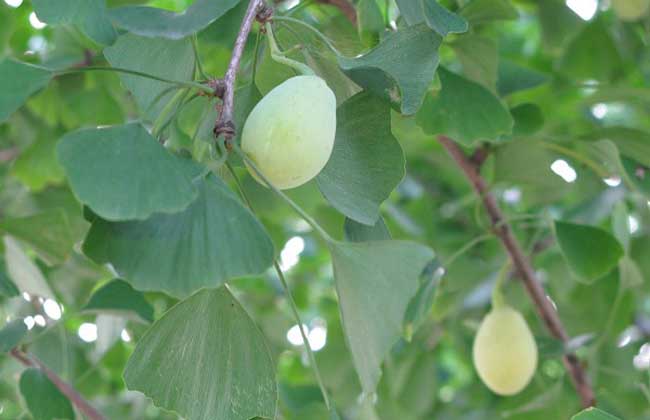
Growth habits of the ginkgo tree
The ginkgo tree prefers appropriately moist, well-drained, deep loam soil. It is suitable for growing in subtropical monsoon regions with relatively superior water and heat conditions. It can grow well in both acidic soil and calcareous soil, but neutral or slightly acidic soil is most suitable. It is not tolerant of waterlogged areas and is relatively drought-tolerant, but grows poorly in overly dry places, rocky slopes, or low-lying wet areas. Early growth is relatively slow, and its ability to produce root suckers is strong. Female trees generally begin to bear fruit after about 20 years, and 500-year-old large trees can still bear fruit normally. Generally, buds break and leaves unfold from late March to early April, flowering occurs from early to mid-April, seeds mature from late September to early October, and leaves fall from late October to November.
Propagation techniques for the ginkgo tree
1. Cutting propagation: Cutting propagation can be divided into hardwood cutting and softwood cutting. Hardwood cutting is suitable for breeding seedlings for large-scale landscaping, while softwood cutting is suitable for breeding a small number of seedlings for households or landscaping units. Hardwood cutting is generally carried out in spring from March to April, and softwood cutting from late May to mid-June.
2. Division propagation: Division propagation is generally used to cultivate rootstock and landscaping seedlings. It is prone to producing root suckers, especially in 10-20 year old trees, which produce the most suckers. The method is to remove the soil around the root zone, cut off the suckers with fibrous roots from the parent plant with a knife, and plant and cultivate them separately.
3. Grafting propagation: Grafting propagation is mostly used in fruit production. Green branch grafting can be carried out from late May to early August, but grafting cannot be done under high-temperature and drought conditions, especially not at noon on sunny days, and rainy days should also be avoided for grafting.
4. Seed propagation: Seed propagation is mostly used for large-scale landscaping seedlings or for making clustered-style bonsai. After collecting seeds in autumn, remove the outer seed coat, dry the seeds with the fruit coat in the sun, and they can be sown in winter of the same year or in spring of the following year. If sown in spring, they must first undergo mixed-sand stratification to promote germination. When sowing, place the seed embryo horizontally in the sowing furrow, cover with 3-4 cm of soil after sowing and compact it, and the seedlings can grow to 15-25 cm tall in the same year.
Cultivation methods for the ginkgo tree
1. Land selection: Ginkgo has a long lifespan, and one planting brings long-term benefits, so land selection is very important. A sunny slope with a gentle gradient should be chosen as the afforestation site. It has no strict requirements for soil conditions, but neutral or slightly acidic soil with a thick upper layer, moist and fertile soil, and good drainage is best.
2. Arrangement of pollinator trees: Ginkgo is a dioecious plant. To achieve high yield, pollinator trees should be arranged reasonably. Select male trees with the same variety and flowering period as the female trees. The ratio of female to male trees is 25-50:1. The arrangement method uses a central pattern with 5 or 7 trees, or corner placement.
3. Seedling specifications: Good varieties and strong seedlings are the material basis for early fruiting and high yield in ginkgo. Seedlings with a height-to-diameter ratio above 50:1, a main root length of 30 cm, uniform lateral roots, and current-year new shoot growth of more than 30 cm should be selected for planting. In addition, the seedlings must have robust terminal buds, plump and full lateral buds, and no pests or diseases.
4. Reasonable close planting: Ginkgo grows relatively slowly in the early stage, and close planting can improve land utilization and increase yield per unit area. Generally, a spacing of 2.5×3 m or 3×3.5 m is used, with 88 or 63 plants planted per mu. After the canopy closes, transplanting is carried out. First, every other row is transplanted from the plant spacing, becoming 5×3 m or 6×3 m spacing, with 44 or 31 plants per mu. After a few years, every other row from the original row spacing is transplanted again, forming 5×6 m or 6×7 m spacing, with 22 or 16 plants planted per mu.
5. Planting time: Ginkgo is mainly planted in autumn with leaves on and in spring before leafing out. Autumn planting is carried out from October to November, which allows the seedling roots to have a longer recovery period and prepares for aboveground sprouting in the second spring. When planting before spring sprouting, because the aboveground part sprouts quickly and the root system does not have enough time to recover, growth is not as good as autumn planting.
6. Planting method: When planting ginkgo, dig planting holes according to the designed row and plant spacing, with specifications of 0.5-0.8×0.6-0.8 m. After digging the holes, backfill topsoil and apply fermented fertilizer containing calcium superphosphate. When planting, spread the seedling root system naturally, align it with the seedlings in front, behind, left, and right, then fill in topsoil while pressing it firm. The planting depth should be such that soil is mounded 2-3 cm above the original soil mark of the seedling; do not bury the seedling too deep. After planting, water promptly with settling water to improve the survival rate.
Disease control of the ginkgo tree
1. Stem rot
[Symptoms] In the early stage of stem rot infection, the epidermal tissue at the base of the stem near the soil surface and the underground root tissue turn brown, producing water-soaked lesions. The aboveground leaves lose green color and droop, and then the diseased part spreads and surrounds the stem base, extending upward on the seedling, ultimately causing the whole plant to wither and die. At this time, the leaves are orange-yellow and drooping but do not fall off. The disease spreads to the roots, causing the phloem of the root system to become brown and decay, and the cortex to rot completely, with grayish-white mycelium growing on it. When the seedling is pulled hard, the root cortex can be seen falling off.
[Control] ① The key points for preventing ginkgo stem rot are soil treatment and seedling disinfection. Organic fertilizer must be fully decomposed before use. ② Cultivate strong seedlings to improve disease resistance. Irrigate and loosen soil and weed in a timely manner, and be careful not to injure the seedling stem when loosening soil and weeding. ③ Strictly control moisture to prevent excessive humidity and seedlings being too dense. ④ In winter, strictly prevent freezing damage to improve seedling resistance. When dead seedlings are found, remove them promptly and burn them in a centralized manner to avoid spread. ⑤ Do not set the nursery in low-lying waterlogged areas. Using sufficient farmyard manure or cottonseed cake as base fertilizer can reduce the incidence of disease. ⑥ After disease occurs, spray with a 200-300 times dilution of 50% carbendazim wettable powder, once every week, for a total of 2-3 treatments.