The Benefits and Effects of Ginkgo Leaves and Ginkgo Nuts, and Their Production Area Distribution
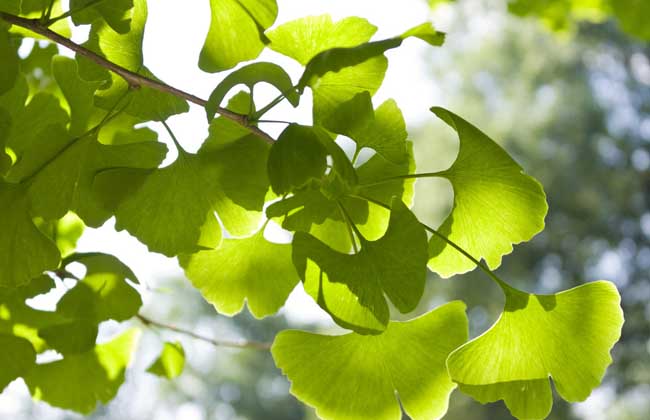
Ginkgo Production Area Distribution
Ginkgo has a very wide natural geographical distribution range, with large distributions in China, Japan, Korea, South Korea, Canada, New Zealand, Australia, the United States, France, Russia and other countries and regions. In China, well-growing ancient ginkgo trees have been found from the eastern plains at altitudes of a few meters to several tens of meters, all the way to the mountainous areas of the southwest at around 3000 m, with the largest numbers in Shandong, Zhejiang, Jiangxi, Anhui, Guangxi, Hubei, Sichuan, Jiangsu, Guizhou and other provinces.
Ginkgo Propagation Methods
1. Cutting propagation: Cutting propagation can be divided into hardwood cuttings and softwood cuttings. Hardwood cuttings are suitable for breeding seedlings for large-scale landscaping, while softwood cuttings are suitable for breeding a small number of seedlings for households or landscape units. Hardwood cuttings are generally taken from March to April in spring, and softwood cuttings from late May to mid-June.
2. Division propagation: Division propagation is generally used to cultivate rootstock and seedlings for landscaping. It readily produces root suckers, with trees aged 10 to 20 years producing the most suckers. The method is to remove the soil around the root zone, cut off the sucker shoots with fibrous roots from the mother plant with a knife, and replant and cultivate them separately.
3. Grafting propagation: Grafting propagation is mostly used in fruit production. Green-wood grafting can be carried out from late May to early August, but grafting cannot be done under high-temperature and drought conditions, especially not at noon on sunny days, and grafting should also be avoided on rainy days.
4. Seed propagation: Seed propagation is mostly used for large-scale landscaping seedlings or for making clump-style bonsai. After harvesting the seeds in autumn, remove the outer seed coat, dry the seeds with the fruit coat in the sun, and they can be sown in winter of the same year or in spring of the following year. If sown in spring, they must first undergo stratification with sand to promote germination. When sowing, place the seed embryo horizontally in the sowing furrow, cover with 3 cm to 4 cm of soil and press firm. The seedlings can grow to 15 cm to 25 cm tall in the same year.
Benefits and Effects of Ginkgo Nuts
[Nature and Flavor] Sweet, bitter and astringent in flavor, neutral in nature, toxic.
[Meridian Tropism] Lung meridian.
[Effects] Astringes the lungs and calms wheezing, stops abnormal vaginal discharge and turbid urine, and reduces urination. Used for conditions such as cough with copious phlegm and wheezing, leukorrhea with white turbidity, enuresis and frequent urination.
1. Preventing cardiovascular and cerebrovascular diseases: Ginkgo nuts contain anti-platelet activating factor, which can prevent blood coagulation, improve blood circulation and prevent the formation of blood clots. Flavonoids can dilate blood vessels, eliminate free radicals, prevent arteriosclerosis, myocardial infarction, etc., and improve human immunity.
2. Eliminating bacteria: Ginkgo nuts have anti-allergic effects, anti-inflammatory and sterilizing functions, and anti-tumor effects, and have certain effects on the reproductive system, digestive system, urinary system, etc.
3. Delaying aging: Ginkgo nuts are rich in vitamin C, riboflavin, carotene, etc., so they can resist oxidation, protect the integrity of cells and delay aging.
4. Beauty and skin care: Ginkgo nuts have antioxidant effects and can remove free radicals from the body. The flavonoids they contain can prevent the formation and deposition of pigment in the dermis, achieving whitening and preventing age spots. Some of the trace elements in them also have effects such as removing oxygen free radicals and inhibiting melanin.
5. Preventing and treating tumors: The benefits and effects of ginkgo nuts also include inhibiting and killing tumor cells, reducing the side effects of chemotherapy and radiotherapy in tumor patients, having a definite effect on raising white blood cells, and resisting radiation, increasing body immunity, and effectively alleviating the inhibition of bone cell proliferation by radiation.
Benefits and Effects of Ginkgo Leaves
[Nature and Flavor] Sweet, bitter and astringent in flavor, neutral in nature.
[Meridian Tropism] Heart and lung meridians.
[Effects] Promotes blood circulation and removes blood stasis, dredges collaterals and relieves pain, astringes the lungs and calms wheezing, resolves turbidity and lowers lipids. Mainly treats blood stasis obstructing the collaterals, chest impediment and heart pain, stroke and hemiplegia, lung deficiency with cough and wheezing, hyperlipidemia, etc.
1. Lowers cholesterol levels in human blood, prevents arteriosclerosis, and has a significant improving effect on fatigue after mild activity, accelerated heartbeat, chest pain, dizziness and blurred vision in middle-aged and elderly people.
2. Lowers blood pressure by increasing vascular permeability and elasticity, with a relatively good blood pressure-lowering effect.
3. Can significantly relieve symptoms such as menstrual abdominal pain and waist and back soreness, and is used in the treatment of bronchial asthma, also with relatively good efficacy.
4. Ginkgo leaf preparations combined with hypoglycemic drugs have relatively good efficacy in treating diabetes and can be used as an auxiliary drug for diabetes.
5. Eliminates deposited components on blood vessel walls, improves blood flow, enhances the deformability of red blood cells, lowers blood viscosity, and makes blood flow smooth. It can prevent and treat cerebral hemorrhage and cerebral infarction, and also has a certain efficacy on senile dementia caused by arteriosclerosis.
6. Lowers the level of lipid peroxidation, has the effects of reducing freckles, moisturizing the skin, beautifying the complexion, promoting bowel movements and urination, and detoxifying. It has a significant improving effect on menopausal syndrome in women.
Methods of Eating Ginkgo Nuts
1. Salt and Pepper Ginkgo
[Ingredients] Ginkgo, salt and pepper.
[Method] Take a plate of ginkgo in shells, put the salt and pepper and ginkgo together in a pot and stir-fry until cooked, then remove the shells and eat.
2. Ginkgo Congee
[Ingredients] 6-10 ginkgo nuts (shelled and then blanched in boiling water to remove the inner seed coat), a small amount of rock sugar, 2 liang of japonica rice, an appropriate amount of water.
[Method] Put the ingredients into a pot at the same time, cook over gentle heat until done, until the japonica rice becomes mushy.
[Effects] Benefits vital energy, tonifies the five viscera, and resists aging. Especially good for the elderly and those who are weak and frequently ill. Healthy people who eat it will strengthen their body. Suitable for family consumption.
3. Candied Ginkgo
[Ingredients] 400 g ginkgo, 200 g water chestnut, 100 g lard, 100 g white sugar, appropriate amounts of salt, aromatic vinegar, wet starch, small mill sesame oil, and monosodium glutamate.
[Method] 1. Blanch the ginkgo in boiling water to remove the astringent water, drain well, and press slightly flat with a knife. 2. Peel and wash the water chestnuts, and cut into cubes of about 1.2 cm. 3. Heat the lard in a wok, add the ginkgo and water chestnut cubes with a little salt and stir-fry. When the ginkgo turns yellow, add white sugar and aromatic vinegar and stir-fry, then thicken with wet starch, add monosodium glutamate, drizzle with small mill sesame oil, mix evenly, and plate.
4. Sugar-Threaded Ginkgo
[Ingredients] 500 g ginkgo, 100 g rock sugar, 100 g white sugar, 10 g sweet-scented osmanthus sugar.
[Method] 1. Take the ginkgo, remove the shells and red coats, wash and blanch once in boiling water, drain well, and grind the rock sugar into powder. 2. Add the ginkgo and continue frying and roasting, stirring constantly with a spatula to prevent burning. 3. When the sugar forms threads and the ginkgo is golden yellow, add the sweet-scented osmanthus sugar, mix evenly, and then remove from the pan and plate.
[Effects] Has the effects of stimulating the appetite and strengthening the spleen, and relieving cough and calming wheezing.