How to Grow Crown Daisy? Detailed Video Guide to Crown Daisy Cultivation Techniques
Crown daisy, also known as tonghao, penghao, haocai, etc., is an annual or biennial herbaceous plant of the Asteraceae family. Its taste is sweet and pungent, its nature is neutral, and it is non-toxic. It has the effects of calming the mind, nourishing the spleen and stomach, eliminating phlegm and fluids, and benefiting the intestines and stomach. It originated in the Mediterranean region and has a cultivation history of more than 900 years in China, with a wide distribution, but the cultivation area in all parts of the north and south is very small. Now let us take a look at the crown daisy cultivation techniques video together!
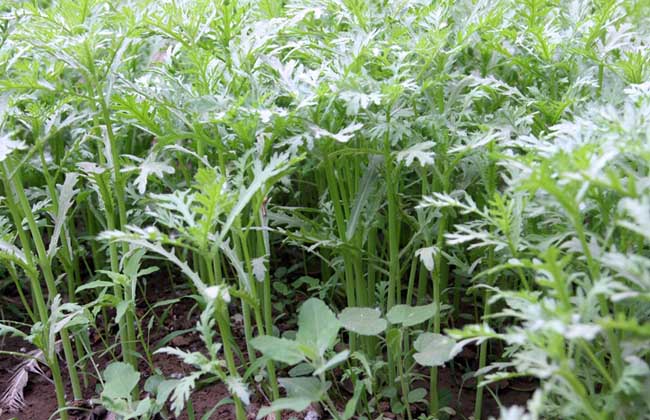
Cultivation Conditions for Crown Daisy
1. Temperature: Crown daisy has wide adaptability and by nature likes cool environments, and it is not tolerant of high temperatures. The most suitable temperature for growth is 17—20°C. Below 12°C growth is slow, and above 29°C growth is poor, but it can tolerate short-term zero-degree low temperatures. Seeds can germinate above 10°C, but germinate fastest at 15—0°C.
2. Light: Crown daisy does not have strict light requirements. Generally, it grows well under weaker light conditions. Under long-day conditions, vegetative growth is insufficient.
3. Water: Crown daisy does not have strict water and fertilizer requirements, as long as the soil is kept moist regularly. If there is too much water, it will affect growth and development and reduce yield.
4. Soil: Crown daisy has a wide range of soil adaptability and does not have strict requirements, but loose, fertile, slightly acidic sandy loam is best.
Variety Selection for Crown Daisy
1. Large-leaf crown daisy: Large-leaf crown daisy is also called flat-leaf crown daisy or round-leaf crown daisy. The leaves are large and thick, with few and shallow notches, spoon-shaped, green, with a waxy bloom. The stem is short, with dense and thick nodes, light green, tender in texture, with few fibers and good quality. It is relatively heat-tolerant, but has poor cold tolerance, grows slowly, and matures slightly late. It is suitable for cultivation in southern regions.
2. Small-leaf crown daisy: Small-leaf crown daisy is also called flower-leaf crown daisy or fine-leaf crown daisy. Its leaves are narrow and small, with many deep notches, green, relatively thin leaf flesh, and a strong aroma. The stems and branches are relatively thin, it grows quickly, and has relatively strong cold resistance, but is not very heat-tolerant. It matures earlier and is suitable for cultivation in northern regions.
Cultivation Techniques for Crown Daisy
1. Land preparation and bed making: The plot should preferably be neutral or slightly acidic soil with deep, loose, moist soil layers, rich organic matter, convenient drainage and irrigation, and good water and fertilizer retention. Before sowing, apply base fertilizer first, applying 50—60 kg of compound fertilizer per mu, or 2000 kg of organic fertilizer per mu. You can also apply 15 kg of urea, plus 25 kg of diammonium phosphate and 5—10 kg of potassium sulfate per mu, and mix the fertilizer thoroughly and evenly with the soil. When making beds, the bed width is generally required to be about 1.5—1.8 m, and the length can be flexibly controlled according to the actual situation of the greenhouse. Use a rake to break the soil into fine particles and level it, and then you can sow.
2. Seed soaking and germination promotion: Crown daisy seeds are botanically called achenes and have edges and corners. Promote germination 3—4 days before sowing. Soak the seeds in warm water at 30°C for 24 hours, then wash and dry them, and place them under conditions of 25°C to promote germination. Wash them once a day. After 3—4 days, once the seeds sprout, they can be sown.
3. Timely sowing: Because crown daisy plants are small and the growth period is short, they can be intercropped or relay-cropped with other vegetables. In production, direct sowing, broadcast sowing, and drilling can all be used. For broadcast sowing, the seeding rate is generally 3-4 kg per mu. For drilling, the seeding rate is 1.5—2 kg per mu, which saves more seed. When drilling, the row spacing should be controlled at about 10 cm. If thinning and transplanting, the seeds can be sown more densely; if not transplanting, sow thinly to avoid wasting time and seeds. After sowing is completed, cover the seeds with a 1 cm thick layer of soil, level it with a flat rake, and then water thoroughly once. After that, water once every 10 days in winter and once every 7 days in summer.
4. Field thinning: Crown daisy can emerge about one week after sowing. When the seedlings grow to 2—3 true leaves, thinning should be carried out. When thinning, be careful not to use a sickle; thin directly by hand, pulling up the seedlings that are too dense, and keep the remaining seedlings at a plant and row spacing of about 4-6 cm. Be careful not to make them too sparse, otherwise yield will be affected.
5. Timely transplanting: Practice has proved that transplanting is a good method for cultivating crown daisy. Transplanted seedlings grow faster and larger than directly sown seedlings, and can generally be harvested in about 20—25 days. When transplanting, use a sickle to lift the seedlings and put them into a prepared basin. Then transplant them into the prepared field with a plant and row spacing of about 4—6 cm. After transplanting, water thoroughly once, and apply a nitrogen fertilizer once 20 days after transplanting.
6. Water management: Because temperatures are relatively low in winter and spring, watering should be properly controlled after emergence to prevent damping-off disease and downy mildew. Water according to seedling conditions, generally once every 7-8 days.
7. Reasonable topdressing: Generally, when the seedlings grow to about 10—12 cm, topdress once. After that, topdress once after each harvest. Topdressing is generally applied with water, evenly scattering the fertilizer at the water inlet and irrigating directly together with the water. Fertilizer must not be scattered directly in the field, so as not to burn the crown daisy leaves. During the growth period, apply quick-acting nitrogen fertilizer with water 1—2 times, using 15—20 kg of urea per mu each time.
8. Timely harvest: When the crown daisy plants reach about 20 cm in height and have 12—13 true leaves, begin harvesting. Harvesting should not be too late, so as not to affect quality. At harvest, use a knife to cut at the base of the stem while leaving 2—3 leaves, then remove yellow leaves and tie the crown daisy into small bundles for sale. Generally, it can be harvested once every 20—25 days, and each crop can be harvested 2—3 times.
Pest and Disease Control for Crown Daisy
1. Damping-off
[Symptoms] Mostly occurs in the middle and late stages of seedling raising. It mainly harms the base of the seedling stem or the underground roots. Initially, it appears as oval or irregular dark brown lesions. In the early stage, diseased seedlings wilt during the day and recover at night. The diseased area gradually sinks and constricts, and some gradually turn dark brown. When the lesion expands and encircles the stem once, it finally dries up and dies, but does not lodge. Mildly diseased plants only show brown sunken lesions and do not die. When the seedbed humidity is high, an indistinct light brown spiderweb-like mold can be seen on the diseased area.