How to Cook Crown Daisy Deliciously? A Full Analysis of Its Nutritional Value and Cultivation Techniques
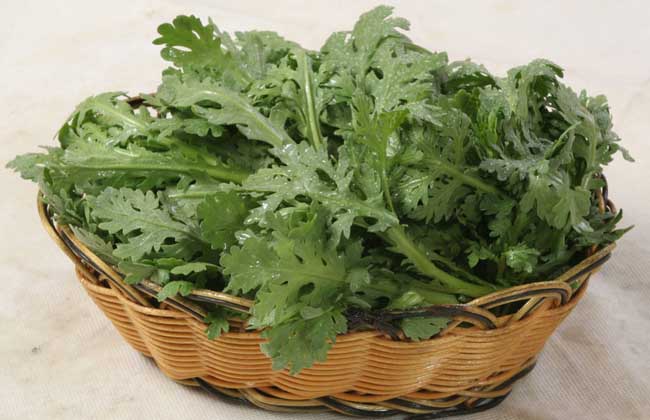
Nutritional Value of Crown Daisy
1. Crown daisy contains multiple amino acids, fats, proteins and relatively high amounts of mineral salts such as sodium and potassium, which can regulate water and fluid metabolism in the body, promote urination and eliminate edema.
2. Crown daisy has a fragrant aroma, which can eliminate phlegm and relieve stagnation, and ward off foul and turbid qi.
3. Crown daisy is rich in vitamins, carotene and multiple amino acids, which can nourish the heart and calm the mind, lower blood pressure and benefit the brain, purify the blood and resolve phlegm, moisten the lungs and nourish the liver, stabilize mood and prevent memory decline.
4. Crown daisy also contains a volatile essential oil as well as substances such as choline, and therefore has effects such as stimulating appetite and strengthening the spleen, lowering blood pressure and benefiting the brain.
Efficacy and Effects of Crown Daisy
[Nature and Flavor] Pungent and sweet in flavor, neutral in nature.
[Meridians Entered] Spleen, stomach.
[Efficacy] Harmonizes the spleen and stomach, promotes urination, resolves phlegm and relieves cough.
1. Stimulates appetite: Crown daisy contains a volatile oil with a special aroma, which can aid digestion and stimulate appetite.
2. Calms the mind: It is rich in vitamins, carotene and multiple amino acids, which can nourish the heart and calm the mind, lower blood pressure and benefit the brain, purify the blood and resolve phlegm, moisten the lungs and nourish the liver, stabilize mood and prevent memory decline.
3. Aids digestion: Crown daisy contains a volatile oil with a special aroma, which helps to soothe the middle burner and regulate qi, aid digestion and stimulate appetite, and increase appetite. In addition, its crude fiber helps intestinal peristalsis and promotes defecation, achieving the purpose of clearing the bowels and promoting intestinal function. Furthermore, crown daisy has a fragrant aroma, which can eliminate phlegm and relieve stagnation, and ward off foul and turbid qi.
4. Promotes urination and relieves edema: Crown daisy contains multiple amino acids, fats, proteins and relatively high amounts of mineral salts such as sodium and potassium, which can regulate water and fluid metabolism in the body, promote urination and eliminate edema.
5. Lowers blood pressure: Crown daisy contains a volatile essential oil as well as substances such as choline, and has the effects of lowering blood pressure and benefiting the brain.
How to Cook Crown Daisy Deliciously
1. Stir-Fried Crown Daisy
[Ingredients] 1 jin of crown daisy, vegetable oil, salt, sesame oil.
[Method] ① Select fresh tender crown daisy, remove the roots and impurities, wash clean and drain the water. ② Heat a wok over high heat, stir-fry quickly, and when the color turns dark green and the vegetable becomes soft, add salt and stir well, then remove from the wok and plate, and drizzle with sesame oil.
2. Stir-Fried Crown Daisy with Pork
[Ingredients] 150 g crown daisy, 50 g pork, appropriate amount of oil, appropriate amount of salt, appropriate amount of chicken essence, appropriate amount of scallion.
[Method] ① Wash the crown daisy and cut into sections. ② Add oil to the wok and add the cut shredded pork. ③ Add chopped scallion and stir-fry quickly. ④ Add the crown daisy and stir-fry for 2 minutes. ⑤ Plate and serve, add a little red pepper for garnish, an enticing color.
3. Stir-Fried Crown Daisy with Eggs
[Ingredients] Crown daisy, eggs, salad oil, salt, chicken essence, minced scallion, ginger and garlic.
[Method] ① Wash the crown daisy and blanch briefly in hot water, then remove and cut into sections. ② Beat the eggs evenly, add oil to the wok and scramble until tender, then remove. ③ Add base oil to the wok, add the minced scallion, ginger and garlic and stir-fry until fragrant, add the crown daisy and then the eggs, stir-fry over high heat and when nearly done add salt and chicken essence to season.
4. Crown Daisy with Mashed Garlic
[Ingredients] 3 cloves of garlic, 250 g crown daisy, appropriate amount of salt and sesame oil.
[Method] ① Wash the crown daisy and cut into sections one cun long. Mash the garlic into a paste and set aside. ② Bring clean water to a boil in a pot, blanch the crown daisy in the boiling water for 3 minutes and remove, then add the mashed garlic, salt and sesame oil all at once, mix well and plate.
Cultivation Techniques" />
Cultivation Techniques of Crown Daisy
1. Land preparation and bed making: The plot should preferably be neutral or slightly acidic soil with deep, loose and moist soil layers, rich organic matter, convenient drainage and irrigation, and good water and fertilizer retention. Before sowing, apply base fertilizer first, applying 50-60 kg of compound fertilizer per mu, or 2000 kg of organic fertilizer per mu. Alternatively, apply 15 kg of urea per mu, plus 25 kg of diammonium phosphate and 5-10 kg of potassium sulfate, and mix the fertilizer thoroughly and evenly with the soil. When making beds, the bed width is generally required to be about 1.5-1.8 m, and the length can be flexibly adjusted according to the actual situation of the greenhouse. Use a rake to break the soil fine and level it, and then sowing can begin.
2. Seed soaking and germination: Crown daisy seeds are botanically called achenes and have angular edges. Carry out germination 3-4 days before sowing: soak the seeds in warm water at 30°C for 24 hours, then rinse and air-dry, and place under conditions of 25°C to germinate, rinsing once a day; after 3-4 days the seeds sprout and can be sown.
3. Timely sowing: Because crown daisy plants are small and have a short growing period, they can be intercropped or relay-cropped with other vegetables. In production, direct sowing, broadcast sowing and drill sowing are all acceptable. For broadcast sowing, the seeding rate is generally 3-4 kg per mu. For drill sowing, the seeding rate is 1.5-2 kg per mu, which saves more seed. When drill sowing, the row spacing should be controlled at about 10 cm. If thinning and transplanting, the seeds can be sown more densely; if not transplanting, sow thinly to avoid wasting time and seeds. After sowing, cover the seeds with a 1 cm layer of soil, level with a flat rake, and then water thoroughly once. Afterwards, water once every 10 days in winter and once every 7 days in summer.
4. Reasonable thinning: Crown daisy can emerge about one week after sowing. When the seedlings grow to 2-3 true leaves, thinning should be carried out. When thinning, note that a sickle must not be used; thin directly by hand, pulling out the densely growing seedlings, and keep the remaining seedlings at a plant and row spacing of about 4-6 cm. Note that it must not be too thin, otherwise the yield will be affected.
5. Timely transplanting: Practice has proved that transplanting is a good method of cultivating crown daisy. Transplanted seedlings grow faster and larger than directly sown seedlings, and can be harvested in about 20-25 days. When transplanting, use a sickle to lift the seedlings and place them in a prepared basin. Then transplant them into the prepared field at a plant and row spacing of about 4-6 cm. After transplanting, water thoroughly once, and apply a nitrogen fertilizer once 20 days after transplanting.
6. Water management: Because temperatures are relatively low in winter and spring, watering should be appropriately controlled after emergence to prevent damping-off and downy mildew. Water according to seedling conditions, generally once every 7-8 days.
7. Reasonable topdressing: Generally, when the seedlings grow to about 10-12 cm, topdressing is needed once. Afterwards, apply fertilizer once after each harvest. Topdressing generally uses fertilizer applied with water, scattering the fertilizer evenly at the water inlet and irrigating directly together with the water. Fertilizer must not be scattered directly in the field, so as to avoid burning the crown daisy leaves. During the growing period, apply 1-2 applications of quick-acting nitrogen fertilizer with water, using 15-20 kg of urea per mu each time.
8. Pest and disease control: Crown daisy is prone to anthracnose and downy mildew. If they occur, spray 1000 times dilution of 72% Previcur for control. If aphids occur, spray 1200-1500 times dilution of 10% imidacloprid for control.
9. Timely harvest: When the crown daisy plants reach a height of about 20 cm and have 12-13 true leaves, begin harvesting. Harvesting should not be too late, so as to avoid affecting quality. When harvesting, use a knife to cut at the base of the stem, leaving 2-3 leaves, then remove the yellow leaves and tie the crown daisy into small bundles for sale. Generally, it can be harvested once every 20-25 days, and 2-3 harvests can be made per crop.