What are the nutritional benefits of tea tree mushrooms?
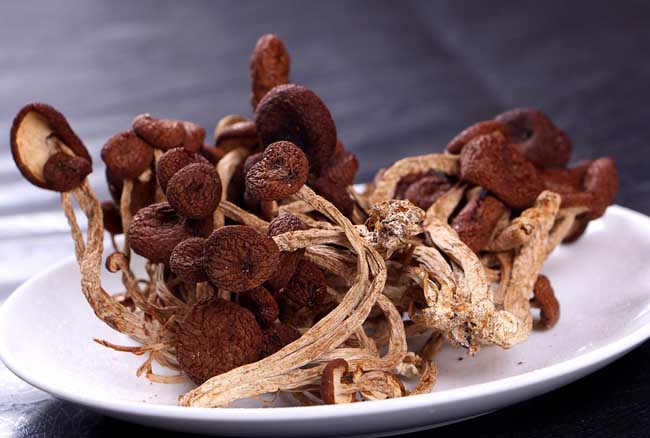
Tea tree mushrooms were originally a wild fungus growing on the bases of tea trees in the high mountain forests of Guangchang, Jiangxi. They are a pure natural, pollution-free healthful edible fungus combining high protein, low fat, low sugar and health-promoting dietary therapy. The improved tea tree mushroom has tender caps and crisp stems, a pure delicate aroma and excellent texture, and can be cooked into all kinds of delicious dishes. Its nutritional value exceeds that of other edible fungi such as shiitake mushrooms, and it ranks among premium edible fungi.
Nutritional composition of tea tree mushrooms
Tea tree mushrooms contain the 18 amino acids needed by the human body, especially the 8 amino acids the body cannot synthesize, along with glucans, fungal proteins, carbohydrates and other nutrients; their stems are crisp, tender and refreshing with a delicate aroma. They are also rich in B vitamins and various mineral elements, such as iron, potassium, zinc and selenium, all higher than in other fungi. Traditional Chinese medicine holds that this mushroom tonifies the kidney, promotes urination, treats soreness and pain in the lower back, drains dampness, strengthens the spleen and stops diarrhea, making it an ideal food for patients with high blood pressure, cardiovascular disease and obesity. It is delicious, crisp and tender, and has good health-promoting effects, making it one of the rare and delicious edible fungi. Tea tree mushrooms are highly nutritious, with a protein content as high as 19.55%. Among the proteins they contain are 18 amino acids, the most abundant being methionine at 2.49%, followed by glutamic acid, aspartic acid, isoleucine, glycine and alanine. The total amino acid content is 16.86%. They contain all 8 essential amino acids, and are rich in B vitamins and mineral elements such as potassium, sodium, calcium, magnesium, iron and zinc.
According to the inspection report of the National Food Quality Supervision and Inspection Center (Beijing), the nutritional composition of tea tree mushrooms is: per 100 g (dried mushrooms), 14.2 g protein, 14.4 g fiber and 9.93 g total sugars; and 4713.9 mg potassium, 186.6 mg sodium, 26.2 mg calcium and 42.3 mg iron.
Medicinal value of tea tree mushrooms
Traditional Chinese medicine holds that tea tree mushrooms are neutral in nature, sweet and warm, and non-toxic; they boost qi and stimulate appetite, strengthen the spleen and stop diarrhea, and have special effects against aging, lowering cholesterol, and preventing and fighting cancer. They tonify the kidney and nourish yin, strengthen the spleen and stomach, boost human immunity and enhance the body's disease resistance. Regular consumption can have anti-aging and beauty effects.
Clinical practice has proven that tea tree mushrooms have unique therapeutic effects on frequent urination due to kidney deficiency, edema and asthma, especially low-grade fever and bedwetting in children. Modern medical research shows that because tea tree mushrooms contain a large amount of anti-cancer polysaccharides, their extract has an inhibition rate of 80%-90% against mouse sarcoma 180 and Ehrlich ascites carcinoma, showing a good anti-cancer effect. Therefore, people call tea tree mushrooms the “Chinese divine mushroom”, “health food” and “anti-cancer vanguard”.
Tea tree mushrooms are a pure natural edible fungus that is high in protein, low in fat, pollution-free and free of pesticide harm, combining nutrition, health care and physical therapy. According to tests by the National Food Quality Supervision and Inspection Center, they are rich in 17 amino acids needed by the human body, such as aspartic acid and glutamic acid, as well as more than ten mineral trace elements and anti-cancer polysaccharides, and their medicinal and health benefits are higher than those of other edible fungi. They are delicious and excellent both as a main dish and as a seasoning; they also nourish yin and strengthen yang and have beauty and health benefits, with unique therapeutic effects on kidney deficiency, frequent urination, edema and rheumatism, and auxiliary therapeutic functions against cancer, high blood pressure, aging, low-grade fever in children and bedwetting. People call them the “divine mushroom”.
Culinary value of tea tree mushrooms
1. Cancer prevention and control: Tea tree mushrooms contain a large amount of anti-cancer polysaccharides and have a good anti-cancer effect; people call them the “Chinese divine mushroom”, “health food” and “anti-cancer vanguard”.
2. Anti-aging: They tonify the kidney and nourish yin, strengthen the spleen and stomach, boost human immunity and enhance the body's disease resistance. Regular consumption can have anti-aging and beauty effects.
3. Relieving bedwetting in children: Tea tree mushrooms have unique therapeutic effects on frequent urination due to kidney deficiency, edema and asthma, especially low-grade fever and bedwetting in children.