Is a cherry actually the fruit that a cherry blossom produces?
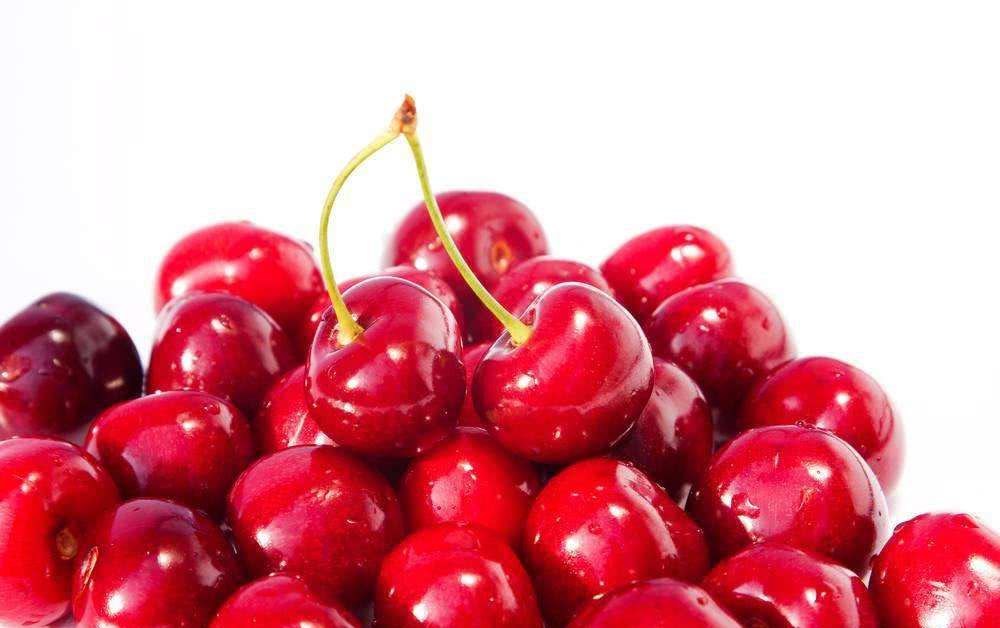
What we are talking about today is the cherry. When it comes to cherries, people think of cherry blossoms - are you puzzled about their relationship? Looking at them, do you think a cherry is the fruit that grows after a cherry blossom blooms? Actually, that is not the case; the two are not very closely related. It is just that both cherries and cherry blossoms are plants of the Rosaceae family. But the cherry blossom, also known as mountain cherry blossom, is a deciduous tree of the Rosaceae family, genus Cerasus. The cherry, on the other hand, is a deciduous fruit tree of the Rosaceae family, genus Cerasus, or a shrubby thicket.
The cherry is one of the earliest fruits to reach the market, earning the title of "the first branch of a hundred fruits." When the fruit ripens, although it is as small as a pearl, its surface is bright in color, crystal-clear and beautiful, red as agate, yellow as congealed fat. When flowers and fruits are at their peak, red fruits fill the tree, and the scene is charming and extremely beautiful; it can be planted alone, in clusters, or in groups.
Most people have probably heard the origin of the name "cherry," right? It is said that because the yellow oriole especially loves to peck at this fruit, people named it "yingtao" (oriole peach). Eaten as a fruit, the cherry tastes sweet with a slight sourness and is much favored, and the fruit is rich in sugar, protein, vitamins, and various elements such as calcium, iron, phosphorus and potassium. Therefore, even if cherries are not eaten fresh, making them into canned goods or brewing them into wine is also quite good.
Everyone knows that cherries are high in iron, ranking first among all fruits. Therefore, they can both prevent and treat iron-deficiency anemia and strengthen the physique, and also benefit the brain and boost intelligence. Even if none of the above is lacking, cherry juice can be applied to the face and wrinkles to remove wrinkles and fade spots, making the facial skin rosy, tender and white.
The whole cherry plant is a treasure; its twigs, leaves, roots and flowers can all be used medicinally. It has the effects of tonifying the middle and boosting qi, strengthening the spleen, harmonizing the stomach, resisting anemia, preventing and treating measles, expelling parasites, killing insects, astringing and relieving pain, nourishing the face and preserving youthful looks, dispelling wind and removing dampness, treating dysentery with undigested food, and stopping seminal emission.
Cherries can also treat weakness of the body and qi after illness, shortness of breath and palpitations, fatigue and poor appetite, dry throat and thirst, as well as rheumatic pain in the waist and legs, numbness of the limbs, difficulty in flexing and extending the joints, and mild to severe frostbite. They can also treat burns and scalds, astringing and relieving pain, and preventing blisters and suppuration at the injured area.
Although cherries can generally be eaten by most people - for example, those with indigestion, paralysis, rheumatic waist and leg pain, weak constitution, or dull complexion are all suitable - be sure to note that cherries are warm and hot in nature, so those with heat-related diseases and deficiency-heat cough should avoid eating them, and care should be taken against poisoning when using them medicinally; those with ulcer symptoms or internal heat should also eat them cautiously; diabetics should avoid them; and patients with kidney disease should not eat too many either (it may cause the patient's heart to stop beating within seconds to minutes); children must never swallow one whole and choke.