How do you fertilize succulents? These two methods are practical and harmless
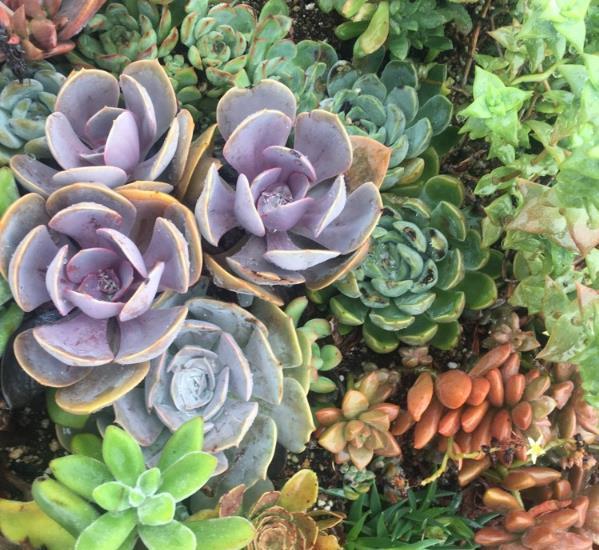
After milk spoils, add water and use it to water flowers; it benefits the growth of the flowers. But use more water so it becomes fairly diluted, which is best. Unfermented milk should not be used to water flowers, because it produces a large amount of heat during fermentation, which will "burn" the roots (root rot). Watering flowers with cooled boiled water: using cooled boiled water to water flowers can make the foliage lush and the blooms vivid, and can promote earlier flowering. If used to water asparagus fern (Asparagus setaceus), it can make its branches and leaves grow horizontally, staying short and dense. Watering flowers with warm water: in winter, when the weather is cold and the water is chilly, it is best to water flowers with warm water. It is best to place the water indoors and wait until it is close to room temperature before watering. If you can bring the water temperature to 35°C before watering, that is even better.
Sprinkle a layer of maifan stone granules in the flower pot; this can promote the growth of flowers and extend the flowering period. Using maifan stone can reduce the use of chemical fertilizers and soil amendments, and can economically and effectively improve the soil and protect the environment. Of course, maifan stone also has disadvantages, such as being somewhat alkaline and having poor water retention, so I usually do not use it alone, but rather add more or less of it together with other granules according to the plant's preference for pH. There is one more thing to note: there are many kinds of maifan stone. One that is somewhat blackish, apparently called China maifan stone, is not very suitable as a growing medium, because its hardness and density are too high and it is only suitable for making containers.
Some flower growers have said that after spreading maifan stone on their succulents, they felt the plants instantly became prettier. However, after the top dressing had been in place for a while, they found that the succulents' growth began to worsen. Later they learned that after maifan stone is used as a top dressing, it can absorb the moisture evaporating from the soil, so the moisture in the pot evaporates more slowly. What they were using was a peat-based potting mix that itself already retained water fairly well, so the succulents' condition began to suffer. Therefore, maifan stone as a top dressing is not necessarily a very good choice. If you like using maifan stone as a top dressing, then the soil below should have more granules added and less peat.
The most outstanding advantage of maifan stone is that it can absorb moisture from the air, so adding a certain proportion of maifan stone when mixing soil can not only increase the soil's air permeability, but also improve the soil's water retention, thereby achieving the goal of protecting the roots. After I added maifan stone to my own potting mix, watering indeed drained through more easily. Here is a mixing ratio for everyone to choose: 90% maifan stone plus 10% peat. The common succulents I grow with this ratio are also very beautiful, and the stems are very thick and sturdy too. In my heart, succulents have no distinction of noble or humble; it just depends on how you make them beautiful.
You can spread a layer of newspaper on the soil. Besides having the effect of increasing soil nutrients, in summer it can also play a certain role in shading, which can provide sun protection and moisture retention. Sunlight cannot shine directly on the soil, so this can prevent the soil temperature from getting too high and harming the plant. After spreading the newspaper, water thoroughly and spray water on it regularly to keep it moist. In this way, water can slowly seep into the potting soil, and you also do not need to worry about the potting soil becoming compacted.
Household flower growing should not frequently use chemical fertilizers. The main nutrients needed for cultivating flowers, such as nitrogen, phosphorus and potassium, can all be collected from daily life. For example: moldy, inedible waste peanuts, beans, sunflower seeds and miscellaneous grains are all nitrogen-containing fertilizers; after fermentation they can be used as a base fertilizer, or soaked to make a solution for top dressing, and both can promote vigorous growth of flowers and trees. Fish bones, broken bones, chicken feathers, eggshells, and people's trimmed fingernails and hair are all rich in phosphorus. Mix these waste materials into old potting soil, add some water, put them in a plastic bag and place it in a corner; after a period of decomposition, they can become excellent organic fertilizer. If these waste materials are soaked to make a solution and then used as top dressing, it can make household potted flowers vivid in color and abundant in fruit. In addition, fermented rice-washing water, the water left after growing bean sprouts, wood ash water, as well as rainwater and waste water from fish tanks, all contain a certain amount of nitrogen, phosphorus and potassium; as long as they are used in appropriate amounts, they will promote the growth and development of flowers and trees.
This is a gathering place for succulent lovers, sharing succulent care tips; you are welcome to follow and exchange ideas.