Complete Guide to Tea Tree Mushroom Cultivation Techniques, Nutritional Value and Recipes
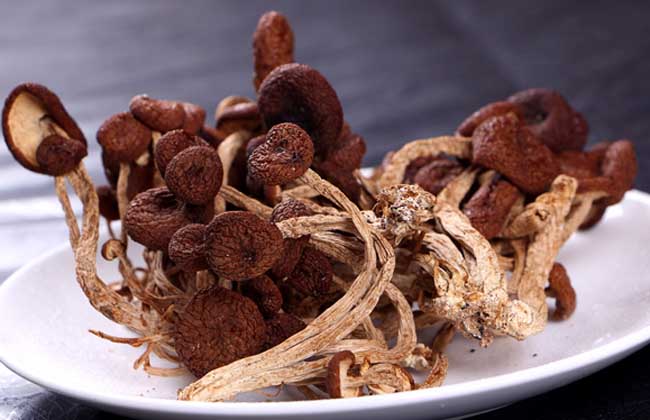
Geographic Distribution of Tea Tree Mushroom
Tea tree mushroom is mainly distributed in the northern temperate zone, with some distribution in subtropical regions, but it is rare in tropical regions. Neither extremely cold nor extremely hot climatic conditions are suitable for its development. Tea tree mushroom can be cultivated using the general methods for wood-decaying fungi.
The main production areas of tea tree mushroom are Guangchang County in Jiangxi, Lichuan County in Jiangxi, and Gutian County in Fujian. In addition, it is produced throughout the country, with Kunming, Chengdu, Beijing and other places being major fresh mushroom production areas.
Nutritional Value of Tea Tree Mushroom
Tea tree mushroom contains 18 amino acids required by the human body, especially the 8 amino acids that the human body cannot synthesize, along with glucan, fungal protein, carbohydrates and other nutritional components. Its mushroom stem is crisp, tender and refreshing, with a delicate fragrance. It is also rich in B vitamins and various mineral elements. Elements such as iron, potassium, zinc and selenium are all higher than in other fungi. Traditional Chinese medicine considers that this mushroom has effects such as tonifying the kidneys, promoting urination, treating waist soreness and pain, draining dampness, strengthening the spleen, and stopping diarrhea. It is an ideal food for patients with hypertension, cardiovascular disease and obesity. It has a delicious taste, is crisp and tender, and also has good health benefits, making it one of the delicious and rare edible fungi.
Tea tree mushroom is rich in nutrients, with a protein content as high as 19.55%. Among the proteins contained are 18 amino acids, of which the highest content is methionine at 2.49%, followed by glutamic acid, aspartic acid, isoleucine, glycine and alanine. The total amino acid content is 16.86%. It contains all 8 essential amino acids required by the human body, and is rich in B vitamins and mineral elements such as potassium, sodium, calcium, magnesium, iron and zinc.
The nutritional composition of tea tree mushroom is as follows: per 100 grams (dried mushroom) it contains 14.2 grams of protein, 14.4 grams of cellulose, 9.93 grams of total sugars, 4713.9 milligrams of potassium, 186.6 milligrams of sodium, 26.2 milligrams of calcium, and 42.3 milligrams of iron.
Efficacy and Benefits of Tea Tree Mushroom
1. Anti-cancer and cancer prevention: Tea tree mushroom contains large amounts of anti-cancer polysaccharides and has excellent anti-cancer effects. People call it the “Chinese Divine Mushroom”, “Health Food”, and “Anti-cancer Vanguard”.
2. Anti-aging: It has the effects of tonifying the kidneys and nourishing yin, strengthening the spleen and stomach, improving human immunity, and enhancing the body's disease resistance. Regular consumption can achieve anti-aging, beauty and other effects.
3. Relieving bedwetting in children: Tea tree mushroom has a unique therapeutic effect on frequent urination due to kidney deficiency, edema, and asthma, especially bedwetting in children with low fever.
4. Eating tea tree mushroom together with pork bones or chicken has the effect of enhancing immunity.
Cultivation Conditions for Tea Tree Mushroom
1. Nutrition: Tea tree mushroom is a wood-decaying fungus with relatively weak ability to decompose lignin and cellulose. Wild tea tree mushroom only grows on oil tea trees. After artificial domestication, broadleaf trees such as tung tree, maple, willow, oak and white poplar can be used as cultivation materials, but miscellaneous wood sawdust with a looser texture and lower tannin content is more suitable for tea tree mushroom growth. Wheat bran, rice bran and cake fertilizer can be fully utilized as nitrogen sources. In addition to miscellaneous wood sawdust, bagasse, rice straw, cottonseed hulls and mushroom grass can also serve as carbon sources. Among carbon sources, monosaccharides and disaccharides are the best, while the utilization capacity for starch and cellulose is relatively weak. If the cultivation formula contains only glucose, the mycelium grows loosely; when a small amount of sucrose is added, the mycelium grows densely and vigorously. This indicates that mineral elements are relevant during mycelium growth.
2. Temperature: Tea tree mushroom is a medium-temperature type edible fungus. On PDA medium at 26°C, spores germinate after 24 hours, and fine mycelium can be seen with the naked eye after 48 hours. The optimum temperature for mycelium growth is 23-28°C, growth stops above 34°C, and it can be preserved for 3 months at minus 4°C. The temperature range for fruiting body primordium differentiation is 12-26°C, with the optimum temperature being 18-24°C. Lower or higher temperatures will delay primordium differentiation. At lower temperatures, the fruiting body grows slowly, but the tissue is firm, the mushroom shape is larger, and the quality is good. At higher temperatures, it easily opens its cap and forms long-stemmed thin-capped mushrooms.
3. Moisture: The water content of the culture medium for tea tree mushroom cultivation should be maintained at 60%-65%, that is, grab a handful of culture medium and squeeze hard; it should be moist between the fingers with slight water but not dripping, and when the fingers are released it forms a clump that breaks apart upon falling to the ground. However, different types and thicknesses of sawdust may vary slightly, so it should be adjusted flexibly. During mycelium growth, the relative air humidity should be kept below 70%. During the fruiting body formation and development stage, it should be 85%-95%, and appropriately reduced during the growth period to extend the product's shelf life.
4. Air: Tea tree mushroom is an aerobic macrofungus and is very sensitive to carbon dioxide. Poor ventilation with excessively high carbon dioxide concentration can easily cause slow mycelium growth, thick and long fruiting body stems, small caps, early cap opening, and deformed mushrooms.
5. Light: Tea tree mushroom is a light-requiring fungus, and its fruiting body has phototropic growth characteristics. Appropriate diffused light is a necessary condition for completing its normal life cycle. During the mycelium culture period, it still grows under dark conditions, but does not form fruiting bodies. The fruiting body is not easy to differentiate without light, and the suitable light intensity is 50-300 lux.
6. pH: Tea tree mushroom mycelium prefers a weakly acidic environment, with the optimum pH being 5.5-6.5. Below pH 4 or above 6.5, the mycelium grows sparsely and slowly.
Pest and Disease Control for Tea Tree Mushroom
For pest and disease control of tea tree mushroom, the main approach is prevention. Do a good job of environmental sanitation and indoor disinfection, and deal with contaminating fungi promptly when found. Because tea tree mushroom fruiting occurs at relatively high temperatures and the fungal protein content is relatively high, pest outbreaks are likely. The best method is manual capture. As a last resort, spray with 0.1% fungal compound lipid or midaemiding diluted with water, which can completely eradicate the problem, but be careful not to use too high a concentration, as it may poison and rot the mushroom buds and cause losses.
1. Penicillium
[Symptoms] Generally 6 to 10 days after inoculation, soybean-sized blue-green toxic spots appear on the mushroom logs, then gradually expand and hinder tea tree mushroom mycelium growth. In severe cases, they can kill the tea tree mushroom mycelium.
[Causes] Impure spawn, contamination, inadequate inoculation disinfection causing inoculation contamination, insufficient disinfection and sterilization time, and contaminating fungal spores in the culture medium not being killed, then slowly resuming growth after inoculation.
2. White Mold
[Symptoms] After the mycelium resumes growth, a layer of sparse white mycelium begins to grow in front of or alongside the tea tree mushroom mycelium, like fuzz, hindering tea tree mushroom mycelium growth.
[Causes] High air temperature and humidity, increased contaminating fungi and spore levels, making inoculation disinfection difficult; excessive air flow at the inoculation site causing outside air to blow into the box; impure spawn; and loose sealing.
3. Streptomyces (Chain-spore Mold)
[Symptoms] Two to three days after inoculation, pink spore masses grow from the bag opening or damaged areas and fly into the air with the wind. This contaminating fungus spreads extremely quickly, especially in hot and humid weather.