What are the main benefits and effects of purple sweet potato?
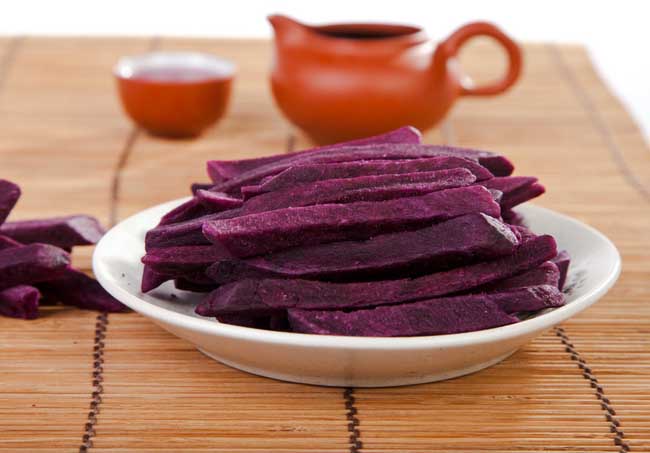
Purple sweet potato, also called black sweet potato, has flesh that ranges from purple to deep purple. In addition to the nutrients found in ordinary sweet potato, it is also rich in selenium and anthocyanins, and offers multiple health benefits. From the tender leaves at the stem tips to the tuberous roots, purple sweet potato has certain health-promoting effects, and it is currently among the foods classed as pollution-free, green, and organic.
Benefits and Effects of Purple Sweet Potato
Purple sweet potato is sweet in taste and neutral in nature, entering the spleen, stomach, and lung meridians; its main effects are to tonify the spleen and boost qi, and to relax the bowels and relieve constipation. Eaten raw, it can promote fluid production and quench thirst. It mainly treats conditions such as spleen deficiency with weak qi, constipation, heat in the lungs and stomach, and thirst with dry throat.
1. Purple sweet potato helps prevent anemia: The vitamin C content of purple sweet potato is 10 to 30 times that of apples, grapes, and pears, ranking first among similar fruits, vegetables, and grains. Its carotene content is more than 600 times higher than that of potatoes, taro, and corn; its various mineral trace elements such as selenium, iodine, copper, iron, potassium, manganese, and zinc are several times those of ordinary sweet potato. It is especially suited to the needs of children's growth and development, and can help prevent anemia and trace element deficiency.
2. Purple sweet potato's effects on the digestive tract: Purple sweet potato is nutritious and suitable for regular consumption. It is rich in fiber; eating purple sweet potato can increase stool volume, promote gastrointestinal motility, clear mucus, gas, and putrefied matter retained in the intestinal cavity, excrete toxic and carcinogenic substances from the stool, keep bowel movements smooth and prevent constipation, improve the digestive tract environment, and prevent the occurrence of gastrointestinal diseases, which is more beneficial to health.
3. Purple sweet potato's anti-fatigue and anti-aging effects: Purple sweet potato is rich in protein, 18 kinds of amino acids that are easily digested and absorbed by the human body, 8 kinds of vitamins such as vitamin C, B, and A, and more than 10 kinds of natural mineral elements such as phosphorus and iron. Among these, iron and selenium are abundant. Selenium and iron are essential elements for the human body in fighting fatigue, resisting aging, and replenishing blood, making purple sweet potato suitable for women who care about their appearance.
4. Purple sweet potato's antioxidant and blood pressure-lowering effects: The anthocyanins contained in purple sweet potato are currently the most direct, effective, and safe free radical scavenger discovered for preventing and treating diseases and maintaining human health. Their ability to scavenge free radicals is 20 times that of vitamin C and 50 times that of vitamin E. Anthocyanins have a small-molecule structure and are the only substance that can pass through the blood-brain barrier to scavenge free radicals and protect brain cells. For men, they help relieve stress and have functions such as anti-mutation, antioxidant, blood pressure lowering, and liver protection.
5. Purple sweet potato's cancer-preventing effects: Purple sweet potato is rich in selenium, which has an excellent preventive and therapeutic effect on cancer. In addition, purple sweet potato contains a large amount of mucilaginous substances, which can maintain the elasticity of the cardiovascular walls in older adults, prevent atherosclerosis, help keep the respiratory tract, digestive tract, and joint cavities lubricated, and also have a certain preventive and therapeutic effect on cardiovascular diseases.
Medicinal Value of Purple Sweet Potato
The selenium and iron in purple sweet potato are essential elements for the human body in fighting fatigue, resisting aging, and replenishing blood. Selenium in particular is called the “king of anti-cancer”; it is easily absorbed by the human body, can remain in the serum, repair the myocardium, enhance the body's immunity, scavenge free radicals in the body, inhibit DNA synthesis in cancer cells and the division and growth of cancer cells, and prevent the occurrence of cancers such as stomach cancer and liver cancer.
Purple sweet potato is rich in fiber, which can increase stool volume, promote gastrointestinal motility, clear mucus, gas, and putrefied matter retained in the intestinal cavity, excrete toxic and carcinogenic substances from the stool, keep bowel movements smooth, improve the digestive tract environment, and prevent the occurrence of gastrointestinal diseases. In addition to the nutrients found in ordinary sweet potato, it also contains polysaccharides and flavonoids, and is also rich in selenium and anthocyanins, giving it certain functions in preventing high blood pressure, reducing liver dysfunction, and fighting cancer.
Using Salmonella typhimurium TA98 to evaluate the anti-mutagenic activity of water extracts from sweet potatoes of four different colors, it was found that purple sweet potato anthocyanins can effectively inhibit mutations caused by heterocyclic amines and other substances. Two kinds of anthocyanins isolated from purple sweet potato have strong anti-mutagenic effects.
Animal experiments showed that a purple sweet potato beverage containing large amounts of anthocyanins could significantly inhibit the rise in serum glutamate oxaloacetate transaminase (GOT) and glutamate pyruvate transaminase (GTP) in rats with liver injury induced by carbon tetrachloride, and also had a certain inhibitory effect on the increase in thiobarbituric acid (TBA) reactants and oxidized lipoproteins in serum and liver; a yellow-fleshed sweet potato beverage, however, could not. Fredenck et al. gave rats by gavage 2.5 mL of a 5% ethanol aqueous solution containing 1%, 5%, and 10% anthocyanins respectively per kg body weight, 5 days a week for 4 weeks; then gave the rats by gavage 0.5 mL carbon tetrachloride per kg body weight. After 18 h, the serum levels of aspartate and alanine aminotransferase were measured and were significantly lower than those in the control group given only carbon tetrachloride by gavage, indicating that anthocyanins can inhibit acute liver injury induced by carbon tetrachloride.
Special reminder:
Purple sweet potato has a high sugar content, so people with diabetes should not eat it. Also, because it is rich in potassium, it can increase the burden on the kidneys, so people with kidney disease should not eat much of it either.