Purple sweet potato porridge recipe, sweet, soft and glutinous, easy to learn
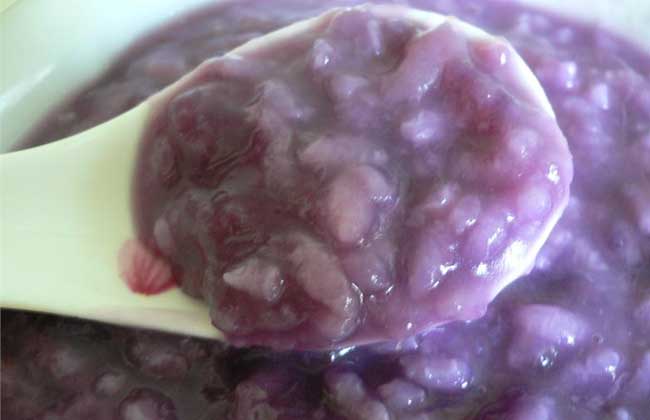
Besides containing the nutrients of ordinary sweet potatoes, purple sweet potatoes are also rich in selenium, anthocyanins, and abundant protein, cellulose, and nutrients needed by the human body. Purple sweet potato porridge made with purple sweet potatoes also has many benefits. It is simple and easy to make, and very suitable for the elderly and children. Let's take a look at how to make purple sweet potato porridge!
Ingredients for purple sweet potato porridge
One purple sweet potato, 100 grams of rice.
How to make purple sweet potato porridge
1. Peel the purple sweet potato and cut it into small cubes so it cooks easily.
2. Wash the rice clean and soak it in water for more than half an hour.
3. Put the purple sweet potato and rice into a clay pot, add enough water, and after it comes to a boil, turn to low heat.
4. Simmer over low heat until the purple sweet potato breaks down and the porridge becomes thick. Stir frequently during the process, as porridge cooked in a clay pot can easily stick to the bottom or burn.
5. Let it cool to below 60°C, then it is ready to eat.
Benefits of purple sweet potato porridge
1. Purple sweet potato porridge is rich in protein and also contains 8 kinds of amino acids, and is easily digested and absorbed by the human body.
2. Purple sweet potato porridge is rich in vitamins A, B, C, and others, all of which are essential nutrients for the human body.
3. Purple sweet potato porridge is rich in cellulose, which can promote digestion, improve gastrointestinal function, and prevent the occurrence of gastrointestinal diseases.
4. Purple sweet potato porridge is very rich in iron, calcium, selenium, and others, inhibits the synthesis of DNA in cancer cells and the division and growth of cancer cells, and prevents the occurrence of diseases such as stomach cancer and liver cancer.
Note: The blue color of cooked purple sweet potato porridge is normal, because purple sweet potatoes are rich in anthocyanins, which are water-soluble pigments. Anthocyanins change color when they encounter acids or bases. They turn bluish-green in the presence of alkali and red in the presence of acid. This is a normal phenomenon, so it can be eaten with confidence.