What are the benefits and effects of matsutake? A detailed guide
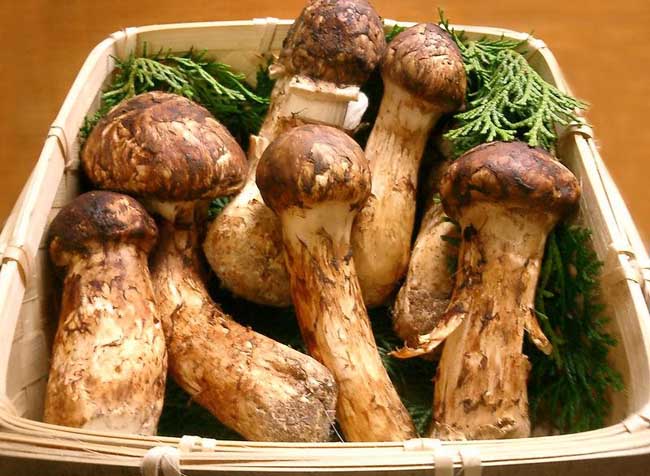
The main nutrients in matsutake are polysaccharides, polypeptides, amino acids, fungal proteins, minerals, trace elements and alcohols. The fruiting body contains 18 amino acids, 14 essential trace elements for the human body, 49 active nutrients, 5 unsaturated fatty acids, 8 vitamins, 2 glycoproteins, rich dietary fiber and a variety of active enzymes. It also contains 3 precious active substances, namely double-stranded matsutake polysaccharide, matsutake polypeptide and matsutake alcohol, an anti-cancer substance unique among all plants in the world. It is the world's most precious natural medicinal fungus; its many nutrients are widely used in the fields of medicines, health products and cosmetics, among which matsutake alcohol is widely used to prevent cancer and support recovery after cancer surgery.
Anti-cancer and anti-tumor
1. The principle of anti-cancer and anti-tumor effects
Matsutake contains a special double-stranded bioactive substance that no other plant has - matsutake alcohol (RNA). It has super-strong anti-gene mutation ability and a strong anti-cancer effect. It can automatically recognize the toxins secreted by tumor cells, target and approach and bind to tumor cells, enter the cells by dissolving the tumor cell membrane and destroying the lipid bilayer, block the transferrin receptors of tumor cells, and interrupt the protein synthesis of tumor cells so that they cannot divide and reproduce and eventually die; it destroys the DNA genes of tumor cell genetic replication, thereby achieving the goals of resisting gene mutation, inhibiting tumors and controlling tumor recurrence and metastasis.
2. Research on anti-cancer and anti-tumor effects
Matsutake has very good anti-tumor activity, and the anti-tumor activity of its polysaccharides is far higher than that of reishi mushroom, ranking first among 15 edible fungi with anti-tumor activity. Its fruiting body hot water extract (polysaccharides) has an inhibition rate of up to 91.8% on mouse sarcoma S-180 and an inhibition rate of 70% on Ehrlich ascites carcinoma. In addition, studies have shown that the matsutake glycoprotein MTSO also has an inhibitory effect on the human breast cancer (MCF-7) cell line, while at the same time having very low toxicity to normal cells. At the same time, matsutake polysaccharide can also induce apoptosis of K562 cells and inhibit leukocyte proliferation; research also shows that patients with liver cancer who take matsutake after liver cancer resection can significantly increase the survival rate, and can significantly reduce GOT, r-GTP and bilirubin values.
Studies show that the anti-tumor effect of matsutake is manifested in two aspects: on the one hand, it directly kills tumor cells. Experiments found that certain proteins contained in matsutake can directly kill skin cancer and uterine cancer cells. On the other hand, it induces tumor cell apoptosis. Experiments found that certain active glycoproteins in matsutake can inhibit HeLa cell proliferation by inhibiting the transition stage of cancer cells from S to G2M phase in the cycle, and induce cell apoptosis.
3. Applications of anti-cancer and anti-tumor effects
Japan is the most successful country in using matsutake to prevent cancer. Experts believe that this has a causal relationship with Japan's results of having the world's lowest cancer conversion rate and mortality rate. In cancer treatment, matsutake is, on the one hand, accepted by more and more patients as a recovery food after cancer surgery, and on the other hand, used in the form of extracts as a drug for adjuvant treatment after cancer surgery. Our country started late in the field of matsutake anti-cancer research. At present, only a few institutions such as the Shanghai Institute of Materia Medica of the Chinese Academy of Sciences and Yunnan Baiyao are engaged in matsutake anti-cancer research and product development. Strengthening public education on matsutake anti-cancer effects and clinical research on matsutake anti-cancer effects is of great significance for the application of this endangered species.
Improving immunity
Matsutake contains various nutrients needed by the human body and has the effect of comprehensively improving immunity. In particular, the double-stranded matsutake polysaccharide rich in matsutake can activate human T cells and has a definite enhancing effect on non-specific immunity and specific immunity. It has a certain effect on rapidly improving immunity in people with weak constitutions and in people after surgery or childbirth.
Anti-aging and beauty care
Matsutake polysaccharide can enhance the body's antioxidant capacity, clear excess free radicals produced in the body, reduce the degree of peroxidation of tissue cells, improve human immune function, and has an anti-aging effect.
In addition, matsutake also has a beauty and whitening effect. Melanin is the main factor determining skin color, and tyrosinase is the key enzyme in melanin synthesis. The crude matsutake polysaccharide in matsutake has a very good inhibitory effect on tyrosinase and can achieve the purpose of whitening the skin by intervening in the process of melanin deposition. The world-famous cosmetics brand Sisley successfully extracted matsutake polysaccharide from matsutake and developed its own product - an anti-wrinkle revitalizing cream. So far, 42 million bottles have been sold worldwide.
Treating diabetes
Modern medicine shows that matsutake has the effect of treating diabetes. The main modes of action are:
1. Increasing insulin content in the body: matsutake can stimulate pancreatic β cells to secrete insulin, protect and repair pancreatic β cells, and increase insulin content in the body.
2. Reducing post-meal blood sugar levels: α-glucosidase inhibitor is a new type of hypoglycemic drug. Experiments prove that the α-glucosidase inhibitor (GI) extracted from matsutake can lower post-meal blood sugar in diabetic patients.
3. Directly lowering blood sugar: matsutake can improve insulin resistance and accelerate hepatic glucose metabolism, and has the effect of directly lowering blood sugar.
Effects on treating cardiovascular diseases
The content of unsaturated fatty acids in matsutake is far higher than that of saturated fatty acids, among which oleic acid, linoleic acid and palmitic acid account for a very high proportion of the fatty acids. Oleic acid, linoleic acid and others can effectively remove waste from human blood, delay aging, and also have the effect of lowering cholesterol content and blood viscosity and preventing cardiovascular and cerebrovascular system diseases such as hypertension, atherosclerosis and cerebral thrombosis.
Promoting gastrointestinal function