Add these waste materials to any soil to replenish nutrients for plants and flowers
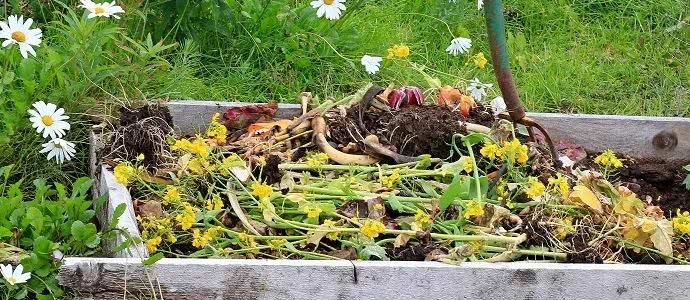
When planting plants and flowers, you must never ignore the importance of soil. If the soil is too frequently disturbed, it will not only affect the growth of plants but also easily lead to a situation where they cannot bloom or bear fruit. If the soil lacks some of the nutrients plants need, it will be very difficult to grow plants healthily. The following are all key to improving soil fertility. Let's take a look together.
The following methods all use some discarded household materials to make organic fertilizer. They cost nothing at all, and the production methods are also very simple. See which one suits you.
1. Compost
The simplest way to improve soil fertility is to add compost soil. You do not need too much space to do it, and you can even make it on a balcony.
Nothing is easier than composting. You do not need a lot of space to do it. You can use common materials from daily life, such as common vegetable leaves, fruit peels, fruit shells, plant ash, eggshells, tea bags and coffee grounds, etc., and you can mix them with an appropriate amount of garden soil.
During the composting process, it should be placed in a warm place with a ventilated and light-transmitting environment. The composting materials should be kept moist and prevented from drying out. Generally, in 3~6 months it can be made into fully decomposed compost, and afterward it can be added to the soil to improve soil fertility.
2. Earthworms
Some friends are very afraid of these wriggly earthworms, but they play a very good role in decomposing organic matter and are very helpful for improving soil fertility. They can also speed up the decomposition and fermentation of compost.
You can create a suitable environment to attract earthworms, or you can directly go to the market and buy some live earthworms. Of course, you need to provide them with a suitable environment. You can directly find a spot in the yard and cover it with a layer of wooden boards, dry grass, wood chips or other things, keep the soil loose and breathable, and create an environment with moist soil and ventilation, with a certain amount of shade.
3. Dry fallen leaves
Fallen leaves can be laid directly on the soil in the yard, and after a period of time they can become excellent leaf mold. Of course, you cannot add some diseased leaves. Leaves of diseased plants cannot be mixed in, otherwise they will bring some fungal diseases. It is best to use fallen leaves of broadleaf trees. You can directly use a lawn mower to crush them, which helps them decompose and ferment faster.
Using fallen leaves to cover the roots of plants as mulch is also quite good. It can keep the roots cool very well, maintain moisture, avoid exposure to the sun, and in winter it can also prevent the roots from being frostbitten.
4. Coffee grounds
Coffee grounds are actually a very good composting material. They can also be added directly to the soil in the yard. After fully decomposing, they can release the nitrogen and potassium elements necessary for plant growth. Of course, you cannot let coffee grounds directly touch the roots and stems of plants, otherwise the coffee grounds can easily burn the roots and stems of plants during decomposition.
5. Urine
Urine is acidic and contains elements such as nitrogen, potassium and phosphorus. These are all necessary nutrients for improving soil nutrients. Of course, you cannot directly sprinkle urine onto the soil. You can collect it in a container and leave it for a few days.
Before sprinkling it onto the soil, you can dilute the urine with water at a ratio of 1:10. Just avoid sprinkling it directly onto the leaves of plants. However, you also need to consider whether your neighbors accept this practice of yours.
6. Leguminous plants
You can plant some leguminous plants in the yard, which can improve the nitrogen element in the soil very well. Leguminous plants can absorb nitrogen from the air, and the next year you can directly plant other plants in the soil where leguminous plants were grown.