The wild fruit is both sour and bitter, once disliked by farmers, but now it sells for 30 yuan per jin and has become a rare commodity.
Now that summer has arrived, if you ask what is most popular in summer, I think it is the air conditioner, watermelon, and mosquito coils. After all, the weather is so hot now and there are so many mosquitoes. Without these few things, summer would be hard to get through.
But in the rural areas of the past, there were no such good conditions. Back then, people basically used hand-held palm-leaf fans and ate wild fruits to get through the summer. Speaking of wild fruits, I remember that in my childhood, whenever the summer vacation came, what I loved most was getting together a few friends and going near the farmland or into the mountains to pick wild fruits to eat.
Below, I will share with you a kind of wild fruit. This wild fruit looks very pretty, but in the past, many farmer friends would get annoyed as soon as they saw it.
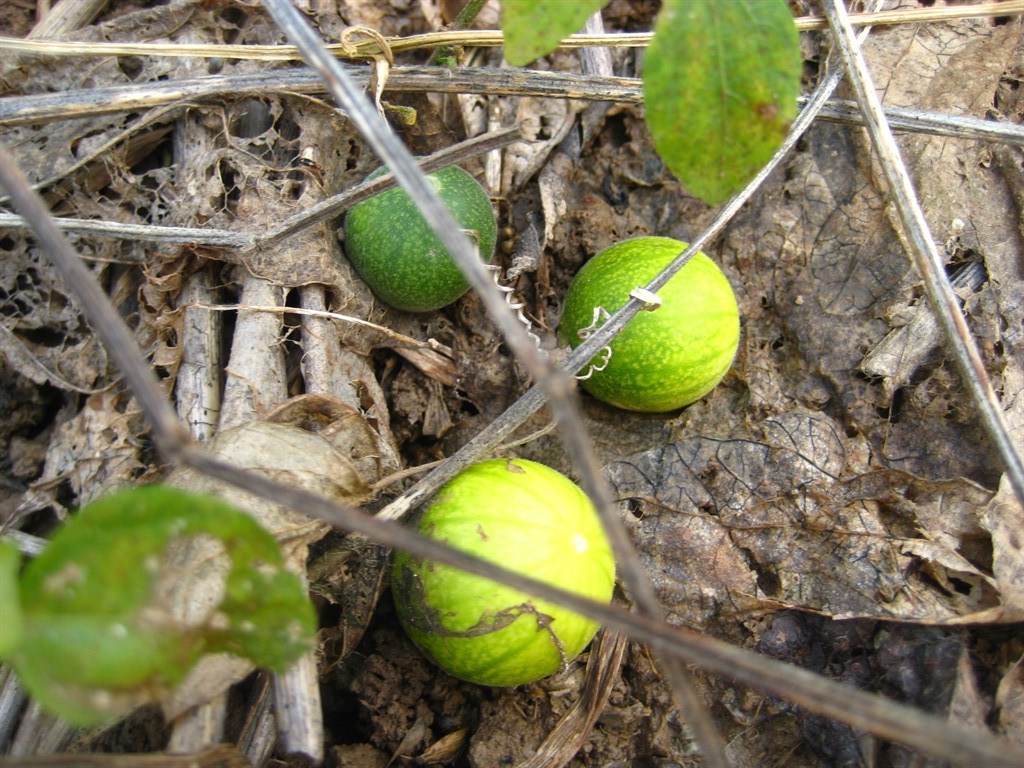
In the past, this kind of wild fruit would always grow in farmland. Its appearance resembles a watermelon, but it is much smaller than a watermelon, only as big as an adult's thumb. In my hometown, this wild fruit is called "shig melon" (literally "shit melon"). Not only is the name unpleasant, it also does not taste good, because it is both sour and bitter.
In the past, many farmer friends who worked the fields would get annoyed as soon as they saw this wild fruit. The reason was that this wild fruit called "shig melon" especially liked to grow in farmland. It was not good to eat and also affected crop growth, so people were very annoyed by it and would stomp it to pieces whenever they saw it.
But for rural children, although this "shig melon" was not tasty, it could be used as a toy. At that time, many rural children would grab a handful of "shig melon" in the fields and throw them back and forth at each other for fun, so they were actually quite fond of "shig melon".
Actually, the scientific name of this "shig melon" is "mabao melon" (Cucumis melo var. agrestis). It usually begins to bear fruit around July, and ripens around September. When mabao melon is unripe, it really does not taste good, being sour and bitter, but after it ripens, it can be eaten, and it has a fresh, sweet fragrance and tastes very good (but you cannot eat too much, as it easily numbs the tongue). However, in the past, because farmer friends disliked it very much, it was often completely cleared out before it even ripened.
In the past, I also always thought that mabao melon had basically no use other than being a toy for rural children. Only now have I realized that this view was wrong, because mabao melon actually has quite high value.
The seeds in mabao melon contain a large amount of oil and can be pressed for oil. It is a very good oil crop with great development prospects. A farmer friend of mine from Henan told me that in their area, some people specifically cultivate this mabao melon, and after refining it into oil, it now sells for 30 yuan per jin. Compared with the past, when it was removed on sight, this counts as a rare commodity.
Besides being able to be refined into oil, mabao melon is also rich in multiple vitamins, such as vitamin C and vitamin E. It can be dried and used to make tea, and it has the effect of sobering people up and preventing alcohol poisoning. However, this mabao melon is now becoming more and more rare in my hometown.
Dear friends, did you eat or play with "mabao melon" when you were children? You are welcome to leave a message and share!