Don't throw away watermelon rinds. Put a little in the pots of gardenias and jasmine, and a single pot will bloom with dozens of flowers.
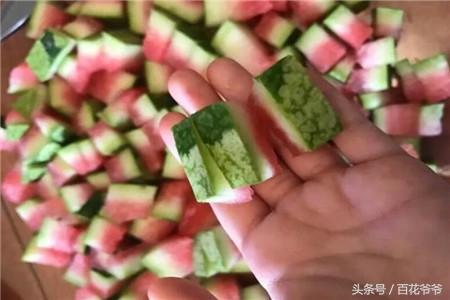
Summer is here, there are all kinds of fruits around, and accordingly there are lots of fruit peels too, especially watermelon rinds. Even just eating a bit casually produces a lot of watermelon rinds. Collect some to use for growing flowers, and the effect is simply fantastic. Today's share is to teach everyone how to use watermelon rinds to grow flowers.
1. Mixing and fermenting watermelon rinds with soil
Find a styrofoam box, spread a layer of soil on the bottom, then cut the watermelon rinds into pieces and spread a layer, then continue with a layer of soil and a layer of watermelon rinds. Finally, cover the top with a layer of soil, seal it with plastic, and put it in a warm place to ferment for 2 months and it's done. The soil made with watermelon rinds is full of fertility and tends toward acidic, making it very suitable for growing all kinds of acid-loving plants, such as jasmine, gardenia, camellia, and so on.
Note: When using it, remember to expose it to strong sunlight to disinfect it before use. Use it to plant newly bought jasmine and gardenia, and you will find the flowering is especially...
2. Watermelon rind water
If you find using soil troublesome, we can also directly ferment watermelon rinds with water. Wash the watermelon rinds, cut them into small pieces, put them in a bucket, then add water until it covers the watermelon rinds. Note that after adding water, the watermelon rinds being 70% full is enough; otherwise, during fermentation it can easily overflow. Cover with a lid, but do not cover it too tightly, and place it in the sun to expose it for about 20 days and it's done.
Note: Fermenting watermelon rinds with water will relatively have a bit of an odor, so it is best to add some orange peel in to ferment together. When handling the watermelon rinds, try to cut them smaller, which can speed up fermentation. After fermentation is complete, when using it, dilute it with water at a ratio of 10 times before using it to water flowers. For flower enthusiasts in northern regions, it is highly recommended to ferment a bucket to keep on hand for growing gardenias, camellias, and so on, as yellowing leaves are less likely to occur.
3. Making enzymes with watermelon rinds
If you are afraid of the smell and also feel it is not clean enough, then you can also use watermelon rinds to make enzymes, and the effect is equally good. Wash the watermelon rinds and cut them into pieces, put them into a container, add a little brown sugar, then add EM bacteria, pour in clean water until it covers the watermelon rinds, cover with a lid, and ferment for 4 weeks and it's done. When using it, note to dilute it; the enzyme concentration is relatively high, and when using it, it needs to be diluted 500 times.
Don't you think it is very practical? You don't necessarily need very good fertilizer; we can still grow flowers well. What must be said is that no matter which method of fermentation is used, it must be fully diluted before use. Watermelon rind fermentation is suitable for all kinds of acid-loving flowers, but do not use it for alkaline-loving flowers.