A detailed explanation of fragrant pig farming technology, a full analysis of scientific rearing methods
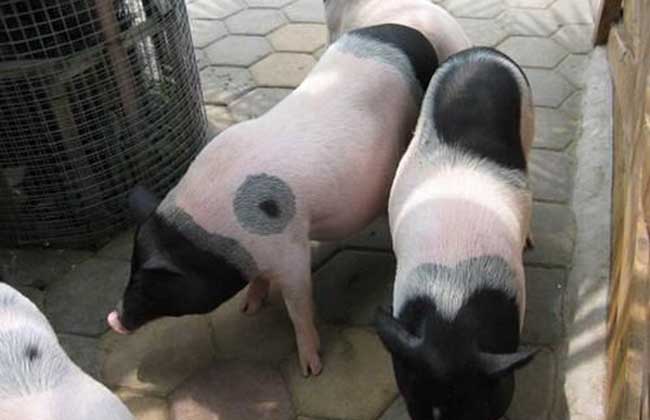
The fragrant pig, also known as the mini pig, has farming characteristics such as tolerance of coarse feed, strong adaptability, easy management, and slow growth, with thin skin and fine bones, tender meat, and a delicious flavor. It is suitable for processing into the excellent characteristic of roast suckling pig, and at the same time it also has broad prospects as an experimental animal or pet. Now let us take a look together at the farming technology for fragrant pigs!
Pig house design for fragrant pigs
The pig house for fragrant pigs should be built on dry, wind-sheltered, sunny, and level ground. Either a single-row or double-row form may be used, but the walls must be built with brick and stone and finished with cement so that they can be washed and cleaned. The pens have relatively high requirements, and the exercise yard should be larger. Each small fragrant pig should occupy 0.8 sq m, and keeping 8-10 pigs per pen is suitable. A manure yard should be set up outside the pig house, with 1.5 sq m of manure yard per pig.
Feeding and management of fragrant pigs
1. After small fragrant pigs are born, the sow's teats should be fixed so that the piglets can suckle enough colostrum, and warmth should be strengthened to let them start eating early. Generally, after 4 days of birth, concentrated feed can be supplemented. Weaned piglets should be fed a compound feed, and its feed formula is: corn 10%, rice bran 50%, soybean cake 8%-10%, wheat bran 30%, flour 1%, salt 0.5%. Each kilogram of feed should contain 10.5 megajoules of digestible energy and 16.2% crude protein.
2. Fragrant pigs are mainly raised by grazing and often eat green feeds such as wild grass and fragrant rice grain, which gives the suckling pig meat a special fragrance. At the same time, concentrated feed should be supplemented. Each replacement gilt (2-4 months old) consumes an average of 0.2 kg of concentrated feed and 1 kg of green feed per day. Pregnant and lactating sows consume an average of 0.4 kg of concentrated feed and 2 kg of green feed per head per day.
3. Fragrant pigs reach sexual maturity early, tolerate inbreeding, and have stable heredity. Boars at 2 months of age and 8 kg in weight already show mounting sexual behavior, and mating is carried out at 3 months of age. Sows come into estrus at 3 months of age and can be mated at 4 months of age, with an average of 7-10 piglets per litter. The ratio of males to females is best at 1:(8-10).
4. Fragrant pigs have the characteristics of rapid early growth and putting on fat while growing. Birth weight is 0.3-0.5 kg, and at 60 days of weaning the average weight per pig is about 5 kg. The body weight of adult pigs is only 15—38 kg. Generally, suckling pigs raised to 5-7 weeks of age are the most suitable for marketing and slaughter.
5. The cold resistance of fragrant pigs is lower than that of local pig breeds. Poor insulation will not only affect normal growth but also cause losses. The walls of the pig house should preferably be one and a half bricks or one adobe in thickness, tight, and without cracks. Around thin walls, more firewood and grass should be piled as an insulation layer. The pig house should be covered with a plastic film shed, preferably with two layers of plastic film. Straw curtains should be added on top of the shed at night. The shed should have ventilation holes, and ventilation should be carried out 1-2 times around noon every day. Each time half an hour is enough. Manure should be cleaned up in time, and the sleeping and lying areas should be frequently changed with dry grass, dry leaves, and dry sawdust. If there are pigs that urinate in their bedding area, they must be trained.