How much does Bama Xiang pig cost? Market price introduction
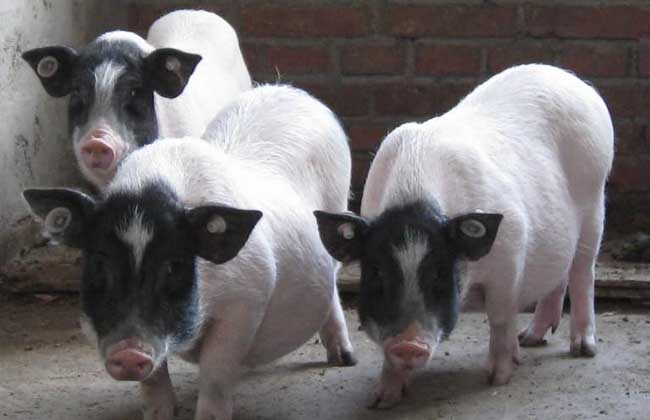
The Bama Xiang pig is a rare and valuable local miniature pig breed with a long history of rearing, stable genetic traits and excellent quality. In March 1995, Bama Yao Autonomous County in Guangxi was named "China's Home of Xiang Pigs" by the National Specialty Economy Professional Committee, and since then it has been recorded in history as a local specialty. Now let us take a look at how much Bama Xiang pigs cost!
How much does Bama Xiang pig cost?
The Bama Xiang pig originates from native pigs. Legend has it that it was domesticated from wild boars, and local people call it winter melon pig, plantain pig, two-end-black pig and so on. Because its bones are fine, its skin is crisp and its meat is tender, outsiders find it very fresh and fragrant when eating it, so it gradually became known as "Xiang pig" (fragrant pig). Adult Bama Xiang pigs are divided into commercial pigs and breeding pigs. For commercial pigs, the live pig market price is generally around 30 to 40 yuan per jin, while breeding pigs are priced according to appearance and size, usually around 600 to 800 yuan.
Breeding benefits of Bama Xiang pigs
1. Tolerant of coarse feed: Bama Xiang pigs are mainly raised by grazing and often eat wild grass, fragrant rice and other green feed, which gives the suckling pig meat a special fragrance. Each reserve sow (2 to 4 months old) consumes on average 0.2 kg of concentrate feed and 1 kg of green feed per day. Pregnant and lactating sows consume on average 0.4 kg of concentrate feed and 2 kg of green feed per day per head, so feed consumption is low.
2. Strong adaptability: Bama Xiang pigs have strong adaptability to climate and rarely get sick.
3. Slow growth: Bama Xiang pigs grow rapidly in the early stage and fatten as they grow. Birth weight is 0.3 to 0.5 kg, average weight at 60 days weaning is about 10 kg per head, and adult pigs weigh only 15 to 38 kg. Generally, suckling pigs raised to 5 to 7 weeks of age are most suitable for slaughter and marketing.
Precautions for breeding Bama Xiang pigs
1. Pig breed selection: When introducing Bama Xiang pigs, the appearance, growth and development, bloodline and presence of genetic defects of the pig breed should be strictly examined. The breed characteristics should be obvious and reproductive function vigorous. The pig breed pedigree card should also be brought back for preservation and future reference.
2. Local environment: The introduced Bama Xiang pigs must meet the living consumption level and economic development needs of the local people. At the same time, the characteristics of the breed, climate and feeding management should be understood so as to determine the acclimatization measures after introduction and create the necessary feeding and management conditions. Only in this way can the breeding benefits of Xiang pigs be guaranteed.
3. Introduction season: Bama Xiang pigs are best introduced in late spring, so that they pass through the warm summer and then go through autumn and winter as temperatures gradually drop. Cold protection work should be done after the beginning of winter so that they gradually adapt to the local natural conditions.
4. Pig age: It is best to introduce young pigs about 3 months old or slightly older. At the young stage, pigs have strong adaptability and are more likely to accept changed external living conditions. Newly introduced pig breeds should not be fed separately, but should be concentrated in 1 or several pig farms, where good feeding and management conditions are created for raising them. At the same time, observation records should be kept well, and breeding and selection work should be done well. After they adapt, they can gradually be promoted.
5. Pay attention to epidemic prevention: When Bama Xiang pigs are introduced from other places, they should be kept in centralized isolation for 1 to 2 months, and epidemic prevention and disinfection should be strengthened. Attention should be paid to eliminating and preventing the threat of local parasitic diseases and infectious diseases to ensure the safety of the introduced pig breeds.