What is the market price of Tibetan fragrant pig per jin?
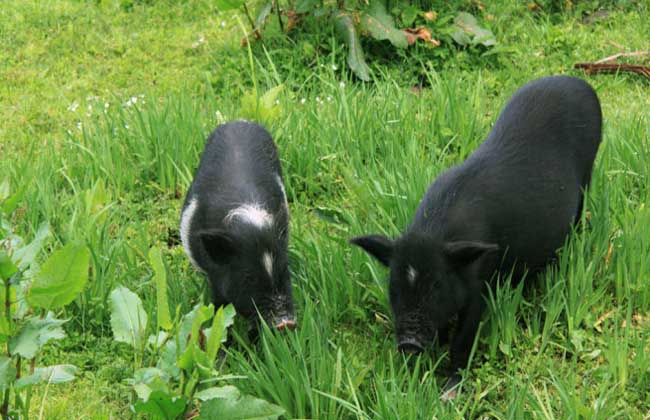
The Tibetan fragrant pig, also known as the pipa pig, ginseng pig, and fern hemp pig, is an ancient livestock breed resource unique to the western Sichuan plateau, Yunnan, Tibet, Gannan and Minxian in Gansu. It has a sturdy build, a pointed snout and long head, fine hooves and hard bones, black and smooth glossy fur, is good at running, has particularly well-developed heart and lung function, and possesses extremely strong disease resistance and cold resistance. Now let us take a look at how much the Tibetan fragrant pig costs per jin!
How much is Tibetan fragrant pig per jin?
The Tibetan fragrant pig is the only grazing-type pig breed in our country, growing in highland areas at an altitude of 3000-4000 m, feeding mainly on natural wild edible plants and fruits. The average weight of an adult pig is less than 50 kg, and the market price is usually around 100 yuan per jin. When sold by the head, only Tibetan fragrant pig breeding stock is priced that way, with breeding stock prices varying around 1500-2000.
The farming prospects of the Tibetan fragrant pig
Because the Tibetan fragrant pig is raised freely in mountain forests and year-round eats abundant wild plants and Tibetan medicinal herbs, it has a petite body size, high nutritional value, and delicious, non-greasy meat. It is now widely popular on the market and in short supply. At market prices, each pig can sell for up to about 1500 yuan, piglets sell for about 800 yuan each, and suckling piglets are about 400 yuan each. Compared with the high returns, the farming cost of the Tibetan fragrant pig is very low. Normally, farmers and herdsmen only need to feed it some highland barley, wheat, and peas, and for most of the time it is raised freely in the wild.
The living habits of the Tibetan fragrant pig
1. Group habits: The Tibetan fragrant pig is highly gregarious. Herds generally travel in groups and never disperse to act on their own. Usually, one household is an independent unit of activity, and mixing of household herds is very rare. In each herd of Tibetan fragrant pigs, 1-2 boars or sows are often the “leader pigs”, and the remaining pigs all follow behind them. If foreign pig herds or enemies intrude, they often fight and drive them off with the “leader pig” at the forefront, especially boars and lactating sows. If they cannot hold off the enemy, the whole herd migrates and flees.
2. Feeding habits: The Tibetan fragrant pig has an extremely wide feeding range and extremely strong feeding ability. From herbaceous plants to woody plants, from roots and stems to leaves and fruits, from above ground to below ground, and from water surface to land, it can feed on all of them. The main types it feeds on include various wild vegetables, grass roots, tree leaves, twigs, as well as more than 10 kinds such as ginseng fruit and qinggang seeds, and it often preys on fish in shallow water. For drinking water, it mainly uses mountain stream and river water or water accumulated in low-lying areas, while in winter and spring it often drinks from accumulated snow.
3. Habitat habits: The Tibetan fragrant pig tends to choose places sheltered from wind, facing the sun, dry, and protected from rain, snow, and frost as habitats. Under normal circumstances, the Tibetan fragrant pig can directly dig the soil to make a nest or use caves and pits as nests. Lactating sows with piglets mostly dig the soil to make a nest, covering it with dry branches, leaves, and grass to build a simple habitat. During the day, the herd feeds, drinks, and moves around near the habitat, and its range of activity is generally within 2 km. Before returning to the habitat in the evening, it is accustomed to excreting feces near the habitat.
4. Migration habits: The Tibetan fragrant pig has the habit of collective migration. The frequency of changing feeding and habitat sites depends on various factors such as food, drinking water, and enemies. In places with lush water and grass, abundant food, and few enemies, it generally stays for a longer time. Once feeding, drinking water, or safety is threatened or harmed, the herd spontaneously migrates elsewhere. The usual migration interval is about 7-40 days, and the migration distance is about 0.5-2 km.