Bama Xiang Pig Farming Technology Video: Teaching You Scientific Breeding Methods
The Bama Xiang pig is a precious and rare local miniature pig breed with a long breeding history, stable genetic makeup and excellent quality. It is raised extensively and has strong adaptability and disease resistance. Breeding sows are generally used for eight years, and up to fourteen years at most. It has a wide range of uses and very broad development prospects. Let us take a look at the Bama Xiang pig farming technology video together below!
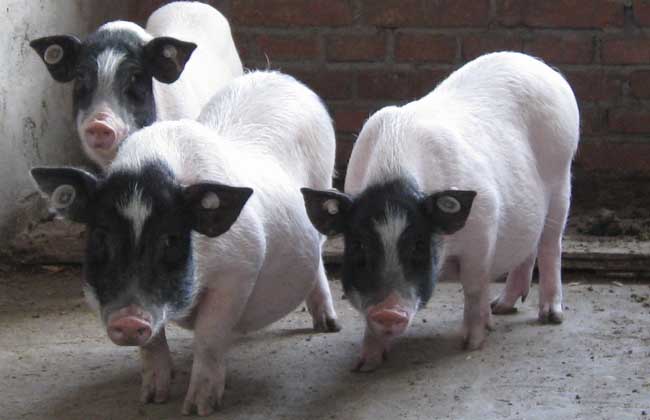
Bama Xiang Pig Farming Prospects
The Bama Xiang pig has thin skin and fine bones, tender meat and a delicious flavor, making it suitable for processing into roast suckling pig. It also has broad prospects as a laboratory animal or pet. The biggest advantage of Bama Xiang pig farming lies in the pig's own tolerance to coarse feed, strong disease resistance and strong adaptability. Because of these advantages, farming them requires less feed input, has a high survival rate, needs less environmental and labor input, and has low technical requirements. Therefore, Bama Xiang pig farming is a low-threshold, low-cost and low-risk farming operation.
Breeder Pig Introduction for Bama Xiang Pigs
1. Pig breed selection: Before farming Xiang pigs, be sure to pay attention to breed selection. When introducing breeding stock, strictly examine the pig breed's appearance, growth and development, bloodline, and whether it has genetic defects. The breed characteristics should be obvious and reproductive function vigorous, and pedigree cards should be brought back for keeping and future reference.
2. Introduction time: It is best to introduce Xiang pigs in late spring, so they pass through the warm summer and then go through autumn and winter as temperatures gradually drop. Cold protection work should be done after the beginning of winter so they gradually adapt to local natural conditions. It is best to introduce young pigs around 4 months old or slightly older. At the young stage, pigs have strong adaptability and easily accept changed external living conditions.
Reproductive Cycle of Bama Xiang Pigs
1. Male Xiang pigs: Bama male Xiang pigs show mounting behavior at 65-75 days of age, and clear fluid first appears in the testes at 76 days of age. At 170 days of age and a body weight of 8.5-17 kg, semen is collected, with an ejaculation volume of about 25 ml and 250 million sperm per ml of semen. Female Xiang pigs first come into estrus at 120 days of age, with an estrus cycle of 21 days, a duration of 3-4 days, and a gestation period of 111-115 days.
1. Female Xiang pigs: Bama female Xiang pigs have a small litter size. The first litter is about 8 piglets, the birth litter weight is 3.36 kg, the number of weaned piglets at 60 days of age is 8, and the litter weight is 80 kg. For second and later litters, female Xiang pigs give birth to 10-12 piglets.
How to Shorten the Reproductive Cycle
1. Induced estrus: Inducing weaned sows to come into estrus and ovulate normally in a timely manner can shorten the sow's reproductive cycle and improve the utilization efficiency of breeding pigs. Commonly used methods include boar induction, grouping and pen merging, increased exercise, udder massage, and exogenous hormones (such as pregnant mare serum gonadotropin, human chorionic gonadotropin, etc.).
2. Early weaning: Sows weaned at 60 days can produce 1.8 litters per year, sows weaned at 45 days can produce 2 litters per year, and sows weaned at 28 days can produce more than 2.2 litters per year. Generally, in factory-style and intensive pig farms, piglets can be weaned at 4-5 weeks of age, while in rural household pig farming they can be weaned at around 7 weeks of age.
3. Piglet fostering: Fostering means that when a certain number of sows farrow at the same time on a pig farm, piglets from large litters or those without milk to drink are fostered to sows with small litters. It is one of the effective measures to improve piglet survival rate, and at the same time it also allows some sows to come into estrus and be mated as early as possible, shortening the farrowing interval of these sows.
Feed Formulation for Bama Xiang Pigs
1. Bran and middlings feed: Bran and middlings feed includes rice bran, wheat bran, sweet potato vine bran, peanut vine bran, broad bean leaf bran, soybean straw bran, etc. The amount used for pigs is 10-15% of the total feed, and no more than 20% at most.
2. Cake and meal feed: Cake and meal feed mainly includes rapeseed cake, peanut cake, cottonseed cake, soybean cake, sesame cake, etc. The proportion of cake feed used for pigs is 10-25% of the total feed. Soybean cake and peanut cake are nutritious and can be included at 25%. Rapeseed cake and cottonseed cake should be below 10%. Rapeseed cake and cottonseed cake must be detoxified before use as feed, while other cakes only need to be steamed or cooked before mixing and feeding. Cake and meal feed should not be added to piglet feed.
3. Distiller's grains and residue feed: Distiller's grains and residue feed includes distiller's grains, bran residue, vinegar residue, starch residue, bean residue, bagasse, etc. The amount used for pigs is 5-10% of the total feed. Pregnant sows and pigs in the late fattening stage should not be fed distiller's grains. All kinds of grains and residues must be cooked thoroughly before feeding.
4. Grain feed: Grain feed includes corn, barley, wheat, sorghum, broad beans, peas, etc. The amount used for pigs is 50% of the total feed, and no more than 60% at most.
5. Animal-based feed: Animal-based feed includes silkworm pupae, fish meal, bone meal, blood meal, feather meal, etc. The amount used for pigs is 4-8% of the total feed, and piglets should not be fed blood meal. In fattening pig feed, fish meal can be included at 10%; if silkworm pupae are included, fish meal can only be included at 5-6%. When using this type of feed, pay attention to balancing the calcium and phosphorus ratio.
6. Mineral feed: Mineral feed includes shell powder, eggshell powder, calcium carbonate, calcium phosphate and salt, etc. The amount used for pigs is 1-2% of the total feed, and the amount of salt used should not exceed 0.5%. If trace elements are added, they must be used strictly according to regulations.
7. Green and succulent feed: Green and succulent feed includes aquatic duckweed, water hyacinth, water lettuce, alligator weed, and leaves and vines of crops, as well as alfalfa, vetch, etc. This type of feed is green, succulent, nutritious and easy to digest, and generally accounts for 40% of the total feed.