How much does a mini fragrant pig cost? Breeding technology and market prospect analysis
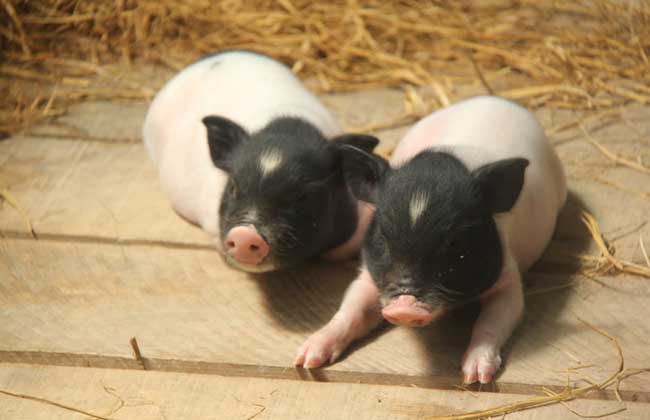
How much does a mini fragrant pig cost?
Generally speaking, the price of a male fragrant pig is around 300-400, and the price of a female fragrant pig is around 500-600. The editor reminds everyone not to be greedy for cheap prices, otherwise it is easy to buy fake fragrant pigs. At the same time, according to the pricing of different merchants, French and Japanese fragrant pig breeds should be more expensive if they are purebred, but particularly cheap ones are definitely not pure enough. Domestic mini fragrant pig breeding boars cost about 450 yuan, and sows about 550 yuan. Bama fragrant pig breeding pigs range from 600 to 800 yuan depending on quality.
Fragrant pig breeding prospects
Fragrant pigs have thin skin and fine bones, tender meat, and a delicious taste, making them suitable for processing roast suckling pig. At the same time, they also have broad prospects as experimental animals or pets. The biggest advantage of fragrant pig breeding lies in the fragrant pig's own tolerance to rough feed, strong disease resistance, and strong adaptability. Because of these advantages, fragrant pig breeding requires less feed input, has a high survival rate, requires less environmental and labor input, and has low technical requirements, so fragrant pig breeding is a low-threshold, low-cost, and low-risk breeding business.
Fragrant pig breeding costs
1. First-year investment: 150 sq m of pen and equipment investment, totaling 30000 yuan. Labor input for 2 people, totaling 30000 yuan per year. Breeding pig feed input of 18000 jin, at 0.8 yuan per jin, totaling 14400 yuan. Fattening pig feed input of 200 yuan per pig. Vaccines, medicines, and health care input of 400 yuan. Water, electricity, and other inputs of 500 yuan. Total 75300 yuan + fattening pig feed.
2. Investment in subsequent years: labor input for 2 people, 30000 yuan per year. Breeding pig feed input of 18000 jin, at 0.8 yuan per jin, totaling 14400 yuan. Vaccines, medicines, and health care input of 400 yuan. Water, electricity, and other inputs of 500 yuan.
3. Total cost: 45300 + fattening pig feed. The above is calculated at the highest standard. If green feed such as fresh grass is added, the cost is lower.
Fragrant pig breeding profits
1. Income: each sow can produce 2.2 litters per year, and at least 2 litters apart from special circumstances such as disease and return to estrus. The average is 10 piglets per litter, so each sow can produce 20 pigs per year. Among the 20 pigs produced, excluding deaths and culling, generally each sow can send more than 16 pigs to market per year. 20 sows can send 320 pigs to market per year. Fragrant pigs can be used for roast suckling pig at at least 200 per pig, so 64000 yuan can be obtained. If fattened and sold as meat pigs at at least 600 yuan per pig, then 192000 yuan can be obtained.
2. Profit: the first-year net profit from selling suckling pigs = selling suckling pigs - costs for the year = 64000 - 75300 = -11300 yuan. Profit from selling fattening pigs = selling fattening pigs - costs = 192000 - (75300 + 64000) = 52700 yuan. In each subsequent year, after deducting 48000 yuan for breeding pig input and pen and equipment input, selling suckling fragrant pigs can yield a profit of 36700 yuan/year, and selling fattening pigs can yield a profit of 100700 yuan/year.
Note: in fragrant pig breeding, attention must be paid to the selection of pig breeds. When introducing breeds, strictly inspect the appearance, growth and development, bloodline, and whether there are genetic defects. The breed characteristics should be obvious, reproductive function should be vigorous, and pig breed pedigree cards should be brought back for preservation and future reference. Also pay attention to the local environment. The introduced fragrant pigs must conform to the local people's living and consumption level and the needs of economic development. At the same time, understand the breed, climate, feeding management, and other characteristics so as to determine the acclimatization measures after the fragrant pigs are introduced and create the necessary feeding and management conditions. Only in this way can the benefits of fragrant pig breeding be guaranteed.
Fragrant pig breeding technology
1. Grouping and penning: fragrant pigs should be reasonably grouped according to size, physique, sex, physiological stage, and so on. It is best to put pigs from the same sow and the same litter into the same pen. If pigs from different maternal lines or litters need to be mixed in, it is best to spray a strong-smelling disinfectant on the pigs' bodies to interfere with their ability to recognize smells and prevent fighting.
2. Stocking density: fragrant pigs are small in size, so the stocking density can be appropriately higher than that of other pig breeds. A 10 sq m pen can house about 10 piglets, while a 10 sq m pen is suitable for 5 large pigs. Too high a density will aggravate competition for food and fighting, affecting feed intake, activity, and sleep, while too low a density wastes pen space. In addition, fragrant pigs reach sexual maturity relatively early, so preparations should be made in advance for grouping by sex.
3. Roughage feeding: in order to ensure the quality of fragrant pigs, the method of roughage feeding must be maintained. The drinking water source should be clean and pollution-free mountain spring water. The daily ration is mainly farm green feed, accounting for about 80%, and various green vegetables, sweet potato leaves and vines, and even some grass roots, tender grass, and various wild vegetable vines and leaves in the mountains can all serve as feed for fragrant pigs. Commonly used supplementary feed accounts for about 20%, mainly including rice bran, broken rice, corn, sweet potatoes, and other farm crop by-products, with appropriate additions of soybean cake, wheat bran, fish meal, bone meal, salt, and so on. The crude protein content in the ration is about 16%. In places lacking green feed, the ratio of green and rough feed can also be appropriately adjusted.
4. Feeding method: use the method of fixed-time and fixed-quantity feeding, 3-4 meals/day, fed in the morning, noon, and evening. Piglets consume about 0.2 kg of supplementary feed and about 1 kg of green feed per day. Large pigs and sows consume 0.4 kg of supplementary feed and about 2 kg of green feed per day. Where conditions permit, when the weather is fine, after the morning feeding the pigs can be released outdoors to range, preferably in mountain and wild areas, allowing them to find food and move on their own. Fragrant pigs raised extensively under forests not only have a strong physique and greatly reduced feeding costs, but also have even better quality.
5. Disinfection and epidemic prevention
(1) Disinfection measures: in order to eliminate bacteria and viruses in the environment and cut off the transmission routes of epidemic diseases, comprehensive epidemic prevention disinfection should be carried out regularly on the site, pens, troughs and utensils, bedding straw, and so on. Routine disinfection is once every 7-10 days. Bromochlorohydantoin can be selected and diluted with water at 1:500 for spray disinfection. Other disinfectants can also be selected, such as 5-20% bleaching powder solution, 2-5% caustic soda solution, 20% plant ash water, or 10-20% lime milk.
(2) Planned immunization: carry out epidemic prevention according to the local animal epidemic situation. Piglets over 20 days old begin immunization with swine fever vaccine, and after 1 week, immunize with swine foot-and-mouth disease vaccine and porcine blue ear disease vaccine. According to the feeding cycle, give a supplementary immunization once every six months (fragrant pigs grow relatively slowly and have a longer feeding cycle). Sows are immunized once every six months, and during the stage of multiple pregnancies and postpartum weakness, immunization should be avoided or done cautiously.
(3) Parasite prevention: fragrant pig parasite prevention adopts drug control measures, with deworming medicine administered once a month. For nematodes, ivermectin or levamisole can be used. For cysticercosis prevention and treatment, albendazole or praziquantel can be used. Manure, bedding straw, and other pollutants should be cleaned promptly to prevent pigs from being infected with parasitic diseases and repeated infections.