How to tell male and female budgerigars apart? Teach you quick identification methods
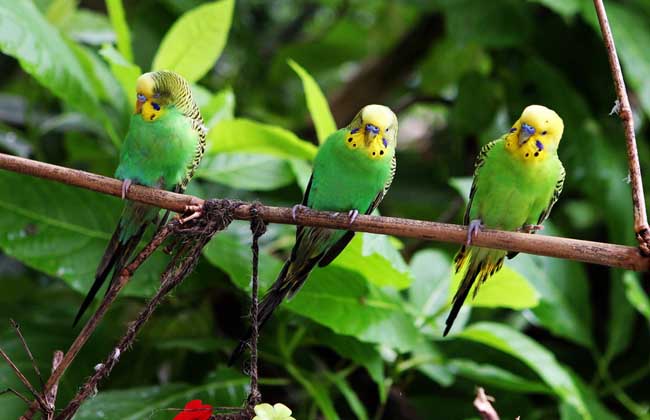
The budgerigar is the most common pet bird in the world, with many varieties, mischievous and cute, and widely loved by the public. The total number worldwide exceeds 5 million. It is often the first parrot that many people who are newly interested in parrots buy, and it is also the species most often seen at bird shows. Now let us take a look at how to tell male and female budgerigars apart!
How long do budgerigars live?
The average lifespan of a budgerigar is 7 to 10 years, and with careful keeping it will be longer. In fact, the lifespan of parrots is generally divided into physiological lifespan and actual life. Excluding all environmental factors and external accidental conditions, budgerigars can generally possibly live to about 50 years. Similar parrots such as small parrots like the budgerigar are about 8 to 12 years, cockatiels are about 15 to 20 years, medium-sized parrots such as Amazons are 20 to 50 years, and as for large parrots such as macaws and cockatoos, they are 30 to 60 years.
How to tell male and female budgerigars apart?
1. Young budgerigars: the cere of the male is basically pink, which applies to young birds after leaving the nest at one month old, because in young birds the nasal membrane is congested early on and difficult to judge. Around the nostrils of the female it appears white, and occasionally also pink, but very pale.
2. Subadult birds: for males, depending on the variety, the cere color is generally blue; recessive pied males and double-factor dominant pied males are pink, lifelong peach pink with a bit of purple. Around the nostrils of the female it is white, with a very pale blue outer edge, or the cere is white.
3. Adult budgerigars: for males, depending on the variety, the cere color is generally blue; recessive pied males and double-factor dominant pied males are pink, lifelong peach pink with a bit of purple. Some females have a white cere, which may be during the fading period of the breeding season; some females have not yet reached the breeding season; some have a wrinkled cere appearing tea-brown, which indicates that the female is in the breeding season.
How to tell old and young budgerigars apart?
1. Young birds have a large number of stripes distributed on the forehead, which gradually recede with age until they are completely gone at adulthood. There will be a solid-colored area on the head; for the green series and yellow series it is yellow, and for blue, white, and gray it is white. The feathers in this area of old birds are messy.
2. The eyes of young birds are completely black, looking very cute, and after adulthood a white eye ring gradually appears.
3. The beak of young birds is waxy yellow, with black at the tip (in most birds), and gradually becomes grayish brown after adulthood, though the beak shell of pied types remains orange-red for life. Newly adult birds may still be waxy yellow, but after some time past adulthood they will change color, and some change color as soon as they become adults.
4. The feet of young birds are very tender, generally pink; newly adult birds do not change much in color, but after a period of time the change is quite obvious, the feet and claws become rough, and they are no longer fleshy like those of young birds, with the color becoming similar to blue-black ink. Not all males will become this color; some are gray.
5. Young birds have bright eyes, while old birds have eye bags around the eyes.
6. Young birds have neat feathers, while old birds have fluffy feathers and are fat.
7. Young birds are lively and mischievous, while old birds move slowly.