Can Lovebirds Talk? An Article to Reveal the Truth
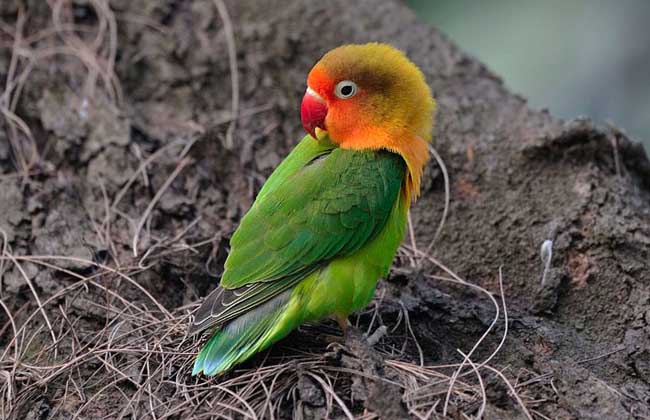
Lovebirds, also known as parakeet lovebirds, love birds, and so on, originated in Africa and belong to the genus Agapornis in the family Psittaculidae, order Psittaciformes. In China, three types are kept: the black-headed lovebird, the red lovebird, and the yellow-headed lovebird. Because they can be bred artificially and have brightly colored feathers, they are deeply loved by bird keepers. Let's take a look below at whether lovebirds can talk!
Can Lovebirds Talk?
Lovebirds cannot talk. Birds that generally mimic speech (not only human words, but also cat meows, etc.) include the African grey parrot, macaw, cockatoo, crested myna, hill myna, and so on. Lovebirds are a small parrot species and cannot mimic speech, but lovebirds can imitate the calls of other birds and animals, as well as sounds they find interesting.
How to Tell Male and Female Lovebirds Apart
1. Head shape: The male bird's head is occipital, pointed, and slightly smaller. The female bird's head is flat, smooth, and perfectly round, and slightly larger compared with the male.
2. Body shape: The male bird is lean, with tight feathers, is active, and has a fierce temperament; the distance between the eye ring and the top of the head is relatively far, and the eyes appear small. The female bird is relatively plump, with slightly loose feathers, is less active, and the distance between the eye ring and the top of the head is relatively close, with the eyes appearing large.
3. Tail feather tip: The male bird's tail feather tip is relatively pointed, forming a V shape. The female's tail feather tip is forked, forming a W shape.
4. Cloaca: The male bird's cloaca shows a small distance between the pubic bones and has a raised protrusion (that is, a pointed object). The female bird's cloaca has a large distance between the two pubic bones; in particular, for an adult bird, a middle finger can be inserted, and it is flat with no protrusion. This method of identification is especially accurate; an experienced person can correctly distinguish males from females even from young birds.
How to Keep Lovebirds?
1. Lovebirds mostly eat husked millet and like cereal grains with husks, but feeding only millet will leave the parrot undernourished, so a mix of many grains must be fed, such as rice, hempseed, barnyard grass seed, sunflower seeds, red millet, black millet, yellow millet, safflower seed, sorghum, and so on. Note that sunflower seeds should not be fed too much; feeding 10 to 20 raw sunflower seeds per day is best.
2. Besides grains, lovebirds should also appropriately eat some clean fruits and vegetables. Fruits should be cut into small pieces for feeding. Also note that the parrot needs calcium supplementation; you can buy some cuttlebone, or crush eggshells and mix them into the food, but pay attention to the amount of food and do not keep the parrot too fat, otherwise it will not breed easily.
3. Pay attention to cage hygiene and clean the parrot's droppings on time. Wood shavings or fine sand can be spread on the bottom of the cage to prevent bacterial and viral infections and reduce parasites. At the same time, pay attention to the cage's location; it should be chosen in a quiet, undisturbed place, without environmental pollution, and with attention to air circulation and freshness. Indoors is not suitable for keeping parrots. Because parrots like to bite the cage, you should also prepare a gnawing stick for the parrot; ordinary wood will do, to prevent the parrot's curved beak from growing longer and longer and starting to fight.
4. Chicks reach sexual maturity after being raised for about 6 months and can then breed, so a wooden box and a breeding box should be prepared for the parrot. However, lovebirds will not breed in the hot summer; other seasons are all fine. Generally, the female bird lays 6 to 8 eggs per clutch, and the incubation period is about 19 days.
5. Lovebirds also need drinking water, but note that the water must be changed every day. If conditions permit, you can feed a little nutrient sand. Nutrient sand contains calcium, iron, and many kinds of trace elements and nutrients, and helps strengthen bone firmness, make the feather color bright, and supplement calcium, and so on.