What Do Parrots Eat? Parrot Diet Guide and Feeding Tips
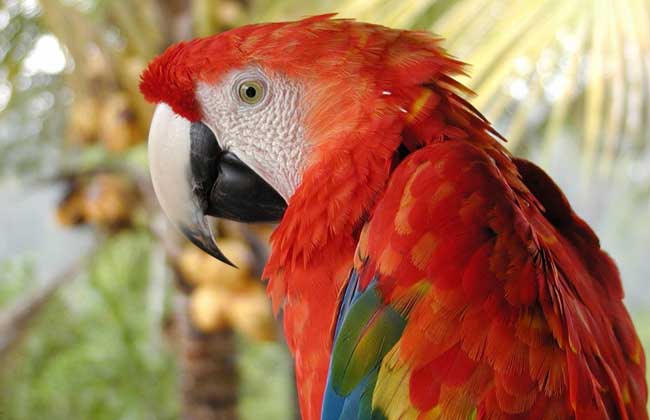
Parrots are a collective term for the many brightly feathered, noisy birds of the order Psittaciformes. They are often kept as pets and are widely appreciated and cherished for their beautiful plumage and their ability to learn human speech. They are distributed across temperate, subtropical and tropical regions, generally living in small groups formed by pairs and families, perching on tree branches in forests, and mainly nesting in tree holes. Let's take a look at what parrots eat!
What do parrots eat?
Most parrots feed mainly on plant fruits, seeds, nuts, berries, tender buds and young twigs from trees or the ground, along with a small amount of insects, while lories and lorikeets feed mainly on pollen, nectar and soft, juicy fruits. When foraging, they often use their powerful hooked beak together with their flexible zygodactyl feet. While eating, they often use one foot as a "hand" to hold the food and stuff it into their mouth.
How long do parrots live?
The lifespan of parrots varies with the species. Small parrots generally live 7 to 20 years, while medium and large parrots have an average lifespan of 30 to 60 years. Some medium-sized parrots can live to around 80 years, such as the sulphur-crested cockatoo, Amazon parrot and grey parrot. The longest-lived bird in the world was an Amazon parrot named Jamie, born in Liverpool, England on December 3, 1870, and died on November 5, 1975, at the age of 105, making it a true elder among birds.
How to keep parrots
1. Overfeeding out of worry that the young bird is hungry. In nature, the parent birds must take turns going out to forage to feed their chicks, so the chicks cannot be fed until their crop is completely full. Therefore, chicks should be fed small amounts more frequently. Before feeding, first make sure that the food from the previous feeding has been fully digested, to avoid old food remaining and fermenting, which can cause ingluvitis (crop inflammation).
2. Generally speaking, parrots all love sunflower seeds, but many bird keepers use them as the only food, not realizing that this behaviour reduces the parrot's enjoyment and ability to forage, and that feeding only sunflower seeds easily leads to nutritional imbalance. In addition, sunflower seeds are rich in lipids and can easily cause obesity-related diseases.
3. Improper storage of feed can cause the food to spoil or even produce toxins, and if bird keepers do not notice and continue feeding it, the birds will of course have problems. Therefore, it is recommended to choose feed according to the number of birds you keep. Large packages are of course cheaper, but feed does not keep for long, so considering only this point may mean losing more than you gain. Besides storing feed in a dry or even refrigerated environment, inviting a few fellow hobbyists to share it is a good method: not only are the costs lower and the risks lower, but you can also try a wider variety of products.
Prevention and treatment of parrot diseases
1. Respiratory diseases: The most common condition of the respiratory organs is the common cold, with symptoms of a runny nose. After a bird catches a cold, move it indoors immediately and keep it warm, and it will usually recover on its own quickly. If the condition does not resolve on its own, dissolve borax in warm water to make a 2 to 4% boric acid solution, use it to wash around the nostrils, and feed canary grass seed feed to strengthen its resistance. You can also add a few drops of wine to its drinking water or give vitamin supplements to help it recover.
2. Digestive tract diseases: Caused by eating unclean concentrated feed or drinking unsanitary water, this leads to diarrhoea. Sick birds generally pass white, pulpy, watery droppings, and the feathers on the lower abdomen become soiled. After a bird develops this disease, feed only barnyard grass (cockspur grass) as the main food, move it to a warm place, and isolate one bird per cage to prevent contagion. Add a few drops of red wine to the drinking water. In severe cases, medication can be used: add furazolidone at 0.01% to the drinking water (crush each tablet and add it to 1000 ml of water). After drinking this for 3 days in a row, it will recover.
3. Parasitic diseases: Budgerigars often carry many feather lice, and attention must be paid to eliminating them. Methods for removing lice include applying veterinary lice-killing powder or rubbing with a medicated pen. In addition, budgerigars are also harmed by blood-sucking mites. Nest boxes are often the main breeding ground for blood-sucking mites. After each incubation period is finished, immediately scald the nest box once with boiling water, then coat the inside of the box with a BGP aqueous solution, an insecticide harmless to birds, and keep it clean and dry to prevent parasites.