What do budgerigars eat? A beginner's feeding guide
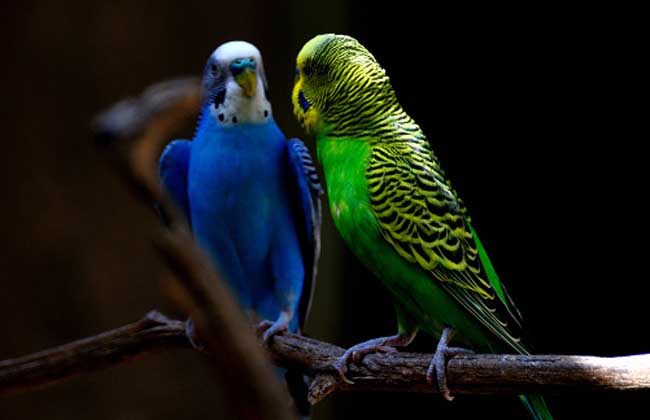
Budgerigars are the most common pet birds in the world, with a wide variety of breeds, playful and cute, and widely loved by the public. Their total number worldwide exceeds 5 million. They are often the first parrot that many people who are just becoming interested in parrots buy, and they are also the species most commonly seen at bird shows. Let's take a look below at what budgerigars eat!
What do budgerigars eat?
Wild budgerigars inhabit forest edges, grasslands and other places, moving about in flocks and feeding on plant seeds and the like. They like to eat feed with husks. Normally, millet, barnyard grass seed, foxtail millet or egg millet should be the staple, with some green vegetables fed every day. Oyster shell powder or bone meal should be kept as a standing feed (you can also put a whole piece of cuttlebone in the cage for them to peck at).
What can't budgerigars eat?
1. When buying a budgerigar, be sure to ask the seller clearly what the budgerigar was previously eating, because once it gets used to one kind of feed, it won't eat another kind given to it.
2. Fruits and vegetables should be fed at set times and in set amounts. Do not feed a large amount just occasionally, otherwise the budgerigar will get diarrhea because it cannot digest it.
3. Giving the budgerigar tap water is fine. If you think tap water is not clean, boiled water is also fine, but it must not drink beverages, because beverages are too sweet and will cause excessive nutrition!
Feed for budgerigars at different stages
1. Budgerigar chicks: after a budgerigar hatches, the mother bird loves to feed the chicks green vegetables most. Therefore, it is suggested to feed green vegetables at 10 a.m. and 3 p.m. every day to ensure the chicks' intake of staple food. There is a certain trick to preparing feed for young parrots: you should not feed them whatever they like to eat, but rather combine a variety of feeds reasonably.
① Egg millet: made by mixing 1 kg of foxtail millet with 4 egg yolks, generally accounting for 40% of the total feed amount.
② Rice: rice with the husk still on is best. Small parrots all like eating the seed coat of rice. It can supplement starch, protein, trace elements and various vitamins, and can also increase the beak's chewing ability. It generally accounts for 30% of the total feed amount.
③ Millet: generally accounts for 10%-15% of the total feed amount.
④ Others: the remaining portion can be hemp seed, barnyard grass seed, melon seeds, etc. According to practical experience, feeding 10-20 raw melon seeds per day is best.
2. Adult parrots: the mixing ratio for adult parrot feed is 7 parts millet or broomcorn millet, 2 parts barnyard grass seed, and 1 part perilla seed. This mixed granular feed is suitable for feeding many kinds of small parrots. In addition, feed mineral supplements such as cuttlebone and shells.
3. Self-prepared feed: nowadays pet stores have many feeds produced by manufacturers, and their nutritional combinations are generally fairly reasonable, so there is no need to mix them yourself again. But if you usually like to prepare feed yourself, then you must pay attention to reasonably configuring the nutritional components in the feed.
① Protein: protein is the main component making up a parrot's muscles, nerves, blood, skin, internal organs and feathers, and the content is generally required to be around 15%-30%, depending on actual needs. For example, young birds have a relatively large demand for it.
② Carbohydrates: carbohydrates are divided into nitrogen-free extract and crude fiber. If fiber is too high, the nutritional value will be lower, so that the parrot's growth slows down; if too low, it will slow down intestinal activity. The general requirement is 3%-5%.
③ Fat: fat is a high-energy substance and also a basic element composing cells. Fat can also help the digestion of fat-soluble vitamins. If the fat content is too low, it may affect the absorption of vitamins A, D, E, K, etc. The general fat requirement is around 1%-5%.
Note: Calcium supplementation for budgerigars is mainly done during their estrus period. If calcium is not supplemented at this time, it will cause a decrease in egg production, and the harm to the bird's body will also be relatively great. Bird shops sell something specifically called cuttlebone, which is actually the bone of a cuttlefish, specially for supplementing calcium in birds. It is very cheap and can also be bought in Chinese herbal medicine shops. This thing can be put directly into the cage for the budgerigar to nibble on by itself, or crushed and mixed with its food, fed 1-2 times a week. If you cannot buy cuttlebone, you can go to the local flower, bird, fish and insect market and buy some health sand, and feed it together with eggshells to supplement trace elements. If you do not use health sand, using eggshells directly is also fine.