How to Keep Crimson Rosellas? Detailed Guide to Care Methods and Tips
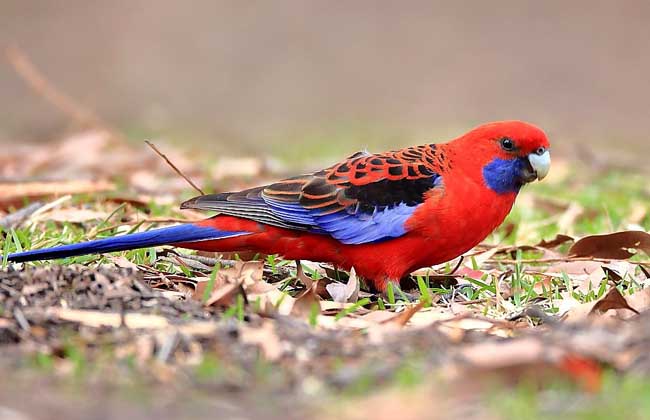
Crimson Rosellas are distributed in Australia and Norfolk Island, inhabiting forests, palm groves, open plains, as well as woodlands and agricultural areas. They usually move in pairs or small groups. Their main foods are flowers, nectar, seeds of grasses and trees, etc. They usually live in flocks of 4 to 6 birds. The breeding season is mostly from September to January. Let's take a look below at how to keep Crimson Rosellas!
Habits of the Crimson Rosella
Crimson Rosellas usually move in pairs or in small groups of 4 to 6 birds. After the breeding season, young birds gather into a large flock, and by September they go their separate ways. They are not very shy by nature and can usually be approached at close range. They usually live in flocks of 4 to 6 birds, and sometimes gather together with other species of rosella in the same genus, such as the Eastern Rosella. They often forage on the ground and usually stay in one spot for a long time. Young birds have a habit of gregarious migration, while adults only migrate to areas at other altitudes in the severe winter. They usually frequent shrubbery, flap their wings quite rapidly, and fly in a wavy pattern. When flying, they emit sharp, piercing calls, usually deeper than the voice of the Eastern Rosella.
What do Crimson Rosellas eat?
Like other Australian parrots, Crimson Rosellas often go to crop areas to forage, causing serious crop losses. Wild Crimson Rosellas are not afraid of people and will not panic and fly away when someone approaches. They often go to parks, gardens or backyard homes to be fed by people. Their natural foods include flowers, nectar, seeds of grasses and trees, vegetation, young plant shoots, berries, fruits, flowers, insects and their larvae, etc. Because they often go to agricultural areas to forage, they are regarded as harmful birds by local farmers.
How to keep Crimson Rosellas?
1, The breeding season of the Crimson Rosella is mostly from September to January. During courtship, the male bird approaches the female with wings slightly open and constantly flapping, the tail also keeps swinging, the head keeps shaking, the chest feathers are puffed up, and it continuously makes chirping calls. Afterward, the male bird will feed the female bird, which indicates that the bond between the pair is very good. They mainly nest in tree hollows, laying 3 to 8 eggs per clutch. The incubation period is about 21 days. The male feeds the female twice a day. After 5 weeks, the young birds have grown their feathers, and after staying with the parent birds for another month, they leave the nest.
2, Crimson Rosellas kept as cage birds need regular deworming work. Feed them eucalyptus seeds, millet, a small amount of sunflower seeds and green vegetables. Newly introduced birds become very strong after adapting to the environment and can tolerate low temperatures. Adults are more aggressive. When purchasing, pay attention to whether the male bird is aggressive toward the female bird. They need to be kept in pairs separately. They love to gnaw on branches. Crimson Rosellas sometimes show feather-plucking symptoms and will also pluck the feathers of young birds, so it is not suitable to let young birds stay in the nest too long. As soon as young birds are found to have their feathers plucked, they must immediately be moved out of the nest for hand-rearing. During the breeding period, the male bird will chase the female bird.
3, Crimson Rosellas are very easy to keep and breed, and can nest twice in succession. Several color variants have already been bred, among which blue is the most common. When first keeping this parrot, do not keep adult birds that cannot be paired. It is best to start with a pair of adult birds that can mate and breed, or keep young birds. This can increase the chances of living in harmony with the parrot. Parrots that have formed a pair are very productive and can breed regularly for more than 20 years.
4, Because the Crimson Rosella is large in size, the nest box must be deep enough (about 60 cm). Prepare to provide deep nest boxes and soft wood for breeding purposes. Pay attention to observing whether the male is chasing the female too violently. Facts have shown that some males are more aggressive than others. If the male violently attacks the female, you can let the male leave the nest box for a period of time, or clip the flight feathers on one of its wings. Also pay attention to observing whether the adult birds will peck at the feathers of the chicks. You can sprinkle some aloe powder on the chicks to avoid this situation. Once the young birds can feed independently, they must be moved away; otherwise, when the adult birds want to nest again, they will attack the young birds.