Meat dog farming technical guidance video teaching
Selection of meat dog breeds
For meat dog farming, you should choose excellent breeds with a large body size, fast growth, and high meat yield. This is the foundation for improving economic benefits. The best choice is the local native dog, because it has strong adaptability and gets sick less often.
1. St. Bernard: Originally from Switzerland, it is one of the giant dog breeds in the world. Adult male dogs weigh 75—100 kg, and female dogs weigh 55—85 kg.
2. Doberman Pinscher: Introduced from Germany, weighing 60—75 kg, with the heaviest reaching up to 95 kg.
3. Tibetan Mastiff meat dog: It is a rare and precious breed in our country.
Practice has proved that using one of the above breeds as the sire and a local dog as the dam for crossbreeding produces a new breed with strong disease resistance, fast growth, high meat yield, tolerance to coarse feed, low feeding costs, and good economic benefits. Compared with local breeds, body weight increases by 25%, feed is saved by 15%, and the litter rate increases by 20%. After weaning, 4 months of fattening can reach a body weight of 30—35 kg, with a fast market turn, and each dog can increase income by 100—150 yuan. The newly bred Changlin meat dog in our country reaches a market weight of 25 kg after 3 months of feeding, with the highest reaching 40 kg, and consumes only 25 kg of feed, making it a relatively ideal high-yield and excellent meat dog breed. The relatively excellent local breeds in China mainly include the Taihang dog, Chow Chow, Dazi dog, Peixian meat dog, etc., generally weighing 25—35 kg.
Meat dog farming management methods
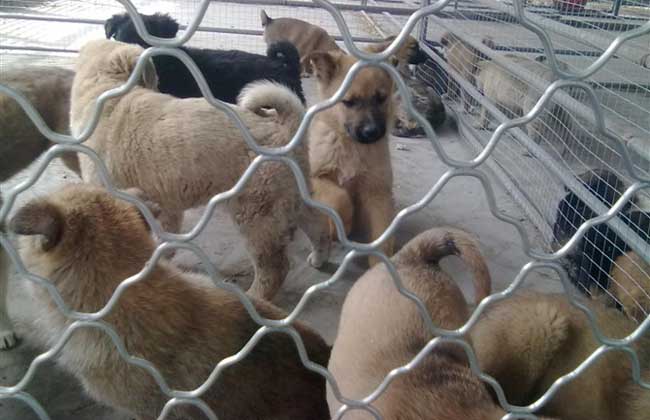
Generally, the high-efficiency pen-raising method is used, with each dog occupying more than 1 sq m, and males and females raised in separate pens. Compared with free-range raising, pen raising can reduce movement and energy consumption, save 200 g of feed per dog per day, and increase daily weight gain by 20%—30%. The farming site should avoid densely populated residential areas and be required to be dry and hygienic, ventilated and sunny, with fresh air, warm in winter and cool in summer, creating a correspondingly good environment for the rapid growth of meat dogs. Meat dogs are mostly sent to market before 6 months of age, and dogs reach sexual maturity after 6 months of age, so there is no need for castration, avoiding reduced appetite, affected growth speed, and lower returns.
Scientifically and reasonably matching feed according to the dogs' nutritional needs and growth conditions is the key to obtaining farming benefits. Try to choose high-quality feed that is rich in nutrition and low in price, reduce feeding costs, and improve feeding results. It is required to be fresh and high quality, clean and hygienic, good in palatability, and easy to digest. Do not feed spoiled or moldy feed. Mix, prepare, and feed on the spot. After steaming and cooking into blocks for feeding, it is beneficial for full digestion and absorption and faster growth. Raw feeding is taboo. The daily feed amount is 2.5% of body weight, fed once in the morning and once in the evening, with clean drinking water supplied. Dogs are omnivores and can make full use of local feed resources according to local conditions, such as corn, wheat bran, broken rice, soybean cake, sweet potato, potato, slaughterhouse by-products, and leftover rice and dishes from restaurants and canteens. No matter what kind of compound feed is used, it must contain 44%—49.5% carbohydrates, 18%—25% protein, 3% fat, 3%—4.5% fiber, 1.6%—1.8% calcium, 1.1%—1.2% phosphorus, vitamins, and various trace elements to meet the needs of rapid weight gain in meat dogs. Reference formula for meat dog compound feed: cornmeal 40%, broken rice 20%, wheat bran 15%, soybean cake 10%, animal offal 5%, fish meal 7%, bone meal 2%, growth hormone 0.5%, salt 0.5%.
Do a good job in the environmental hygiene of the feeding site, remove feces every day, and disinfect the pens and feeding utensils once a week with 10%—20% bleaching powder solution or 0.3%—0.5% peracetic acid solution to prevent disease occurrence. Dogs have many internal parasites. Deworm internally once each at 20—25 days of age and 40—45 days of age, using levamisole at an oral dosage of 10 mg per kg of body weight, and apply Sumeichongjing externally.
The recommended immunization program is first vaccination at 42—45 days of age, injecting canine distemper vaccine; second vaccination at 52—55 days of age, injecting a triple vaccine for canine distemper, parvovirus, and infectious gastroenteritis; third vaccination at 62—65 days of age, injecting rabies vaccine. Breeding dogs should be injected with rabies vaccine 1—2 times per year to prevent rabies.
Related reports
In earlier years, some news media and newspapers strongly promoted the so-called new technology of rapid fattening of meat dogs through anesthesia. The highly toxic substances used, such as datura flower, rhododendron molle flower, and buddleja lindleyana, have strange odors and very large side effects. Dogs, with a very sensitive sense of smell, refuse to eat them and dislike eating them. Under the threat of hunger, they eat some, then suffer chronic poisoning, nausea and vomiting, and faint. In the pathological state of hunger, coma, pain, and nutritional deficiency, how could they be rapidly fattened? Is this not Deceiving people, with no scientific basis at all! Due to misleading publicity, many dog breeding specialized households or farms suffered losses and closed down one after another, casting a shadow over the emerging meat dog farming industry.