What is the outlook for meat dog farming? Understanding the market potential in one article
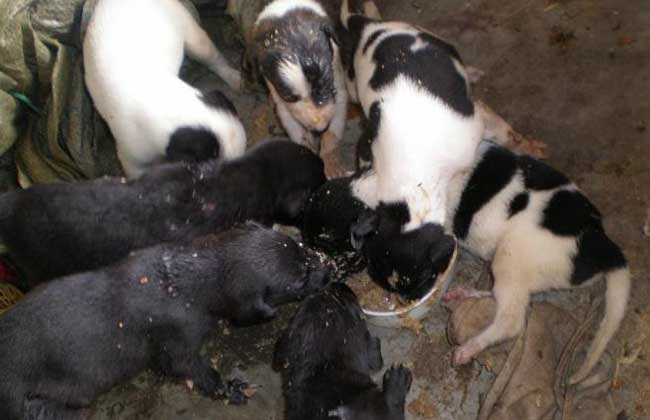
Meat dogs, commonly known as food dogs, are dogs specifically slaughtered for human consumption, mainly raised for meat, and have the farming advantages of small investment, quick returns and high efficiency. Today, as living standards continue to rise, dog meat has become an optimal food for both consumption and medicinal use, so meat dog farming has very high market prospects. Let us take a look below!
The farming prospects of meat dogs
1. Farming history: China's dog-raising industry started in 1956, and its great development occurred in the 1980s-1990s, when a flourishing situation formed with both collective and individual operations. It reached its peak at the end of 1996, but by 1998, due to the influence of pet dogs, the meat dog farming industry kept declining, especially in the north where prices fell to one-third to one-quarter of the level at the end of 1996. Apart from the influence of the pet dog market, the main reason for the price decline is also related to the cultural differences between meat dog quality and that of developed countries. First, because of the results of breed speculation during the "dog-raising craze" in earlier years, breeding dog farms kept almost every female, and the resulting inbreeding caused the quality of breeding dogs to degenerate; another reason is that many farms, in order to save costs or because of insufficient funds, still raised dogs at low standards, resulting in them being raised smaller and smaller; yet another reason is that farming was carried out in areas unsuitable for raising dogs, which led to a decline in the price and quality of meat dogs.
2. Farming prospects: China's dog-raising industry did not begin to recover until the second half of 2000 along with the decline of the pet market, which finally brought a turning point for the dog-raising industry. In early 2001, as dog meat prices rebounded, the number of breeding dogs increased again. As far as the current situation is concerned, with the continuous improvement of China's meat dog farming technology and breed improvement, meat dog prices have been on an upward trend in recent years, and the market has been relatively good. German Shepherds have sold relatively steadily in the recent period, with domestic German Shepherds priced at around 300 yuan and ordinary ones at around 100 yuan. Domestic German Shepherds sell relatively quickly, and prices are rising. Therefore, meat dog farming should be a promising wealth-building industry.
The farming advantages of meat dogs
1. Small investment: with an investment of less than 10,000 yuan, annual returns can reach more than 100,000 yuan. It is a good project supported by the government, generating income for farmers and benefiting the country and the people.
2. Large demand: meat dogs not only have great value as meat, but also extremely high medicinal value. The whole body is a treasure, and the market potential is huge. Dog meat is delicious, with tender meat and rich nutrition, and is a premium beauty product.
3. Strong reproductive capacity: meat dogs are domesticated animals and have the characteristics of strong adaptability, easy raising, fast reproduction and fast growth. The large-scale meat dog breeding base in Jining City, Shandong, through biological purification and crossbreeding of fine breeds, has even greater advantages: large body size (much larger than ordinary native dogs), high reproductive rate (can produce 2 litters per year), many pups per litter (5-12 per litter), short growth period (marketed in 5-6 months) and high meat yield (body weight can reach 80-120 jin).
4. Strong adaptability: dogs have an extremely strong ability to endure hunger; even without food for a week, they will not become very weak. They have strong resistance to trauma and self-healing ability, strong disease resistance, a low rate of viral infection, and are not prone to illness. They have very strong adaptability to the environment and can grow and reproduce well in extremely harsh environments (for example, in winter in northern China at -40 to -30°C, and in summer at temperatures above 30°C).
5. Easy to raise: pigs and chickens need multiple meals a day and are not monophagous, and cattle even need to be fed at night. Improved meat dogs, however, need to be fed only twice a day to fully meet their growth and breeding needs, so they are very easy to raise. Dogs are omnivorous animals; they eat both grains and miscellaneous cereals as well as vegetables and by-products from livestock product processing plants, discarded bones, leftovers and so on. Therefore, meat dogs have a wide range of feed sources, and the prices are low.
Points to note in meat dog farming
1. Think thrice before introducing breeding stock: the profit stated by sellers is calculated based on breeding meat dogs. If calculated based on commercial production and with the increasing popularity of meat dogs, will each group of meat dogs still bring several thousand yuan in profit? Farmer friends must still think carefully before raising meat dogs on a large scale. Under normal circumstances, after large-scale production of meat dogs, prices will decline somewhat, and the profits currently expected will be difficult to achieve. As an emerging special farming industry, the meat dog industry has certain market potential and will continue to develop, but due to restrictions in various aspects such as meat dog breeds, feed, raising technology and market demand, the meat dog industry cannot be entered blindly, so as to avoid unnecessary economic losses.
2. Conduct investigations from multiple sides before introducing breeding stock: because dog raising heated up too quickly, "dog speculation" inevitably appeared, causing uneven quality of dog seedlings and great losses. Therefore, after arriving at the source area for introducing breeding stock, one should not fear trouble and should investigate from multiple sides. First, go to several large, formal meat dog farms or bases for on-site investigation, to see the scale of the dog farm, the number of foundation breeding dogs, whether there is a business license, technical strength, archive records of dog-raising materials, and whether the base has product buyback capacity. Then, according to one's own financial resources, material resources and technical level, decide on the farming scale and the number of breeding stock to introduce.
3. The dog farm environment should be excellent: the dog farm should be quiet and dry, with good drainage, ventilation and sunlight, warm in winter and cool in summer. Generally, building an enclosure in an orchard or mulberry field is best for a dog farm (empty houses, pig pens, sheep pens and so on can also be used for enclosure raising). Generally, each pen has an area of 10-12 sq m and a height of no less than 1.5 m. The dog farm should be equipped with facilities such as a disinfection pool and sewage drainage ditches, as well as a place for meat dogs to move around and sunbathe.
4. Choose fine breeds: meat dogs must gain weight quickly, be large in size, yield more meat and have good meat quality, so as to achieve good economic benefits. At present, most meat dogs used for production are two-way or three-way crossbred dogs produced by mating local large yellow dogs and large black dogs as the female parent with large dogs such as shepherd dogs, Japanese wolfdogs, black-backed dogs and Great Danes as the male parent, which can only be regarded as the use of heterosis. Therefore, when introducing breeding stock, first look at archive materials and pedigree records; second, look at the individual size and production performance of the parents; third, look at the development status and body conformation characteristics of the puppies.
5. Prevent mass death of puppies: one of the main reasons for the mass death of puppies is that the puppies have poor body resistance, and, together with environmental changes, long-distance transport, high temperatures and severe cold, continuous rain, or improper epidemic prevention and so on, diseases are induced (mostly canine distemper). Therefore, when introducing breeding stock, never buy puppies weighing less than 3.5 kg, because there have been no few cases of total loss caused by buying small dogs to save money.
6. Careful management during the raising period: the temperature of the dog house should generally be controlled below 35°C in summer and kept above 12°C in winter, with a relative humidity of 50%-60% being suitable. The dog farm should be cleaned at fixed times once a day, and meat dogs should be trained to defecate at fixed spots. Puppies should be vaccinated 3 times with the five-combined vaccine in the first year, and then boosted once each year thereafter. On average about every 1 month, norfloxacin powder or allicin and so on should be added to the feed to prevent common diseases of meat dogs such as enteritis and colds, and one should observe frequently, check often, watch appetite and inspect feces.