Orchids wasting away, not growing new shoots or blooming? It's mostly caused by 3 kinds of harm
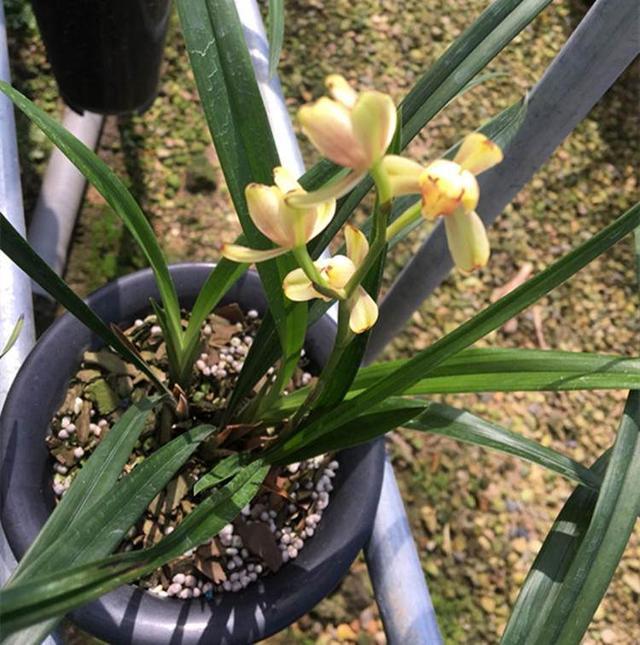
When fellow flower growers cultivate orchids, they often find that the orchid suddenly becomes thin and weak, gradually developing yellow leaves and withering. Normal watering and fertilizing show no improvement. At this point, do you not know how to deal with it? In fact, if an orchid is gradually "wasting away," not growing new shoots, and not blooming, it is often because of these 3 kinds of harm.
1. Water damage
Fellow growers who cultivate orchids all know that too much water damages old leaves, and dry soil damages new shoots; the same holds true for orchids. When watered too much for a long time or exposed to continuous rain, the soil's air gaps become clogged, and the orchid roots are deprived of oxygen and soaked through by water for a long time, causing necrosis. When orchid roots are damaged, it is inevitably reflected in the orchid leaves.
First the basal sheaths turn yellow and wither from water, then the leaf surface loses its green color and turns pale yellow, gradually withering back and becoming highly susceptible to pathogen invasion. When root damage is relatively mild, the outer leaves wither back; if the root damage is severe, the entire plant withers back. So, when encountering this situation, how should it be handled?
The prevention and treatment method is: water moderately and reduce exposure to rain. During the plum rain season or the rainy season in the south, fellow growers should take care to place potted orchids in a rain-sheltered spot. When there are no rain-shelter conditions, after potted orchids are rained on, promptly pour off the accumulated water. During continuous overcast and rainy weather, the orchid pots can be laid on their sides on the ground to prevent water accumulation.
2. Fertilizer damage
Excessive fertilizing damages roots and scorches leaves, causing orchids to "waste away." The main prevention and treatment methods are: when potting orchids, base fertilizer must be applied according to the orchid's growth condition. Weak plants and old plants separated during division should not have base fertilizer added. For mature, robust plants, base fertilizer should also be applied in moderation, mainly phosphorus and potassium fertilizer. Base fertilizer should not directly contact the orchid roots, so as to avoid root damage.
Ordinarily, mainly use organic liquid fertilizer specially made for orchids, diluted 500 times and poured at the roots, once every 10-15 days. If the potting soil is found to be too heavily fertilized, repot immediately, wash the orchid plant clean, cut off the rotten roots, let it dry, and replant it in plain soil.
3. Disease
During the rainy and highly humid season, and in winter when water runs into the leaf center and cannot dry in time, orchids may develop diseases such as black rot and mold disease; in severe cases, the entire orchid plant is affected. In response, first, prevent water from entering the leaf center and prevent water accumulation in the potting soil; second, strengthen ventilation; third, when the temperature is 20-30 degrees C and humidity is excessive, pay attention to spraying chemicals for prevention and treatment.
In addition, when orchids gradually shrivel, stop growing, and do not send out new shoots, and watering and shading both prove ineffective, this is actually also related to the pot and soil used, and they should be repotted and replanted immediately. Orchid pots should preferably be deep and wide to facilitate root development; this refers to robust orchids with multiple clustered plants. For wild-collected plants and weak divided plants, orchid pots of suitable size should be used, and clay pots should be used as much as possible.
The soil used for planting orchids should be loose, light, and soft, preferably fertile humus soil; generally, do not mix fertilizer into the soil. Both wild-collected plants and weak divided plants go through a process of adapting to the environment after potting, so planting them in plain soil is preferable.
On the other hand, if the fertilizer concentration in the soil is too high, it produces a reverse osmosis effect on the root cells, causing the root system to shrivel and rot. Therefore, once orchid leaves are found to be shriveled and growth has stopped, first consider whether the pot used is too large or the potting soil is too heavily fertilized; after confirming this, immediately repot and change the soil.