What to do about dry tips on asparagus fern leaves? 5 tricks to make the leaves green and lush again
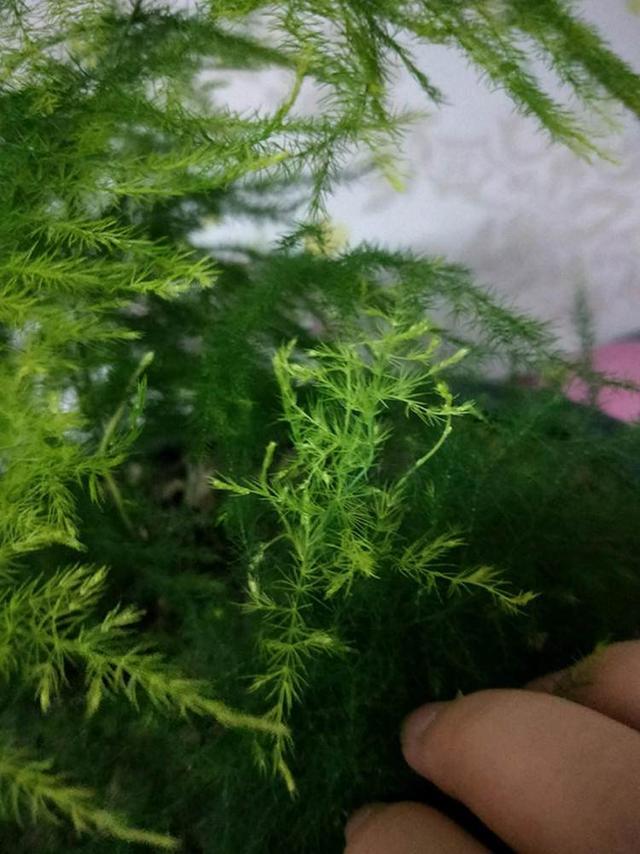
Asparagus fern (Asparagus setaceus) is deeply loved by many plant enthusiasts for its lush, evergreen foliage. However, during care, because some small details are overlooked, the once green leaves of the asparagus fern turn into "dry tips." What can be done about this?
First, let's understand the cause of "dry tips" on asparagus fern leaves: the asparagus fern is a greenhouse flower that prefers warm, humid and semi-shaded environments. The asparagus fern absorbs and transports water slowly. If exposed to dry, hot air or direct blazing sun, the water in the young tender shoot tips will rapidly transpire, while the roots cannot absorb and replenish it in time, thus causing "dry tips" - that is, the leaf surface of the asparagus fern turns yellow or the leaf tips dry up.
In addition, if plant enthusiasts keep the asparagus fern in long-term shade and water it too much during care, a weakly growing asparagus fern will quickly develop "dry tips" once it suffers severe drought.
Therefore, to prevent the "dry tips" problem in asparagus fern, plant enthusiasts can use these 5 tricks, and the leaves will turn green and lush again:
1. Pay attention to misting to create a humid environment for the asparagus fern. When misting, do not only spray the branches and the potting soil; it is best to also spray the surrounding ground. It is best to use a sprayer for misting.
2. Water in time to keep the soil moist and prevent dry tips caused by lack of water. However, be sure to water only when the surface of the potting soil is dry, and do not water too much continuously. Otherwise, if the soil is too wet, it will cause root rot.
3. Pay attention to providing appropriate shade; generally semi-shade is suitable (commonly known as "dappled shade"). In summer, avoid direct sunlight. If there is no shading condition, you can move it outdoors before 9 a.m. and after 4 p.m., when the sunlight is slanted and the light is weaker, and keep it indoors the rest of the time.
4. Pay attention to appropriately supplementing nutrients for the asparagus fern. Plant enthusiasts can use a general-purpose organic liquid fertilizer for plants, dilute it 500 times, water the asparagus fern roots once a week, then add water to dilute it 1000 times and spray the leaves, which helps the asparagus fern leaves absorb it. With sufficient nutrients, it can stay green and lush all year round.
5. Prevent erosion by dry, hot air. In dry, hot weather and when dry, hot winds occur in spring and early summer, do not move the asparagus fern outdoors, to prevent invasion by dry, hot air and dry, hot winds, which would otherwise cause dry tips on the asparagus fern leaves.