The process of making a camellia bonsai is simple and can be easily completed in a few steps
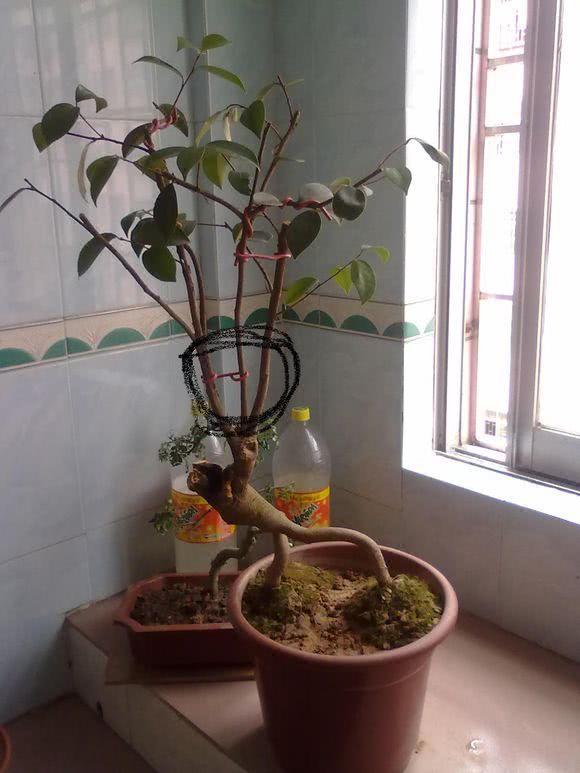
Camellias, unlike pines and cypresses, cannot be pruned at will; they are very intolerant of pruning, and once a branch is cut off it is difficult for a new branch to grow out again, so it is best to cultivate a camellia bonsai from a seedling, which makes shaping easier. And during the shaping process you should cut as few branches and leaves as possible; it is best to make the branches grow into the desired form by binding them.
Although cultivating from a seedling makes it easier to fix the shape, it takes a long time, so it is not very suitable if you want quick results. So what can be done? At this point you can adopt the grafting method. First select a camellia stump with good growth; the tree form of the chosen stump should match the bonsai shape you want to create as closely as possible, and a short, sturdy stump is best. After the stump is selected, graft new camellia branches onto it during the heel-in period to fix the shape.
Once the bonsai stump has been cultivated, you can begin potting it. The soil used for a camellia bonsai should be on the acidic side; you cannot use soil such as yellow clay that does not drain well. It is best to use loose, sufficiently fertile humus soil. The soil used can be made up of sand, leaf mold, and garden soil in a ratio of 2:3:5. It can also be made up of perlite, sand, leaf mold, and peat soil in a ratio of 1:2:3:4. Potting should be done in spring and autumn.
Camellias like moisture and are afraid of direct sunlight, so after potting they should be kept in a shaded place. In winter they can be grown in full sun, but in the other seasons they all need shade. After a camellia is potted it needs to be finally shaped. Camellia bonsai shapes can be made as cascade style, lying-trunk style, slanting-trunk style, single-trunk style, and also exposed-root style and rock-clinging style, but do not make a camellia bonsai in curved-trunk style or dead-trunk style; forest style is also unsuitable.
Because camellias do not tolerate pruning, try as much as possible not to shape them by pruning, but instead use the method of binding the trunk and branches to shape them. When binding to shape, you should start with the main trunk first, and after the main trunk has taken shape, work on the side branches. When shaping the side branches, pay attention to following the natural growth tendency of the branches, and do not force them into unnatural forms. If some branches need to be bent, you need to knead the branch first and then bend it, because camellia branches have a relatively high degree of lignification and forcing them may break the branch. After the side branches have been shaped, you can then deal with the small branches and leaves, removing the small branches and leaves that affect the shape, and also turn the leaves so that the leaves of the camellia bonsai face outward.
Throughout the entire process of making and cultivating, pay attention to fertilizer and water management, pest and disease control, and also protection against cold. Camellias like fertilizer and water; normally keep the potting soil moist, and in dry weather you should also spray water on the plant, but do not spray water during the flowering period. As for fertilizer, in addition to applying enough base fertilizer when potting, topdressing is needed at other times; only during the early autumn period can fertilizing be stopped for 1 month. During the flowering period, apply fertilizer once a week; at other times, apply it once every half month.
Diseases include brown spot disease, and pests include aphids, red spider mites, root-knot nematodes, and scale insects; these are mainly what to guard against during cultivation and care. In addition, camellias are very intolerant of cold, so in winter it is best to keep them in a greenhouse.