Meat dog farming technology video: teaching you to raise meat dogs scientifically
Meat dog farming has a history of several thousand years in China and offers advantages such as low investment, quick results and high returns. In recent years, a farming boom has gradually taken shape. Today, as living standards keep rising, dog meat has become an excellent food for both eating and medicinal use, so meat dog farming has very high market prospects. Let us take a look at the meat dog farming technology video together below!
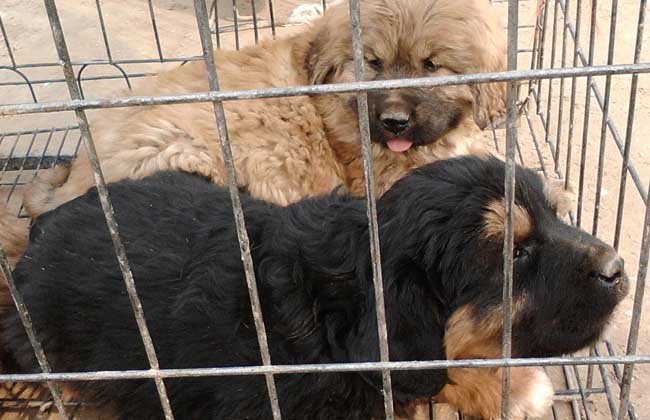
Construction of a meat dog farm
1. Site selection: A dog farm requires a relatively secluded environment, ample water, good water quality, convenient transportation, easy access to electricity, and a certain distance from residential areas, main roads, livestock and poultry farms, sewage pits and chemical plants. The site must be dry, well ventilated and sunny. Plant trees around the pens to provide shade and cooling, keeping them warm in winter and cool in summer.
2. Dog house design: The drainage ditches around the meat dog farm and the exercise area must be unobstructed, and the ground level and even, which helps with clearing feces. Dog houses should face south or southeast, be sturdy and durable, and must conform to the dog's living habits and hygiene requirements. Each dog house should have a separate exercise area. The dog house should be built with brick, tile and cement, while doors and windows can be made of steel and wood. The exercise area is best surfaced with cement or lime-sand mixture, with a slight slope to facilitate drainage. Partition walls are enclosed with angle iron, steel pipes and wire mesh, which is sturdy and durable, prevents biting and tearing, and is easy to clean, wash and disinfect.
Selection of breeding dogs for meat dog farming
1. Selection of young dogs: Most newly built farms start by bringing in young dogs, usually at the time of weaning and separation. The main criteria for selection are pedigree, the traits of both parents, the puppy's birth date and growth and development status, and so on. The pedigree must be clear, both parents must have good coat color, the litter must be large (more than 6 for the German Shepherd, more than 8 for the Soviet Red), the survival rate must be high, and the birth must be early (born before mid-April), because young dogs born later have a 20%-30% chance of not coming into heat the following year, so such dogs cannot be used for breeding. In addition, the body shape must be well proportioned and the coat smooth. The seller should provide the pedigree so that you can understand the production performance of the breeding dog's parents, grandparents and maternal grandparents, which helps you organize production after returning to your own farm.
2. Selection of adult dogs: For adult female dogs, be sure to choose those with consistent coat color, early estrus (estrus before mid-March), large litters (more than 8 pups) and a high survival rate for breeding. At the same time, the female dog must have high milk yield, strong maternal instincts and no bad habits.
① Male dog: Besides good coat color, a male dog must have strong mating ability (more than ten matings per year), and those whose mated female dogs both have high litter rates and high survival rates can be used for breeding. The age should be within 5 years; breeding dogs that are too old have reduced reproductive capacity. The body shape requirement is 12 months of age, body weight above 40 kg and height above 75 cm.
② Female dog: The female dog should weigh more than 35 kg and stand more than 65 cm tall. In practice, it is relatively difficult to bring in good adult dogs; unless someone is selling out or changing careers and quitting farming, you will not be able to buy good adult breeding dogs. Most are female dogs of poor quality or old female dogs that have been culled.
Feed formulas for meat dogs
1. Nursing dogs: Taking the daily feed amount for 10 nursing dogs as an example, the feed formula is 850 g of animal meat or offal, minced in a meat grinder, then add 3 eggs, 500 g of cornmeal, 850 g of chopped green vegetables, and an appropriate amount of growth hormone (use according to the instructions), add a small amount of concentrated bone and meat broth or milk and rice water, and gradually increase thin porridge as well as a small amount of bone meal and fish meal. At first, feed 30-50 ml of thin porridge and bone and meat broth each time, then gradually increase to 200-500 ml, feeding once a day.
2. Puppies: The feed formula for puppies is 20% cornmeal, 15% broken rice, 15% bran cake, 5% rapeseed cake, 14% soybean cake, 15% wheat bran, 5% flour, 5% fish meal, 5% bone meal, and 0.5% each of growth hormone and salt. It is best to also feed meat broth, that is, boil 500 g of pork per dog per day into broth and feed it together with the meat, feeding 3 times a day while supplying enough drinking water.
3. Young dogs: After weaned puppies have been fed for 35 days, they move into the young dog rearing stage (male dogs should be castrated). The feed formula is 30% cornmeal, 20% broken rice, 20% bran cake, 10% soybean cake, 10% wheat bran, 5% rapeseed cake, 4% bone meal, and 0.5% each of growth hormone and salt. Because young dogs grow quickly, mineral feed should also be added, mixed with warm water, and fed 3 times a day, preferably with an appropriate amount of animal feed added.
4. Fattening dogs: After young dogs have been fed for 70 days, they move into the fattening stage. The feed formula is 26% cornmeal, 26% broken rice, 20% bran cake, 10% soybean cake, 10% wheat bran, 5% rapeseed cake, 2% fish meal, and 0.5% each of growth hormone and salt. It is best to also feed fatty feed.
Meat dog farming management
1. Environmental hygiene: Dog houses must be cleaned every day, with feces removed at any time, a thorough cleaning once a month along with disinfection, and two complete disinfections each year during the spring and autumn rainy seasons. For sick dogs, the bedding must be completely removed and either burned in a centralized manner or buried deeply. When the weather is warm, open the doors and windows of the dog house for ventilation and sunlight.
2. Temperature and humidity: The standard temperature inside a dog house is 13-15°C in winter and 15-17°C in summer. If the ambient temperature is too low, too much energy will be consumed, affecting growth and development, and young puppies are prone to freezing to death. If the temperature is too high, the dog's appetite will decrease, growth will be slow, and heatstroke may even occur. In view of the fact that adult dogs tolerate cold but not heat, while young dogs tolerate heat but not cold, the main task for young dogs is to keep them warm, while for adult dogs the focus is on preventing heatstroke and cooling down. Pay attention to maintaining air circulation, avoid direct sunlight, and use mechanical forced ventilation when necessary. The humidity inside the dog house should be kept at 50-60%. When humidity is too high, heatstroke is likely in summer, and in winter it favors bacterial reproduction and causes colds. When humidity is too low, dust in the dog house increases, which harms the respiratory tract.
3. Disinfection of feeding utensils: Feeding utensils can be disinfected by boiling, or soaked in 0.1% benzalkonium bromide solution for 20 minutes, or soaked in 2-4% caustic soda water, and finally rinsed clean with clear water. After each meal, the feeding utensils must be washed clean, and leftover food must be discarded.