How to Raise the Chinese Pond Turtle? A Detailed Explanation of Key Breeding Techniques
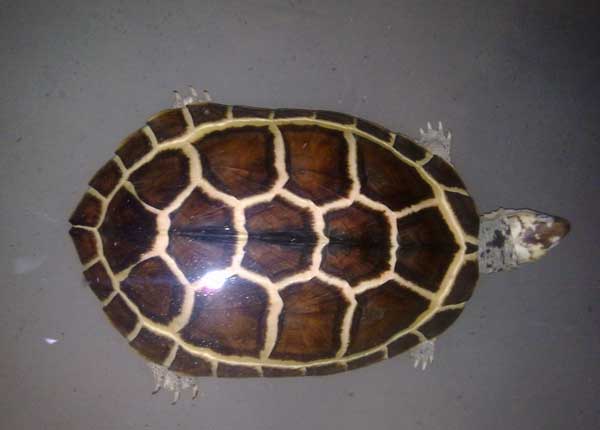
The Chinese Pond Turtle (Mauremys reevesii) is a reptile of the family Geoemydidae, genus Mauremys. It is distributed in Vietnam, Japan, Taiwan, China, and parts of eastern and southern mainland China, Hainan, and as far west as Yunnan. It is commonly found in waters of mountain basins or river valleys in hilly semi-mountainous areas, and often in nearby small thickets or grass clumps. Below, the editor will share with everyone the breeding techniques for the Chinese Pond Turtle.
Growth Habits of the Chinese Pond Turtle
The Chinese Pond Turtle has strong disease resistance and can withstand hunger and cold. It is an amphibious animal, but mostly inhabits water. The egg-laying period is from April to August each year. Generally, a female turtle in good physical and nutritional condition can lay eggs 1-3 times a year, with 1-10 eggs each time. The Chinese Pond Turtle is omnivorous, and small fish and shrimp, meat, animal offal and scraps or substandard products, snails, frogs, snakes, fruit peels, tender grass, bananas, corn, etc. can all serve as food, but it most prefers fresh meat. Its appetite is strongest and growth fastest from June to September each year.
The Chinese Pond Turtle generally begins laying eggs in mid-April and basically stops laying eggs by late August. May to June is the peak egg-laying period, and after mid-July egg-laying decreases noticeably. Turtle eggs are ideally incubated at natural temperature with artificially controlled humidity (hatchlings raised this way grow fast and have strong disease resistance). Generally, after 55 days of incubation, the hatchlings of the Chinese Pond Turtle can be hatched in batches.
The Chinese Pond Turtle is omnivorous and has a wide feeding range. For animal-based food, poultry offal, pork and offal, and mixed feed can be given; for plant-based food, melons, fruits, and vegetables can be given. The Chinese Pond Turtle likes to forage in water. When feeding, it first crawls close to the food, stares at it with both eyes, then stretches its neck, bites the food, and swallows it. If the food is too large, it uses its two front claws to tear the food apart before swallowing.
Breeding Techniques for the Chinese Pond Turtle
1. Site selection. For a turtle-raising site, choose a place with abundant water sources and good water quality, soil with good water retention (such as clay loam or loam), convenient drainage and irrigation, a quiet environment, and shelter from the wind and facing the sun. Avoid raising turtles in places with major external influences such as traffic routes and factories. Turtles at different stages should be kept in different turtle ponds.
① Construction of hatchling (juvenile) turtle ponds: Hatchling (juvenile) turtle ponds are mainly used to raise hatchlings and juvenile turtles. Hatchlings: refers to turtle hatchlings produced by hatching in the current year, up until before overwintering; turtles in this growth stage are collectively called hatchlings. Juvenile turtles: turtles in the growth stage after overwintering until they grow into 500-gram turtles. Hatchlings have weak ability to adapt to the environment and weak vitality, and juvenile turtles are between hatchlings and adult turtles, neither too big nor too small, and also require careful rearing. Therefore, hatchlings and juvenile turtles should have dedicated ponds for rearing. Hatchling ponds are generally cement structures, with the pond bottom and activity area at a 30-degree slope so that three-quarters is water pond (water depth 20-30 cm) and one-quarter is activity area (land portion). The walls on all four sides of the hatchling pond must be smooth and at least 50 cm high, strictly preventing hatchlings and juvenile turtles from “stacking up like a human pyramid” to escape. Shade nets are stretched above the turtle pond for shade. The Chinese Pond Turtle likes water and usually lives mostly in water, so water hyacinth can be placed in the pond in appropriate amounts (about two-thirds of the water surface). Water hyacinth can not only provide hiding places for hatchlings and juvenile turtles, but also absorb some harmful substances in the water, and in summer can also absorb a large amount of solar radiant heat, effectively lowering the water temperature. The activity area is where turtles move about and feed. The size of the hatchling pond depends on the breeding scale; specifications from 5 sq m to 10 sq m are all acceptable. The hatchling pond must have good water inlet and drainage facilities, with anti-escape grilles at the inlet and outlet, and wire mesh added above the turtle pond to strictly prevent attacks by enemies such as rats. Before hatchlings are put into the pond, the turtle pond must be disinfected with 40 ppm potassium permanganate solution (1 ppm is equivalent to a concentration of 1 gram of medicine per cubic meter of water). The stocking density of hatchlings is about 20 hatchlings per sq m.
② Construction of adult turtle ponds: Adult turtles mostly refers to turtles above 500 grams that are close to or have reached sexual maturity. Adult turtles have strong adaptability to the environment and strong vitality, and are not easy to die. The construction of adult turtle ponds can refer to the method for hatchling ponds. The difference is that an adult turtle pond must consist of three parts: a water pond, an activity area (land), and a sand area, with the water pond occupying half the total area of the turtle pond, and the activity area and sand pond each occupying half of the remaining area. The water depth must be 30 cm or more. Adult turtle ponds can be used to raise adult turtles and breeding turtles. A small number of shade plants can be planted around the turtle pond.
2. Feed preparation. The Chinese Pond Turtle has abundant feed sources, so local conditions can be adapted. Planting green plants such as banana trees around the turtle pond can both provide shade and serve as plant feed for the turtles; where conditions permit, golden apple snails can be bred, as snail meat is one of the meat feeds that turtles prefer to eat. When the turtle-raising site is close to a slaughterhouse, animal offal and other scraps can be used to feed the turtles. If compound feed is used to feed the turtles, the raw materials and the equipment and production techniques required for processing should be fully prepared.
3. Selecting turtle stock. The Chinese Pond Turtle has strong disease resistance and is easy to raise, but improper introduction of stock can also easily lead to unnecessary losses. The requirements for turtle stock or turtle hatchlings are: visual observation shows no injuries or disabilities, vigorous activity, and quick reactions; avoid long-distance transport to prevent crushing injuries. Before buying turtles, the turtle pond must first be disinfected (soaked in 40 ppm potassium permanganate solution for 30 minutes), then the pond water drained, and the turtle pond exposed to sunlight for 2-3 days; after the medicinal effect disappears, fresh water is added. Newly purchased turtles must rest for more than 2 hours, and after adapting to the local temperature and environment, be disinfected and then placed in the turtle pond for rearing. Juvenile turtles are best purchased from breeding operations, because turtles domesticated by breeders have already adapted to artificial rearing conditions and have a high survival rate. If purchasing from the market, it is best to do so from May to August, and check each turtle's physical condition one by one and whether there is a hook in its mouth.
Generally speaking, a healthy juvenile turtle should meet three conditions:
① Quick reactions, bright eyes, full and elastic muscles in the four limbs, and able to support itself to walk rather than dragging its plastron along;
② No wounds or ulceration on the body surface;
③ When placed in deep water, the turtle can sink.
4. Stocking juvenile turtles. Before juvenile turtles are put into the pond, they need to be soaked and disinfected in 2 mg/L potassium permanganate solution. The stocking density is 5-8 turtles per cubic meter, and the female-to-male ratio is preferably 3:1 or 3:2.
5. Feeding management
① Feeding: The Chinese Pond Turtle is omnivorous and has a wide feeding range. Under artificial rearing conditions, it can be fed the meat of small fish, poultry offal, and other animals, and can also be fed compound feed, but a period of adaptation is needed. For the first feeding, fresh bait and compound feed should be mixed together, kneaded into balls, and placed at the water's edge. After continuous feeding several times, once most turtles have adapted, compound feed can be directly fed. The Chinese Pond Turtle forages in water, so food should be placed on a feeding platform at the water's edge. The amount fed should be such that the turtles do not leave leftovers, generally 5% of the turtle's body weight. Feeding time varies with the season: in April, May, and October it is best around noon; from June to September it is best at 8-9 a.m. or around 6 p.m.; July is the peak egg-laying season for turtles, so the feeding amount should be increased.