Detailed Explanation of the Design Method for Yellow Pond Turtle (Mauremys mutica) Breeding Greenhouses
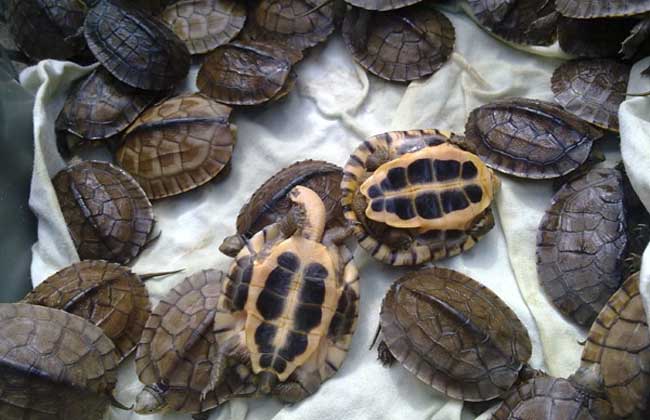
Artificial breeding of yellow pond turtles has the characteristics of small footprint, convenient feeding and management, and high economic returns. However, once the yellow pond turtle breeding industry grows large, how to use space and energy more efficiently becomes an urgent topic. Greenhouse breeding of yellow pond turtles is one of the low-cost heat preservation techniques. Below, let us take a look at the design methods for yellow pond turtle greenhouses!
Construction Methods for Yellow Pond Turtle Greenhouse Roofs
1. Semicircular roof or large shed: suitable for areas with little wind, because this kind of shed has a large usable area and a large span, and is easily damaged by wind in windy areas.
2. Sloped-roof shed: cover the shed with plastic film to let light through and raise the temperature during the day, and add straw mats at night when the temperature is low to keep warm, and also add straw mats to keep warm when the wind is strong. Some sheds are covered with two layers of plastic film, and even additionally covered with plastic sheeting. This practice is wrong. Because, although the temperature is maintained, sunlight is blocked, plankton in the breeding pond is difficult to grow, phytoplankton cannot produce oxygen, and combined with the high water temperature in the greenhouse, turtle feces, residual bait and other organic matter decompose quickly and consume a lot of oxygen, making the water quality prone to deterioration, which is instead unfavorable for breeding.
Heating Methods for Yellow Pond Turtle Greenhouses
For raising yellow pond turtles in greenhouses, from the perspective of reducing expenses, the two-end heating method is best. After the air temperature and water temperature drop in autumn, in order to avoid a decrease in the yellow pond turtle's food intake, pipes can be used to heat the pond water to 30°C to extend the breeding period. When the air temperature drops further and coal consumption becomes too great, the fire can be gradually stopped, allowing the pond water to cool slowly and letting the yellow pond turtles hibernate on their own. After the beginning of spring the following year, the air temperature rises continuously and the water temperature rises accordingly. At this time, the greenhouse can be gradually heated to let the pond water temperature gradually rise to 30°C, carrying out feeding activities in advance. When the outdoor water temperature reaches 25°C, reduce coal feeding indoors, gradually remove the plastic cover film, and slowly lower the temperature. When the indoor and outdoor water temperatures are the same, the pond can be switched, allowing the greenhouse yellow pond turtles to be transferred to a large pond for breeding. Under no circumstances should the fire be suddenly stopped when the indoor water temperature is 30°C and the yellow pond turtles be transferred to an open-air large pond with water temperature several degrees or a dozen degrees lower, so as to avoid the yellow pond turtles suddenly catching a cold, or even dying in large numbers.
Large-Scale Breeding Greenhouses for Yellow Pond Turtles
1. Be prepared to prevent yellow pond turtles from escaping, to avoid loss of assets.
2. It should be easy to change the water quality; if possible, it is best to choose flowing water.
3. Soil should not be placed in the water; a land bank can be designed for the yellow pond turtles to rest on.
4. The drainage pipe design should be reasonable, because all aquatic breeding water cannot be completely changed all at once; generally changing about one quarter is enough.
5. If possible, try to let the yellow pond turtles receive sunlight.
Home Breeding Greenhouses for Yellow Pond Turtles
1. In home settings, the design of yellow pond turtle greenhouses generally pays attention to feng shui, so a feng shui master should be consulted to find a good location.
2. When designing, it must be done according to the living habits of the yellow pond turtle; if possible, choose an indoor space that can receive sunlight.
3. When designing, take into account that the yellow pond turtle is an amphibian, so there must be not only water but also moist land.
4. Some plants can be grown in the breeding pond; turtles all like to hide under plants.
5. Soil should be arranged in the water, and the soil at the bank should also be somewhat soft.