Key Points and Detailed Methods of Golden Coin Turtle Incubation Techniques
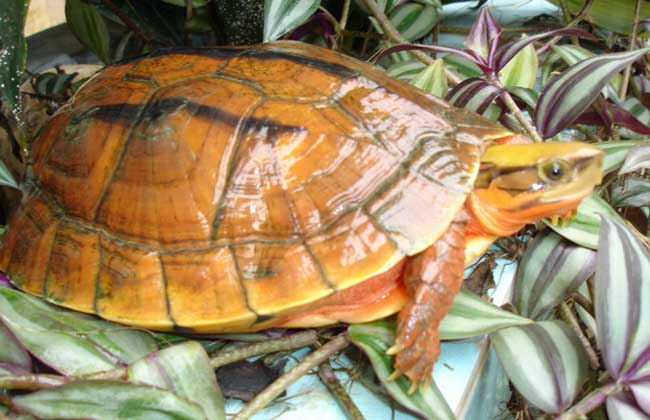
The Golden Coin Turtle has characteristics such as a wide diet, strong disease resistance and tolerance to hunger, and strong vitality. It is easy to raise in captivity, has considerable economic value, and also has extremely high medicinal value. It is a traditional Chinese medicinal material and one of China's traditional export commodities. Its breeding prospects are enormous. Let us take a look at the incubation techniques for the Golden Coin Turtle!
Reproductive Habits of the Golden Coin Turtle
The Golden Coin Turtle grows slowly. Generally, it takes more than 6 years for the gonads to mature and mating to begin. Mature Golden Coin Turtles frequently move about and feed from May to October. In autumn (September to October), mating begins in the early morning or evening when the temperature is around 20-25°C. In June of the following year, when the water temperature rises to around 25°C, the female turtle begins to lay eggs, and egg-laying continues until the end of July or the beginning of August. A total of 3-4 clutches are laid during the whole period, with 3-4 eggs per clutch.
Before laying eggs, the female Golden Coin Turtle chooses soft-soiled shallow shoals or sand piles, or digs a hole in the soil beneath tree or grass roots, then lays the eggs in the hole, covers the hole with sand and soil, presses it flat with her body, and only then leaves. Under natural conditions, the incubation of Golden Coin Turtle eggs is easily affected by external natural factors such as climate, light, and natural enemies, so the incubation time is longer and the hatching rate is lower.
Selection of Parent Golden Coin Turtles
1. Male and female identification: It is difficult to distinguish male from female Golden Coin Turtles at the hatchling and juvenile stages. They can only be distinguished after growing into adults. The identification method is as follows: the male Golden Coin Turtle has a slightly concave plastron, while the female has a flat and straight plastron; the male has a thinner body, while the female has a thicker body; the male has an arched and oval carapace with a rounded and wide rear end, and the cloacal opening is farther from the plastron, while the female's cloacal opening is closer to the plastron and has no copulatory organ; the male's tail is mostly long and thick, while the female's tail is short and thin; the male has a slight fishy odor, while the female has no fishy odor. When you press the turtle's four legs and head and push backward with your hand, the male turtle's copulatory organ is exposed and appears purple-black, while the female turtle does not have one.
2. Age determination: The age of the Golden Coin Turtle is mainly determined by the texture on the shell. The more layers in the texture, the older the age. Some Golden Coin Turtles do not have very clear texture on their backs, so sometimes it is not very precise.
3. Choosing wild turtles: It is best to choose wild turtles. Turtles purchased before the egg-laying period can lay eggs in the same year. If choosing captive-bred turtles, when selecting turtles, do not base the choice solely on the individual weight of the turtle, but mainly on the age of the turtle, with individual weight only as a supplementary condition. A healthy turtle has a well-proportioned appearance, a plump and strong body, bright eyes, and feels very strong when its limbs are pulled. There should be no broken tail. In addition, the ratio of female to male turtles placed is preferably 2:1. If there are too many male turtles, fights among males are likely to occur during the mating season, and in severe cases both sides may be bitten and injured.
Incubation Techniques for the Golden Coin Turtle
1. Egg-laying time: The Golden Coin Turtle mostly begins mating from 5 to 6 p.m. in September to October, when the temperature is 20 to 25°C. In June of the following year, when the water temperature rises to around 25°C, the female turtle begins to lay eggs, and egg-laying continues until the end of July or the beginning of August. A total of 3 to 4 clutches are laid during the whole period, with 3 to 4 eggs per clutch. Eggs are generally laid in the early morning or evening. Before laying eggs, the female turtle chooses soft-soiled shallow shoals or sand piles, or digs a hole in the soil beneath tree or grass roots, then lays the eggs in the hole, covers the hole with sand and soil, presses it flat with her body, and only then leaves.
2. Artificial incubation: Having fresh eggs of good quality with strong embryonic vitality is the internal cause for achieving good incubation results, while the various physical and chemical factors required for embryonic development are the external conditions. Artificial incubation is, on the premise of fully considering the internal factors, creating and maintaining as much as possible the external conditions suitable for embryonic development, thereby hatching as many normal, healthy, and robust hatchlings as possible.
① Incubation preparation: During the egg-laying period of the Golden Coin Turtle, collect the eggs at any time and select fresh, non-deformed eggs for indoor incubation. In the incubation room, an egg incubation pool generally 30 to 40 cm high is built. The incubation pool is filled with soft sand and soil. In addition, a layer of 20 cm transparent plastic board is added along the edge of the incubation pool to prevent the hatchlings from escaping.
② Burying eggs in the sand bed: First dig a 10 cm pit in the sand bed, then gently and evenly place the collected eggs in the sand pit. Insert a marker stick beside the eggs, clearly mark the date and number of eggs buried on the marker stick, and then gently cover the eggs with sand and soil.
③ Environmental regulation: The temperature of the incubation room should be maintained between 25 and 32°C, and the humidity of the sand and soil should be maintained at 80%. Water should be sprinkled into the sand and soil once every 2 to 3 days to maintain the humidity of the sand and soil. After about 85 days, the hatchlings will automatically crawl out of the sand surface. If they do not crawl out, dig open the sand and soil to check whether they have hatched.