How to raise the golden coin turtle? Detailed explanation in a breeding technology video
The golden coin turtle is commonly known as the three-keeled box turtle, red-bellied turtle, golden-headed turtle, "chuan"-shaped back turtle, red-edged turtle, etc. Wild golden coin turtles are extremely rare and sell extremely well on international and domestic markets. Because they have characteristics such as a wide diet, strong disease resistance and hunger tolerance, and strong vitality, they have considerable economic value for breeding. Now let us take a look at the breeding technology video for the golden coin turtle!
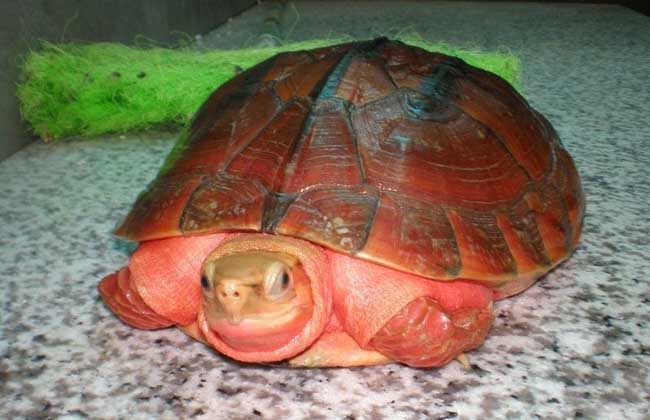
Living habits of the golden coin turtle
1. Diet: The golden coin turtle is omnivorous. It likes to inhabit mountain rock crevices or mud burrows near water areas, and after being startled it dives to the bottom of the water. It often goes to mountain streams or damp places to forage for various aquatic animals. In nature, it mainly preys on aquatic animals in the water such as snails, fish, shrimp, and tadpoles, and also eats young rats, small fish, shrimp, snails, young frogs, scarab beetles, earthworms, snails, and fly maggots. It sometimes also eats pumpkin, banana, and tender plant stems and leaves, and seeds. Under artificial breeding conditions, it likes to eat animal offal, earthworms, lean meat, small fish, and mixed feed.
2. Temperature: The golden coin turtle is a poikilothermic animal. Its growth temperature is between 24-32°C. When the water temperature is 28°C, it must surface to breathe once about every 20 minutes in the water; when the water temperature is 25°C, it surfaces to breathe once about every 26 minutes; when the water temperature is below 12°C, it enters hibernation.
Reproductive characteristics of the golden coin turtle
1. Mating: The golden coin turtle grows slowly. Generally, its gonads mature only after 6 years of age, and then mating begins. Mature golden coin turtles frequently move about and feed from May to October. In autumn, in the early morning or evening, when the air temperature is about 20-25°C, mating begins. In June of the following year, when the water temperature rises to about 25°C, the female turtle begins to lay eggs, and egg laying continues until the end of July or the beginning of August. During the whole period, it lays eggs 3-4 times in total, with 3-4 eggs each time.
2. Egg laying: Before the golden coin turtle lays eggs, the female turtle chooses soft-soiled shallow shoals or sand piles, or digs soil into a hole under the roots of trees and grass, then lays eggs in the hole, covers the hole with sand and soil, presses it flat and firm with its body, and only then leaves. Under natural conditions, the incubation of golden coin turtle eggs is easily affected by external natural conditions such as climate, light, and natural enemies, so the incubation time is relatively long and the hatching rate is relatively low.
Breeding technology for the golden coin turtle
1. Turtle pond construction: Juvenile turtles, adult turtles, and parent turtles should be raised in separate ponds. This can avoid large turtles swallowing small turtles, and it is also convenient for determining feed amounts and carrying out feeding and management work, and convenient for observing and mastering the growth and activity of each type of turtle.
① Juvenile turtle pond: Generally, cement ponds are used for rearing. This method is suitable for ordinary specialized households and small-scale farms. According to the living habits of the golden coin turtle, the rearing pond should be built in a sunny, wind-sheltered place. The size of the pond can be determined according to need, and a wall should be built about 2 m from the pond to prevent the golden coin turtles from escaping. A small island can also be built in the center of the pond for the golden coin turtles to move about. The small island and the open ground around the pond extending toward the pond should all have a certain slope to help the golden coin turtles climb onto the small island or the open ground around the pond to rest, feed, and lay eggs. An outlet should be set at the bottom of the pond for changing water. Both the bottom of the pond and the open ground around the pond should be covered with about 30 cm of sand and soil, and some plants should be planted for shade to help lower temperature and prevent heatstroke in summer.
② Adult turtle pond: Build the pond according to the characteristics of the golden coin turtle, such as liking warmth, liking water, being gentle in temperament, timid, able to dig holes, and prone to escaping. Choose a place with soft mud and sand, sheltered from the wind and facing the sun, with abundant water sources, not easily polluted, secluded, and shaded. Build the pond with cement. The size of the rearing pond can be determined according to the size of the site and the number of turtles being raised.
③ Breeding pond: The construction of the breeding pond is basically the same as that of the adult turtle pond. At ordinary times, the breeding pond can also be used as an adult turtle pond, and only when the breeding period arrives are the adult turtles moved away, which can improve the use efficiency of the pond. The breeding pond should be kept as quiet as possible. The stocking density of parent turtles should be much smaller than that of adult turtles. During the egg-laying period, the sand and soil around the pond should be kept moist without standing water. If there is drought, water should be sprinkled appropriately to keep the sand and soil moist. The breeding pond must be built outdoors. There are still no truly successful examples of building ponds indoors to breed golden coin turtles.
2. Turtle seed selection: For golden coin turtles, it is best to choose wild turtles. Turtles purchased before the egg-laying period can lay eggs that same year. If choosing artificially raised turtles, when selecting turtles, one should not use only the individual weight of the turtle as the criterion, but should mainly base it on the age of the turtle, with the individual weight of the turtle only as an auxiliary condition. A healthy turtle has a well-proportioned appearance, a plump and strong body, bright eyes, and when its limbs are pulled, they feel very strong, with no broken tail. In addition, the ratio of female to male turtles placed in the pond is preferably 2:1.
3. Water quality and water temperature
① Water quality: Tap water is acceptable. Because it has few pathogens, there is no need to expose it to sunlight to release chlorine, but the chlorine content must not exceed 300 mg/L. River water, rainwater, well water, etc. can also be used. At the beginning, the water depth only needs to submerge the turtle's shell, and later it should gradually be increased to about 15 cm. As long as the turtle's head and neck can stretch out of the water, which is beneficial for the turtle's breathing, it is fine. It is best to place a small amount of aquatic plants such as water peanut in the water. This can not only purify the water quality, but also serve as a hiding and resting place for the turtles, creating a natural ecological environment for them.
② Water temperature: The golden coin turtle is a warmth-loving animal. Its feeding temperature is above 20°C, and its growth water temperature is 25-35°C. Because hatchling turtles are tender, weak, and poor at adapting to the external environment, they have relatively high requirements for water temperature. To enable hatchling turtles to safely overwinter and grow quickly, they must be raised with heating. The optimal water temperature should be controlled between 28-30°C, and the water temperature for juvenile turtles can be relaxed to between 26-32°C.