Detailed Explanation of the Stone Coin Turtle Breeding Technology Video Tutorial
The scientific name of the stone coin turtle is the yellow-throated pond turtle (Mauremys mutica), also called stone turtle, water turtle, yellow-board turtle, yellow turtle, fragrant turtle, etc. Artificial breeding of the stone coin turtle has the characteristics of requiring a small land area, being convenient to feed and manage, and yielding high economic returns. It can be developed into an emerging industry for adjusting and optimizing the rural industrial structure and increasing people's income. Now let us take a look at the stone coin turtle breeding technology video together!
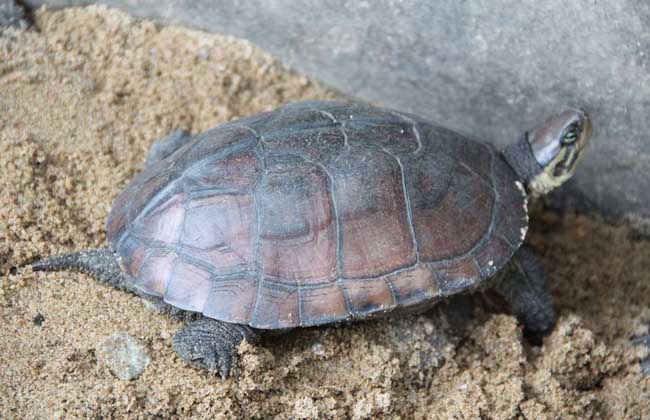
Living Habits of the Stone Coin Turtle
1. Environment: The stone coin turtle inhabits waters in hilly areas, intermontane basins in semi-mountainous areas, and river valleys, and sometimes frequently moves about in shrub grass and rice fields. During the day it mostly prefers to be on land, and sometimes climbs onto the bank to bask in the sun, commonly known as “drying the shell”. When the weather is hot, it is more active in the morning and after dusk, and at noon and night it often hides in water, in dark places, or buries itself in sand, retracting its head and remaining motionless. The stone coin turtle is easily startled; once it encounters an enemy or a noise, it immediately dives into the water or retracts its head and remains motionless.
2. Temperature: The stone coin turtle is highly active from the end of April to the beginning of October each year, and the most suitable environmental temperature is 18~32°C. 3~15°C is the transitional stage in which the turtle shifts from an active state to hibernation. At around 10°C the turtle enters hibernation. At 35~36°C, it is not adapted or remains dormant and motionless. In early March, when the temperature is around 15°C, although the turtle has already awakened, it only crawls and does not seek food. It does not eat until the end of March to early April. After hibernation, the turtle's body weight decreases by about 50~100 grams.
3. Diet: The stone coin turtle is omnivorous and has a very wide feeding range. According to records: in the wild, the stone coin turtle eats insects, arthropods, annelids, etc., and also eats loaches, river snails, fish, and shrimp; plant-based foods include wheat, rice, weeds, etc. Under artificial breeding conditions, it can be fed poultry viscera, pork and viscera, and mixed feed. For plant-based foods, melons, fruits, and vegetables can be fed. The stone coin turtle likes to forage in water. When feeding, it first crawls close to the food, stares with both eyes, then suddenly extends its neck and bites the food and swallows it. If the food is too large, it uses its two front claws to tear the food apart before swallowing it.
Reproductive Characteristics of the Stone Coin Turtle
1. Male-female identification: Males reach sexual maturity at a body weight of 250 grams. The carapace is relatively long, the plastron is concave, and the larger the individual, the more obvious the concavity; the tail is relatively long. Females reach sexual maturity at a body weight of 300 grams. The carapace is wide and short, the plastron is flat, and the tail is short.
2. Reproductive habits: In nature, the mating period of the yellow-throated pond turtle is from April to the end of October, and mating mostly occurs at night or in the early morning. Before mating, the male turtle appears very excited and often follows behind the female turtle, striking the female turtle's shoulder with its head. When the female turtle does not move, the male turtle climbs onto the female turtle's back, hooks its front claws on the front edge of the female turtle's carapace, extends its copulatory organ from the tail, and mates. The egg-laying period of the turtle is from May to September, with July as the peak period, and egg-laying mostly occurs at night. Before laying eggs, the turtle first uses its hind limbs alternately to dig a burrow; the burrow mouth is large and the bottom is small, generally with a mouth diameter of 40 cm and a depth of 80 mm. Then it aligns its tail with the burrow, extends its hind limbs, and spreads its soles to receive the eggs. After laying the eggs, it again uses its hind limbs to push soil and fill the burrow mouth flat. The stone coin turtle lays 1~5 eggs each time; the eggs are white and elongated oval. The eggs are 40 mm in long diameter and 21.5 mm in short diameter. The egg weight is 11.9 grams.
Breeding Technology for the Stone Coin Turtle
1. Site selection: For a turtle breeding site, choose a place with sufficient water sources, good water quality, soil with good water-retention performance (such as clay loam or loam), convenient drainage and irrigation, a quiet environment, and a wind-sheltered, sunny aspect, and avoid breeding turtles in places with major external influences such as traffic lines and factories. For turtles at different stages, different turtle ponds should be built.
2. Selection of young turtles: It is best to buy young turtles from breeding farms, because turtles domesticated by breeders have already adapted to the artificial rearing environment and have a high survival rate. If purchasing from the market, it is best to do so from May to August, and check each turtle's physical condition and whether there is a hook in its mouth. Generally speaking, a healthy young turtle should meet three conditions: 1) It responds quickly, has bright eyes, and has full, elastic limb muscles, and can support itself to walk rather than dragging its plastron along. 2) There are no wounds or ulcers on the body surface. 3) When the turtle is placed in deep water, it can sink.
3. Stocking of young turtles: Before young turtles are put into the pond, they need to be soaked and disinfected in a 2 mg/L potassium permanganate solution. The stocking density is 5~8 turtles/cubic m, and the female-to-male ratio is preferably 3:1 or 3:2.
4. Daily management
1) Feeding: The stone coin turtle is omnivorous and has a wide feeding range. Under artificial breeding conditions, it can be fed the meat of small fish, poultry viscera, and other animals, and can also be fed mixed feed, but it needs a period of adaptation. For the first feeding, fresh bait and mixed feed should be mixed together, kneaded into balls, and placed at the water's edge. After continuous feeding several times, once most turtles have adapted, mixed feed can be fed directly. The stone coin turtle forages in water, so food should be placed on a feeding platform at the water's edge. The amount fed should be such that the turtles do not leave leftovers, generally 5% of the turtle's body weight. Feeding time varies with the season: in April, May, and October it is best around noon; from June to September it is best at 8~9 a.m. or around 6 p.m.; July is the peak egg-laying season for turtles, so the feeding amount should be increased.
1) Water quality: For small-area breeding ponds, change the water every week; for large ponds, discharge part of the old water every 2~3 days, add new water, and alternately splash 20 mg/L furazolidone or 10 mg/L limewater every week.
3) Daily routine: In daily management, frequent inspection and frequent recording should be carried out. Inspection can help understand the turtles' activity, growth, and feeding conditions. Do it once each morning and evening, randomly spot-check the health condition of 2~3 turtles, and record accordingly the air temperature, water temperature, activity, illness, and feeding.