A Detailed Guide to Stone Frog Farming Techniques and Nutritional Value
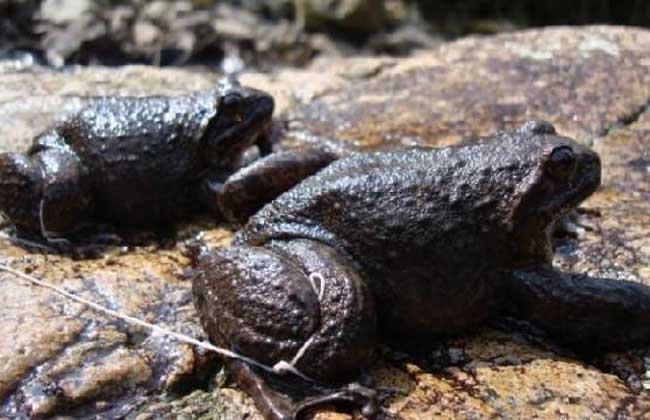 Stone FrogGrowth Habits" />
StoneFrogGrowth Habits
The stone frog prefers to live in burrows under damp, quiet, dimly lit mountain rock walls near water sources. It is social and forages at night, with nighttime being its peak activity period. Normally it is relatively inactive and placid, but during the peak breeding season it becomes very active, displaying calling and amplexus behavior. It favors live prey such as earthworms, maggots, grasshoppers, ants, loaches, river crabs, and mole crickets. It is a cold-blooded poikilothermic animal. When the water temperature drops to 10°C, it enters hibernation, which lasts about 4 months, and after hibernation its body weight decreases moderately. It generally begins estrus in April, laying 1000-3000 eggs each time. The frog eggs usually hatch into tadpoles in 8-20 days. Tadpoles like to live in large crevices among stones or in gravel piles in stream pools. In a suitable environment, they generally metamorphose into young frogs after 60-75 days of growth.
Nutritional Value of Stone Frog
Stone frog meat is neutral in medicinal nature and sweet in taste, entering the heart, lung, and kidney meridians. It has the effects of nourishing and strengthening the body, nourishing yin and reducing internal heat, clearing the heart and moistening the lungs, relieving fatigue and tonifying deficiency, strengthening bones and muscles, and replenishing essence and subduing yang. It has good effects on soreness and weakness of the waist and knees caused by yin deficiency, five-center heat, postpartum weakness, pulmonary tuberculosis with hemoptysis, night sweats, and neurasthenia.
1. Stone frog is rich in high-quality protein, multiple vitamins, and minerals, among which proline and alanine are especially abundant.
2. Stone frog contains sufficient natural glutamic acid, making its meat extraordinarily fresh and delicious. Its protein content is also very high while its fat content is relatively low, making it the most ideal delicious mountain delicacy for nourishing yin and clearing heat.
3. Stone frog tadpoles can darken hair and preserve youthfulness, clear toxins and heal sores, and the frog eggs have the effect of improving eyesight.
4. Modern medical research shows that stone frog has a certain effect on treating cancer, and it has also been found that the skin and flesh of the frog contain bradykinin, which can cause contraction of the human uterus, having remarkable effects on postpartum recovery.
Farming Techniques" />
Farming Techniques for Stone Frog
1. Farming environment: The quality of the environment directly affects the growth, development, and reproduction of stone frogs. The frog pond is not limited by location. Generally speaking, the farming site should be chosen in a place with good water quality, convenient drainage and irrigation, a quiet environment, warm winters and cool summers, free from drought and flooding, convenient management, and protection against escape and harm. Frog ponds can be built indoors or outdoors. Indoor ponds require ventilation, coolness, and no direct sunlight. Outdoor ponds can be built under a shade shed.
2. Hatching preparation: The breeding frog pond and hatching pond should be built in a dark, quiet place with good water quality, with an area of 2-3 sq m being suitable. The pond should be thoroughly disinfected and cleaned before adding clean water, with the water depth maintained at about 20 cm. It is best to place some stones and fresh aquatic plants inside.
3. Mating and egg-laying: Stone frogs usually begin mating and laying eggs in April when the temperature is above 20°C. The male-to-female ratio of breeding frogs is 1:1, with a density of 15-20 frogs per sq m. Breeding frogs generally pair up after 21:00 at night, and female frogs lay eggs between 4:00 and 7:00 in the morning. The egg masses usually attach to aquatic plants, stones, and pond walls. Within 1 hour after egg-laying, they must not be disturbed to avoid damage and breakage that would reduce the hatching rate.
4. Artificial hatching: Observe and check the breeding frog pond every morning. If there are frog eggs, they can be gently scooped out after 8:00 in the morning and placed on hatching trays in the hatching pond. During the hatching process, a small amount of clean water should flow through to ensure cleanliness. The water temperature should be controlled between 15-30°C, and the pH value at 6-8. One pond for one clutch (500-1000 eggs). Generally, half an hour after egg-laying, the black dots of the fertilized egg embryo enlarge; after 7 days the embryo appears strip-shaped; after 9 days the tadpole is basically formed; after 15 days the membrane breaks and tadpoles form. The hatching rate reaches over 85%.
5. Tadpole rearing: Tadpole growth can generally be divided into four stages.
① Early growth stage: The early growth stage is usually 1-10 days of age. In the first 3 days after breaking the membrane, tadpoles gradually grow using the energy from the egg, and after they begin foraging, they mainly feed on the outer egg membrane and unfertilized eggs.
② Early growth stage: The early growth stage is usually 10-20 days of age. When the small tadpoles are 10 days old, their food intake increases, but their digestive function is still weak. High-protein liquid feed such as egg yolk and soybean milk should be provided, fed once daily at a fixed time. Generally, 1 egg yolk is fed to 1500 tadpoles, with the amount gradually increased thereafter.
③ Mid growth stage: The mid growth stage is usually 20-55 days of age. During this period, as the digestive function of the tadpoles continuously strengthens, in order to promote the rapid development of digestive organs and adapt to the "herbivorous" biological characteristics of the amphibian tadpole stage, after 20 days of age, the amount of high-protein liquid feed should be gradually reduced or stopped, and gradually switched to cooked plant-based and algae-based feed such as stems and leaves of tuber crops, fruits and leaves of melons, cooked rice, and tender fresh aquatic plants. The feed residue in the pond should be removed daily to ensure the pond water is not contaminated.
④ Late growth stage: The late growth stage is usually 55-75 days of age. This period is also called the metamorphosis stage. After 55 days of age, tadpoles enter the metamorphosis stage, successively growing hind limbs, forelimbs, and absorbing their tails. In terms of management, special care and thoroughness are required. It is necessary to achieve graded rearing, shallow and fresh water, half water and half land, easy access to land, dim light, and a secluded environment, so as to create an ecological environment suitable for tadpole metamorphosis.
6. Young frog rearing: Newly metamorphosed young frogs are small and have weak resistance, so management should be strengthened. Small maggots, small yellow mealworms, small earthworms, and other live feed should be provided, fed every evening. The amount fed depends on their food intake, gradually increasing the feeding amount as the young frogs' appetite grows, so that a slight surplus remains. The feeding platform should be cleaned every morning and disinfected regularly to prevent leftover food from spoiling and contaminating the pond water. In the following period, young frogs should be reared in grades according to their size, with a density of generally 100-300 frogs per sq m. The top of the frog pond should be covered with gauze to prevent escape and rodent damage.
7. Safe overwintering: Tadpoles can overwinter indoors. During overwintering, the water depth should be maintained at 20 cm, with constant running water, and the frog pond should be covered with frost prevention measures such as insulation. For young frog hibernation, the water depth is generally about 15 cm, preferably not submerging their burrows, and a certain amount of land should be left. In low-temperature and freezing weather, plastic film covering should also be used for insulation and frost prevention. During overwintering, the environment should be kept quiet, natural enemies should be guarded against, and water quality should be prevented from deteriorating.
Complete Collection of Stone Frog Recipes
1. Clear Stewed Stone Frog
[Ingredients] Stone frog 250 g, pork (fat and lean) 100 g, shiitake mushrooms (fresh) 50 g, ginger 5 g, scallion 20 g, salt 4 g, chicken oil 2 g, MSG 1 g.
[Method] ① Take 4 stone frogs weighing about 250 g, cut off the head and upper shell, open the belly and remove the internal organs, cut off the claws, wash and drain. ② Cut the fatty and lean meat into strips 3.6 cm long and 0.6 cm wide. ③ Remove the stems from the shiitake mushrooms and wash them. Wash the ginger and scallion. Take the white part of the scallion and cut into sections, and slice the ginger. ④ Take a stewing pot, place the meat in the middle of the pot, cover with shiitake mushrooms on top, place the stone frogs with their backs up around the meat, pour in 250 mL of fresh soup, add refined salt, ginger slices, scallion sections, and MSG, then place in a steamer over high heat. ⑤ Steam until tender and thoroughly cooked, remove, pick out the ginger slices and scallion sections, and drizzle with chicken oil to finish.
[Tips] Use the stewing and steaming technique. The heating time should be long, and after steam rises, use medium-low heat.
2. Clear Boiled Stone Frog Soup
[Ingredients] Stone frog 500 g, sesame oil 0.5 g.
[Method] ① Remove the head and internal organs of the stone frog, keep the skin, and cut into small pieces. ② First stir-fry briefly in an oiled pan and drizzle with sesame oil. ③ Then add clean water and stew in the pan for about half an hour. ④ Add an appropriate amount of salt before removing from the heat and it is ready to eat.
3. Steamed Stone Frog
[Ingredients] Stone frog 500 g, salt 1.5 g, cooking wine 15 g, a little scallion, ginger, and MSG.
[Method] ① Cut the frog with internal organs removed into 4 pieces and place in a soup bowl arranged into its original shape. ② Add the above seasonings, cover the bowl, and steam for half an hour.
4. Stir-Fried Frog Legs with Green Peppers
[Ingredients] Frog legs 300 g, green peppers 200 g, scallion, ginger, and garlic 30 g each, cooking wine 20 g, appropriate amounts of refined salt, MSG, water starch, and vegetable oil.
[Method] ① Cut the frog legs into small pieces 2 cm long and coat with a little refined salt and cooking wine. ② Cut the scallion, ginger, and garlic into small cubes. ③ Mix refined salt, MSG, and water starch into a sauce. ④ Cut the green peppers into 2 cm long sections. ⑤ Heat the pan, add an appropriate amount of oil, add the frog legs and stir-fry until separated, then add the green peppers, scallion, ginger, and garlic together, stir-fry briefly, pour in the sauce, and stir-fry until cooked.
[Tips] Before steaming, you may place some fresh fruit in a cloth bag, remove it after the dish is done, and the effect will be even better.
5. Sauce-Flavored Stone Frog Casserole
[Ingredients] Stone frog 1000 g, appropriate amount of oil, 1 scallion, 1 garlic stalk.
[Method] ① Cut the stone frog into pieces and marinate with ginger powder, salt, pepper, and cooking wine for 15 minutes. ② Cut the white part of the scallion into sections, crush the garlic and peel. ③ Heat oil in a pan and saute the scallion and garlic until fragrant. ④ Pour in the marinated stone frog. ⑤ Add salt, light soy sauce, soybean paste, sweet bean sauce, yellow lantern chili sauce, vinegar, and other seasonings. ⑥ Transfer to a casserole, add a small amount of water, simmer over low heat for 20 minutes, and remove from the heat.
[Tips] It must be cooked thoroughly. It is better to overcook it than to risk eating parasites.